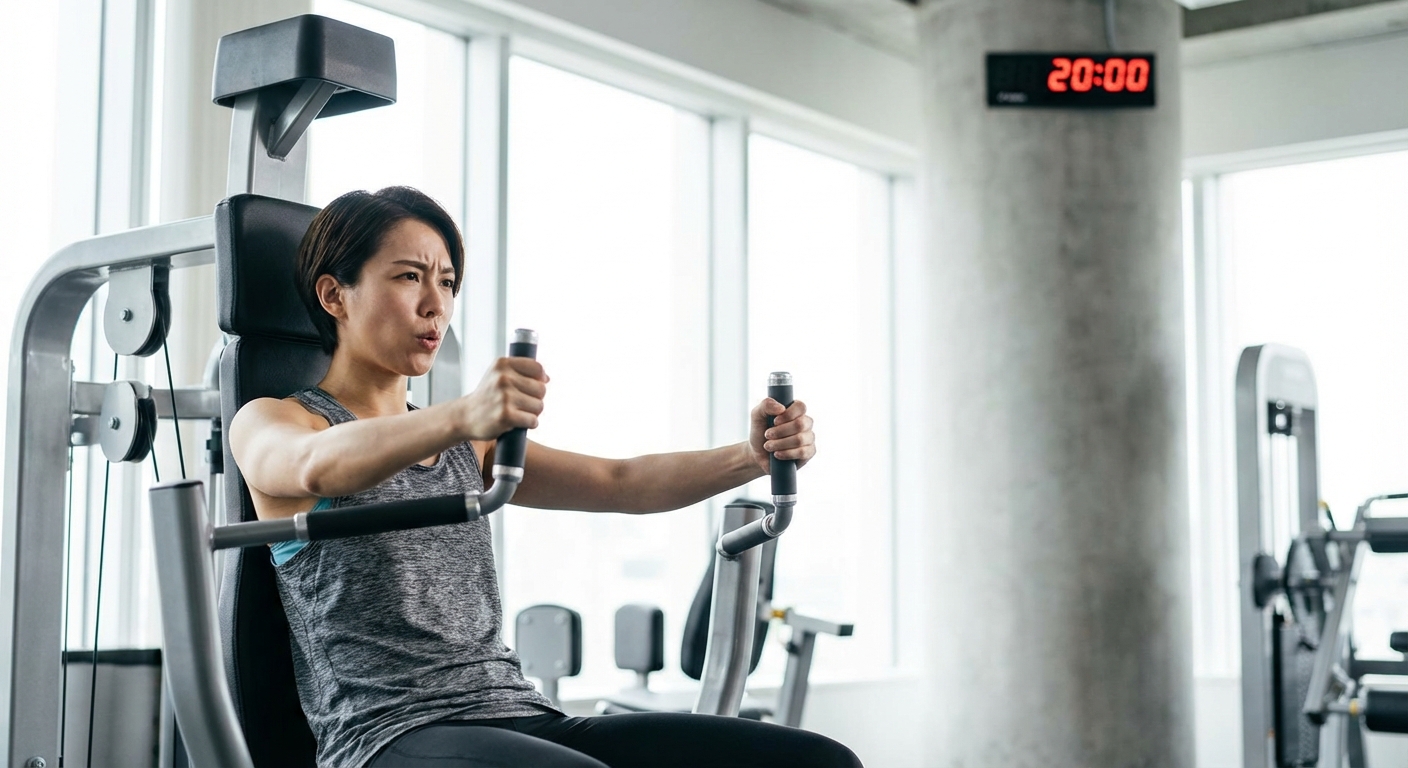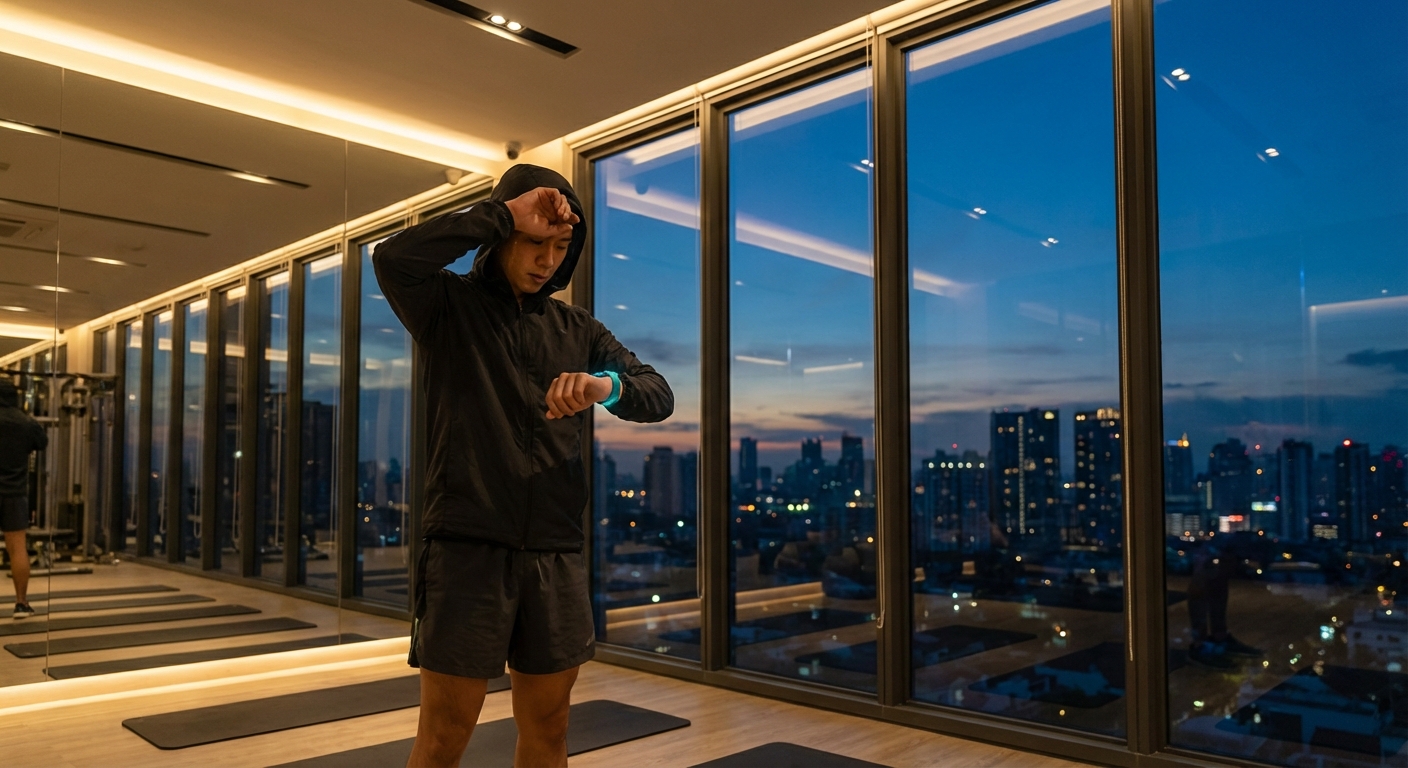
You finally made it to the gym at 8 PM after a long day of meetings. You crushed your workout, showered, ate a quick dinner, and climbed into bed by 11 PM feeling accomplished. Two hours later, you’re still staring at the ceiling, heart rate elevated, mind racing. Your fitness tracker confirms what you already suspect: despite logging excellent exercise metrics, your sleep quality has tanked. The workout that was supposed to help you recover is keeping you awake.
This scenario plays out millions of times each week as busy professionals squeeze exercise into the only available hours, typically late evening. A massive new study published in Scientific Reports analyzing physical activity patterns across different circadian rhythm groups has now quantified what many late exercisers have experienced anecdotally: the timing of your workout significantly impacts sleep quality, and evening exercise within four hours of bedtime can actively harm your rest. The research achieved prediction accuracy above 80% in determining sleep efficiency based on activity timing patterns, confirming that when you exercise matters nearly as much as whether you exercise at all.
The implications extend beyond simple scheduling advice. The study revealed that low-intensity activity in the evening, specifically 12 to 15 hours after waking, had the greatest influence on sleep efficiency across all circadian rhythm groups. This finding suggests that the type of evening activity matters as much as the intensity. Understanding these nuances can help you capture the undeniable benefits of regular exercise without sacrificing the sleep quality that makes those benefits possible.
Why Evening Exercise Disrupts Sleep
The conflict between late workouts and quality sleep involves multiple physiological systems that don’t respect your scheduling constraints. Exercise is fundamentally a stress signal to the body, one that triggers beneficial adaptations when properly recovered from but also activates arousal pathways that work against the biological processes required for sleep onset.
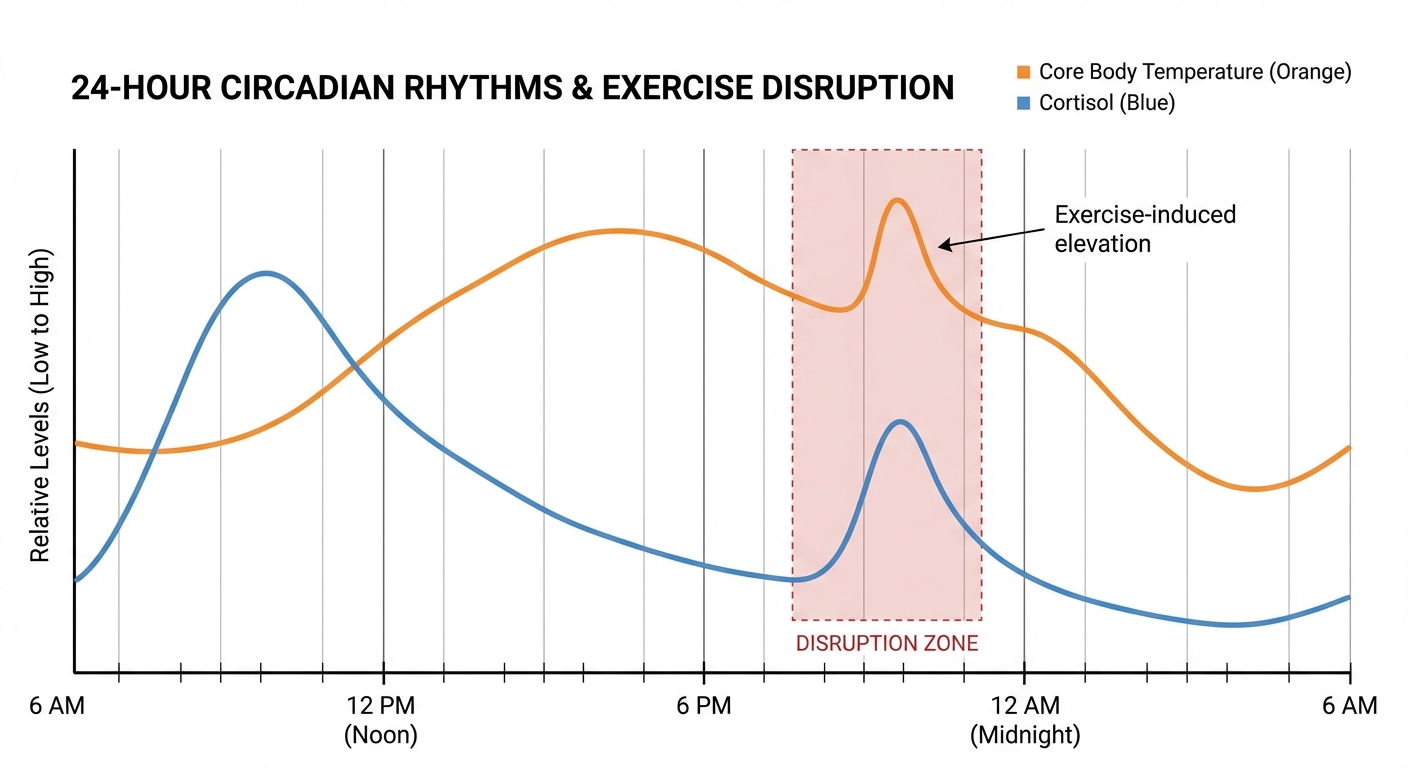
Core body temperature follows a circadian pattern, rising during the day and falling in the evening as part of the sleep initiation process. This temperature drop signals the suprachiasmatic nucleus, your brain’s master clock, that sleep is approaching. Exercise elevates core temperature significantly, sometimes by 1 to 2 degrees Celsius during intense activity. While this temperature eventually falls, the timeline can conflict with sleep. Research from the American Heart Association’s scientific statement on circadian health notes that physical exercise is one of the key behavioral factors that can synchronize or desynchronize circadian rhythms depending on timing.
The hormonal response to exercise also creates sleep-incompatible conditions. Cortisol, the stress hormone that naturally peaks in morning and declines toward evening, surges during and after intense exercise. Adrenaline and noradrenaline flood the system to support physical performance. These hormones are exactly what you need to lift heavy weights or push through a challenging run. They’re also exactly what you don’t need when trying to fall asleep two hours later. The half-life of these stress hormones means elevated levels can persist well into what should be your wind-down period.
The nervous system provides another mechanism of disruption. Exercise activates the sympathetic nervous system, your fight-or-flight response, while sleep requires parasympathetic dominance, the rest-and-digest state. Transitioning between these states takes time. Heart rate variability data, which measures the balance between sympathetic and parasympathetic activity, typically shows that even moderate exercise requires 90 minutes to 3 hours before the body returns to baseline arousal levels. Intense exercise extends this timeline further.
Dr. Charles Czeisler, chief of the Division of Sleep and Circadian Disorders at Brigham and Women’s Hospital, has emphasized that behavioral factors including light exposure, food intake, and physical exercise timing can either align or disrupt circadian rhythms. The question isn’t whether exercise affects sleep biology, but how to schedule it to minimize negative effects while preserving the metabolic, cardiovascular, and mental health benefits that make exercise essential.
What the Research Actually Shows
The Scientific Reports study represents one of the most sophisticated analyses of exercise timing and sleep to date. Researchers used machine learning algorithms to analyze physical activity patterns, accounting for both timing and intensity across different times of day. Critically, they stratified participants by chronotype, recognizing that morning larks and night owls may respond differently to the same exercise timing.
The key finding was that activity timing explained sleep efficiency with remarkable accuracy. When the researchers incorporated time-of-day information into their models, prediction accuracy exceeded 80% for determining whether someone would experience good or poor sleep. Without timing information, accuracy dropped substantially. This confirms that it’s not just total activity that matters but when that activity occurs relative to individual circadian rhythms.
Perhaps surprisingly, the research found that low-intensity activity in the evening, 12 to 15 hours after waking, had the greatest positive influence on sleep efficiency. This suggests that gentle movement like walking or stretching in the evening may actually support sleep, while high-intensity training creates problems. The distinction between activity types in the evening window appears crucial: a post-dinner walk and a CrossFit session at 8 PM have very different effects on subsequent sleep despite both being “evening exercise.”
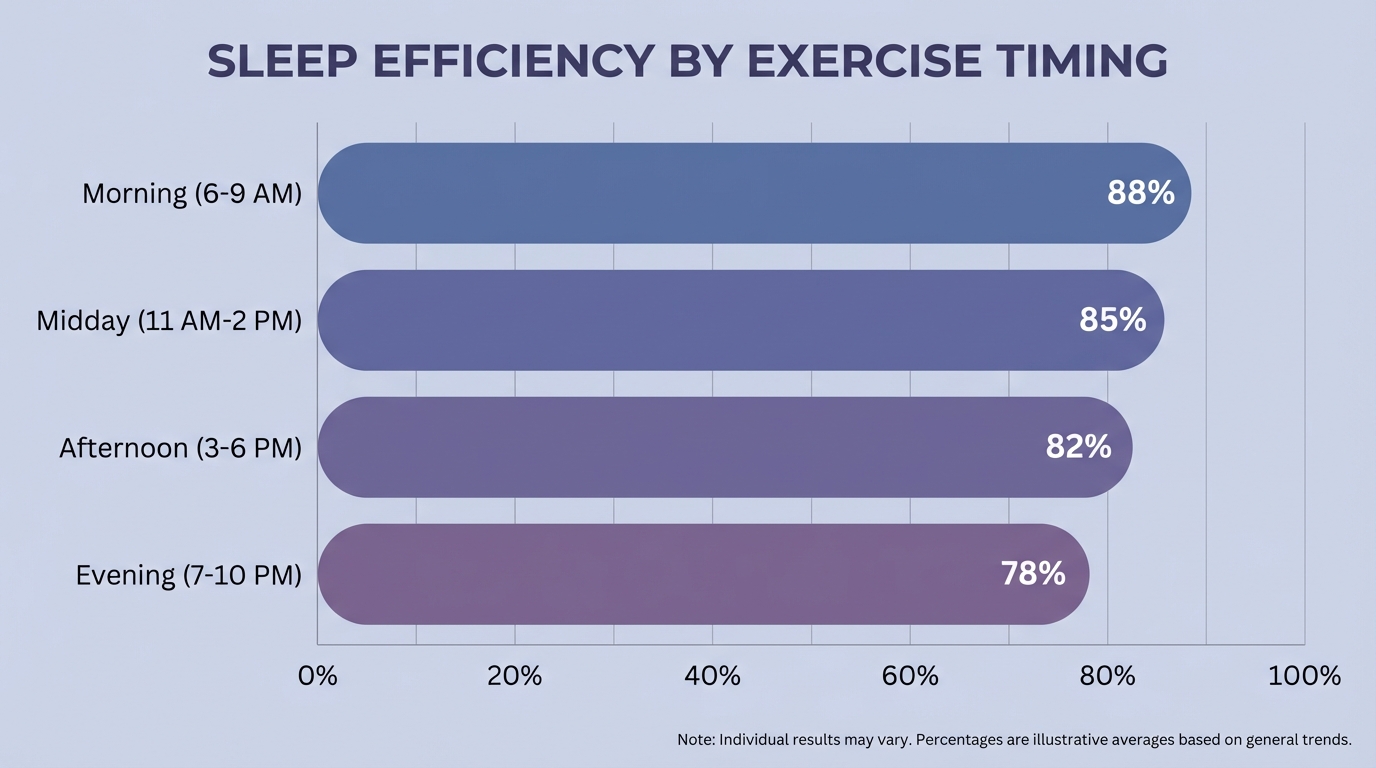
Individual chronotype modifies these effects. True evening chronotypes, those who naturally stay up late and wake late, showed slightly better tolerance for later exercise than morning types. However, even night owls experienced sleep disruption from intense exercise within three to four hours of their natural bedtime. The peripheral metabolic clocks that govern muscle recovery and hormone regulation appear to follow environmental light cues more than subjective preference, meaning that exercising late at night works against biology regardless of when you prefer to be awake.
A separate meta-analysis from Oregon Health & Science University examined the circadian system’s role in cardiovascular function, finding that circadian rhythms influence not just sleep but also how the body recovers from exercise stress. The recovery processes that repair muscle damage, consolidate fitness adaptations, and restore hormonal balance are themselves circadian-regulated. Exercising at times that conflict with these recovery windows may diminish the benefits of training even if sleep onset eventually occurs.
The Four-Hour Rule and Its Exceptions
Based on the accumulated evidence, most sleep researchers recommend finishing vigorous exercise at least four hours before intended sleep time. This guideline provides sufficient time for core temperature to drop, stress hormones to clear, and the nervous system to transition toward parasympathetic dominance. For someone planning to sleep at 11 PM, this means completing intense workouts by 7 PM.
However, the four-hour rule isn’t absolute, and individual variation matters considerably. Some people appear to tolerate late exercise better than others, possibly due to genetic differences in circadian clock genes or variations in autonomic nervous system recovery speed. If you’ve been exercising late for years without noticeable sleep problems, your individual physiology may handle the timing well. The research describes population-level effects that may not apply uniformly to every person.
Exercise intensity creates a more nuanced picture than simple timing alone. The Oregon Health & Science research on exercise and circadian regulation notes that consistency in exercise timing may be more important than the specific time for many individuals. If you can only exercise at 8 PM and you do so consistently, your circadian system may partially adapt to this pattern. The problems arise most acutely when exercise timing varies unpredictably, sending mixed signals to a circadian system that thrives on regularity.
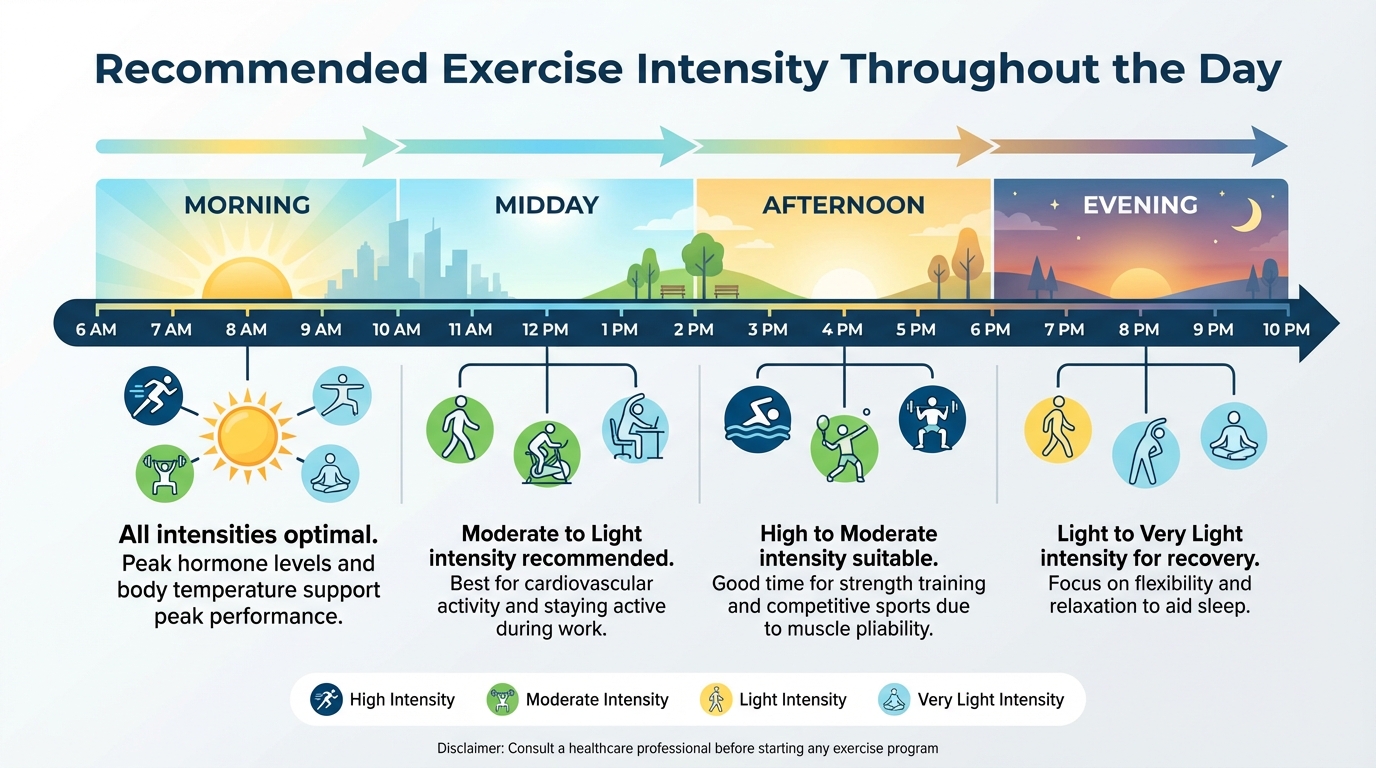
The type of exercise matters significantly in the evening window. Activities that are meditative or parasympathetically oriented, such as yoga, tai chi, or gentle stretching, may actually improve sleep when performed in the evening. These practices lower heart rate and blood pressure, encourage deep breathing, and promote the relaxation response. A 2019 study in Sleep Medicine Reviews found that yoga practitioners often reported improved sleep quality even when practicing in evening hours. The contrast with high-intensity interval training or heavy resistance work in the same time window is stark.
For those who can only fit exercise into late hours, several strategies can minimize sleep disruption. Finishing the workout with an extended cool-down of 10 to 15 minutes of walking or stretching helps initiate the transition from sympathetic to parasympathetic dominance. A warm shower or bath after evening exercise can paradoxically help by triggering a temperature drop as the body cools afterward. Avoiding bright gym lighting immediately before leaving, or wearing blue-light-blocking glasses during the commute home, can prevent exercise-associated light exposure from further disrupting melatonin production. For more on optimizing your circadian signals, our guide on light therapy and sleep hygiene provides detailed protocols.
Optimal Timing for Different Training Goals
The research on exercise timing extends beyond sleep effects to influence training adaptations themselves. Your circadian system regulates muscle protein synthesis, glycogen replenishment, and hormonal responses to training in ways that make certain times of day more advantageous for specific goals.
Strength and power output peak in late afternoon, typically between 3 PM and 7 PM. Core temperature reaches its daily maximum during this window, which improves muscle contractility, reaction time, and joint flexibility. Studies on athletic performance consistently show that personal records in strength and power events are more commonly set in afternoon than morning sessions. If your primary goal is building strength or muscle, afternoon training offers a physiological advantage.
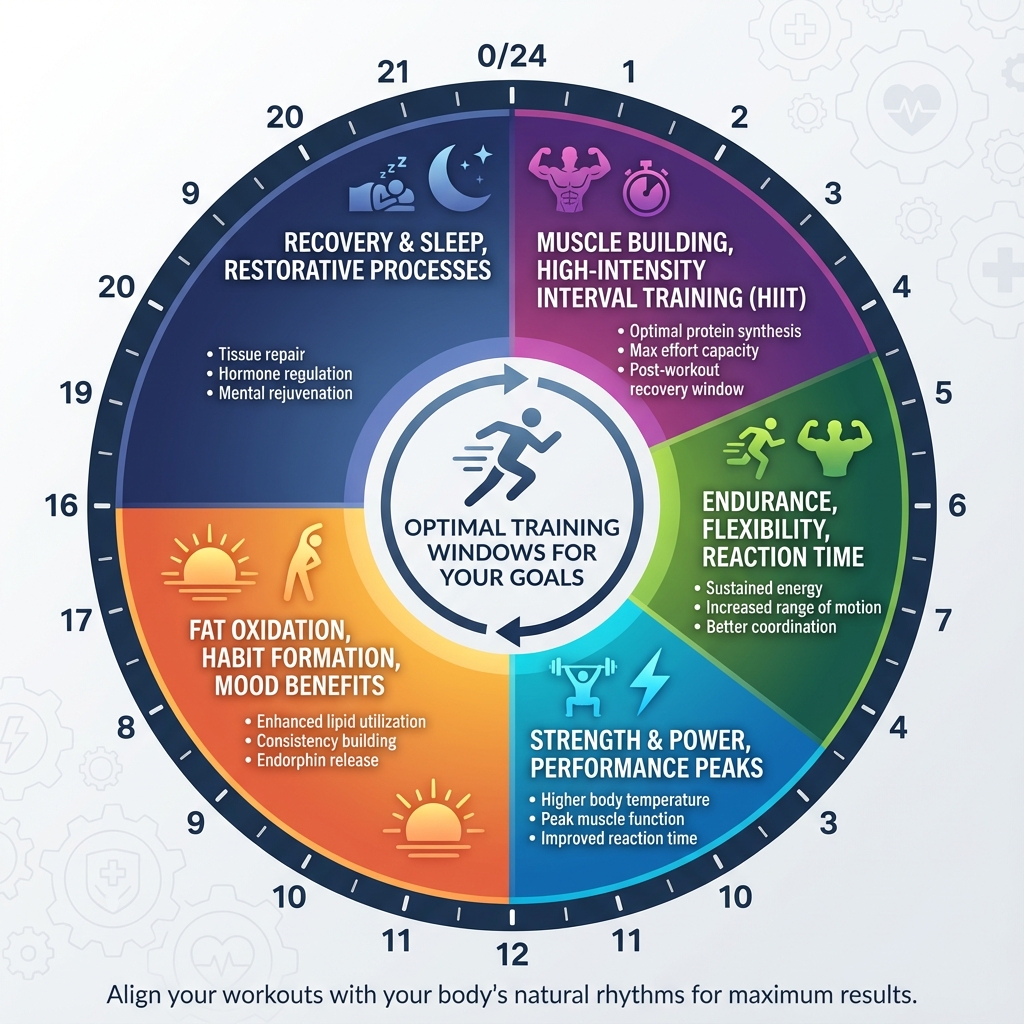
Fat oxidation rates are highest in the morning, particularly in a fasted state. For those focused on body composition, morning cardio before breakfast may enhance fat burning during the session. However, this benefit must be weighed against the lower total work capacity that morning training typically allows. You may burn a higher percentage of fat in morning fasted cardio, but the total caloric expenditure from a harder afternoon session might produce similar or better body composition results over time.
Habit formation research suggests that morning exercise correlates with better long-term adherence. People who exercise in the morning are less likely to skip workouts due to schedule conflicts, fatigue, or competing demands that accumulate throughout the day. The consistency advantage of morning training may outweigh any small physiological benefits of other timing for individuals who struggle to maintain regular exercise habits.
The balance between training optimization and sleep protection should favor sleep in most cases. A slightly suboptimal training time that preserves excellent sleep will produce better long-term results than optimal training time that compromises recovery. Sleep is when muscle repair occurs, when hormonal profiles normalize, and when the nervous system consolidates motor learning from training. Sacrificing sleep quality to squeeze in another late workout is ultimately counterproductive to fitness goals.
Practical Strategies for Busy Schedules
For many people, the theoretical ideal of afternoon training and early evening wind-down doesn’t match reality. Work schedules, family obligations, and facility access often push exercise into non-optimal windows. The goal becomes minimizing harm when ideal timing isn’t possible rather than pursuing theoretical perfection.
If evening is your only option, front-load the intensity. Complete your hardest sets or intervals early in the session, transitioning to lower-intensity work as you approach the end. This gives your body more time to begin the recovery process before you leave the gym. An extended cool-down becomes essential rather than optional.
Consider splitting workouts when possible. A 20-minute high-intensity session during lunch and a 20-minute evening walk might preserve more sleep quality than a single 40-minute intense evening session. This approach also aligns with research on circadian-aligned eating, which shows that distributing activity and nutrition across the day in harmony with circadian rhythms produces better metabolic outcomes than concentrating them in evening hours.
Sleep environment optimization becomes more important when evening exercise is unavoidable. Cool the bedroom to 65 to 68 degrees Fahrenheit. Use blackout curtains to eliminate light pollution. Consider a weighted blanket, which some research suggests can enhance parasympathetic activation. These interventions won’t eliminate the arousal effects of late exercise, but they can help the body transition to sleep despite elevated activation.
Monitor your response over time using sleep tracking technology. Heart rate variability trends, sleep latency data, and subjective sleep quality ratings can help you identify your personal tolerance for evening exercise and make adjustments accordingly. Some individuals may find that 7 PM workouts cause minimal disruption while 8 PM sessions are clearly problematic. Others may need to finish by 6 PM to sleep well. The research provides population-level guidance, but your individual data is what matters for your schedule.
The Bottom Line
Exercise timing significantly impacts sleep quality, with research showing that high-intensity workouts within four hours of bedtime can actively harm rest and recovery. The mechanisms involve core temperature elevation, stress hormone release, and sympathetic nervous system activation that work against the physiological processes required for sleep onset. While individual variation exists, the four-hour guideline provides a reasonable starting point for most people.
The evidence suggests that low-intensity evening activity, such as walking or gentle stretching, may actually support sleep, while the disruption comes primarily from vigorous exercise. This creates a practical path forward: complete intense training earlier in the day, reserving evening hours for light movement that promotes relaxation rather than arousal.
For those constrained to late exercise by real-world demands, mitigation strategies can help. Extended cool-downs, post-workout temperature manipulation, light management, and consistent timing can reduce the sleep impact of evening training. However, if chronic late exercise is consistently compromising your sleep, the long-term health costs may outweigh the short-term scheduling convenience. Sleep is when fitness adaptations actually occur. Protecting that recovery window is ultimately in service of your training goals.
Action Steps:
- Audit your current exercise timing and note any patterns between late workouts and poor sleep
- Complete high-intensity training at least four hours before bedtime when possible
- Reserve evening exercise for low-intensity activities like walking, yoga, or stretching
- If late training is unavoidable, add a 15-minute cool-down and avoid bright lights afterward
- Track sleep quality and HRV to identify your personal tolerance threshold for exercise timing
Sources: Scientific Reports (2025) physical activity timing and sleep efficiency study, American Heart Association scientific statement on circadian health and cardiometabolic function, Oregon Health & Science University circadian rhythm research, Frontiers in Neuroscience exercise and circadian regulation review, Sleep Medicine Reviews yoga and sleep meta-analysis.