The salad you prepped on Sunday looks sad by Wednesday. The grilled chicken breast you once found perfectly acceptable has become a chore to chew. The spring mix has wilted into a dark, slimy mass at the bottom of your container. This is the winter meal prep problem: the strategies that work beautifully in summer, when cold, crunchy meals feel refreshing, collapse entirely when temperatures drop and your body craves warmth and density.
Winter meal prep requires a fundamental shift in approach. The goal remains the same: invest a focused block of time once weekly to produce ready-to-eat meals that save time and support nutritional goals throughout the week. But the execution must change to accommodate both the physical realities of refrigeration and reheating and the psychological shift in what feels satisfying when you’re cold.
The good news is that winter-appropriate foods often improve with time. Stews develop deeper flavor as ingredients meld. Braised meats become more tender. Roasted root vegetables maintain their structure far better than delicate greens. By understanding the science of what makes certain foods reheat well and applying strategic cooking techniques, you can create a week’s worth of meals that you actually look forward to eating, even on Friday.
The Science of Reheatable Foods
Understanding why some foods survive the refrigerator-to-microwave journey while others don’t explains the foundation of successful winter meal prep. The difference comes down to three factors: moisture retention, structural stability, and flavor development.
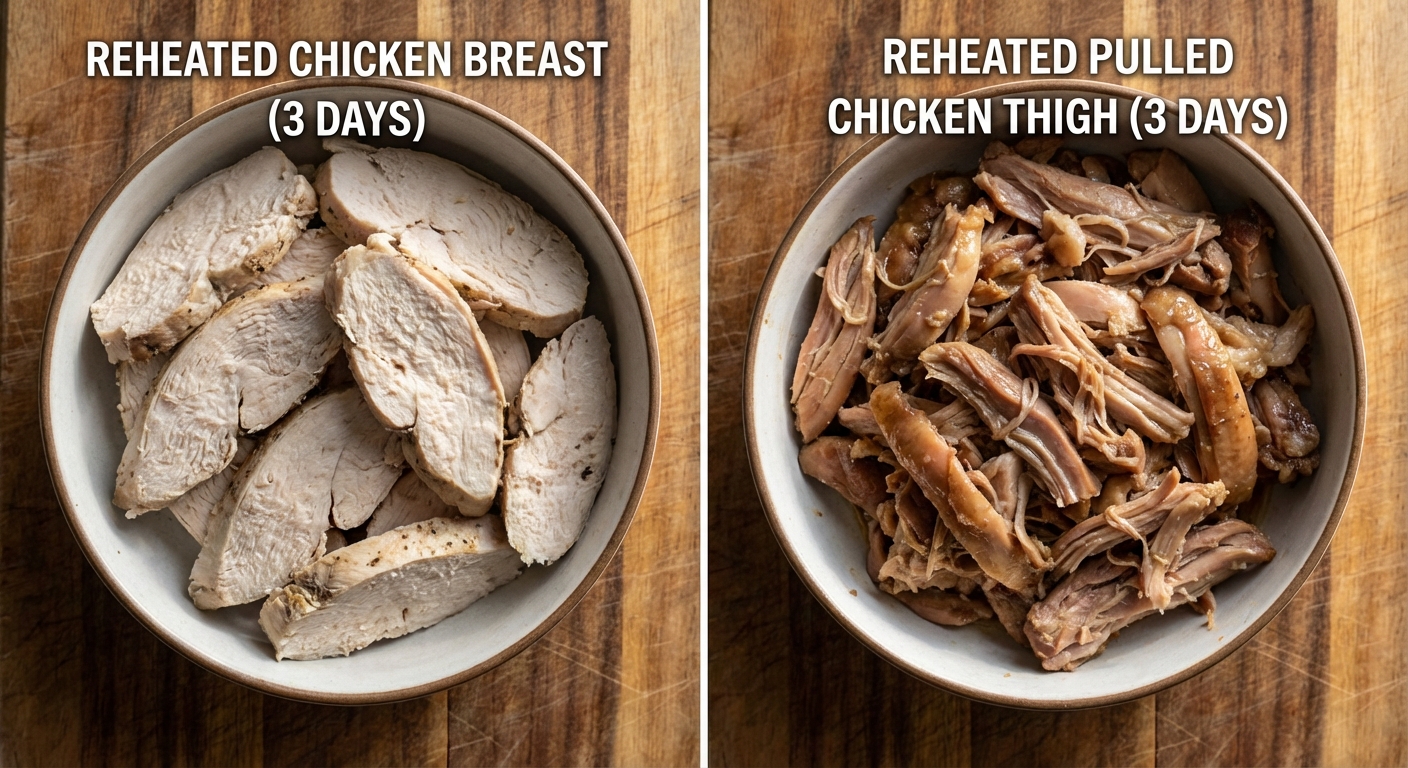
Moisture content determines whether a protein emerges from the microwave tender or resembling shoe leather. Lean proteins like chicken breast and pork loin lose moisture rapidly during initial cooking and have little margin for the additional moisture loss that reheating causes. The proteins contract, squeezing out water, and without fat or collagen to compensate, the result is dry and unpleasant.
Braised and slow-cooked proteins solve this problem through collagen conversion. Cuts from hardworking muscles, like beef chuck, pork shoulder, and chicken thighs, contain abundant connective tissue that converts to gelatin during long, moist cooking. This gelatin bastes the meat from within during reheating, maintaining juiciness even through multiple heat cycles. A pulled pork shoulder on day five will be nearly as moist as it was on day one because the gelatin continues to protect the muscle fibers.
Carbohydrate sources vary dramatically in their reheating tolerance. Pasta absorbs moisture during storage and becomes mushy; the starch swells further during microwaving, resulting in an unpleasant texture. Rice fares slightly better but often dries out or clumps. Root vegetables, by contrast, maintain structural integrity remarkably well. The dense cell walls of sweet potatoes, carrots, parsnips, and beets resist breakdown during refrigeration and reheating. Their natural sugars caramelize during roasting and continue to contribute sweetness throughout the week.
Vegetables with high water content, like zucchini, cucumber, and tomatoes, release their water during storage and become waterlogged or mushy. Greens exist on a spectrum: delicate lettuces and spinach wilt within hours, while hardy greens like kale, collards, and chard maintain their structure for days. The waxy coating on kale leaves acts as a barrier to moisture loss, and the tougher cell walls resist breakdown.
The Two-Track Cooking Strategy
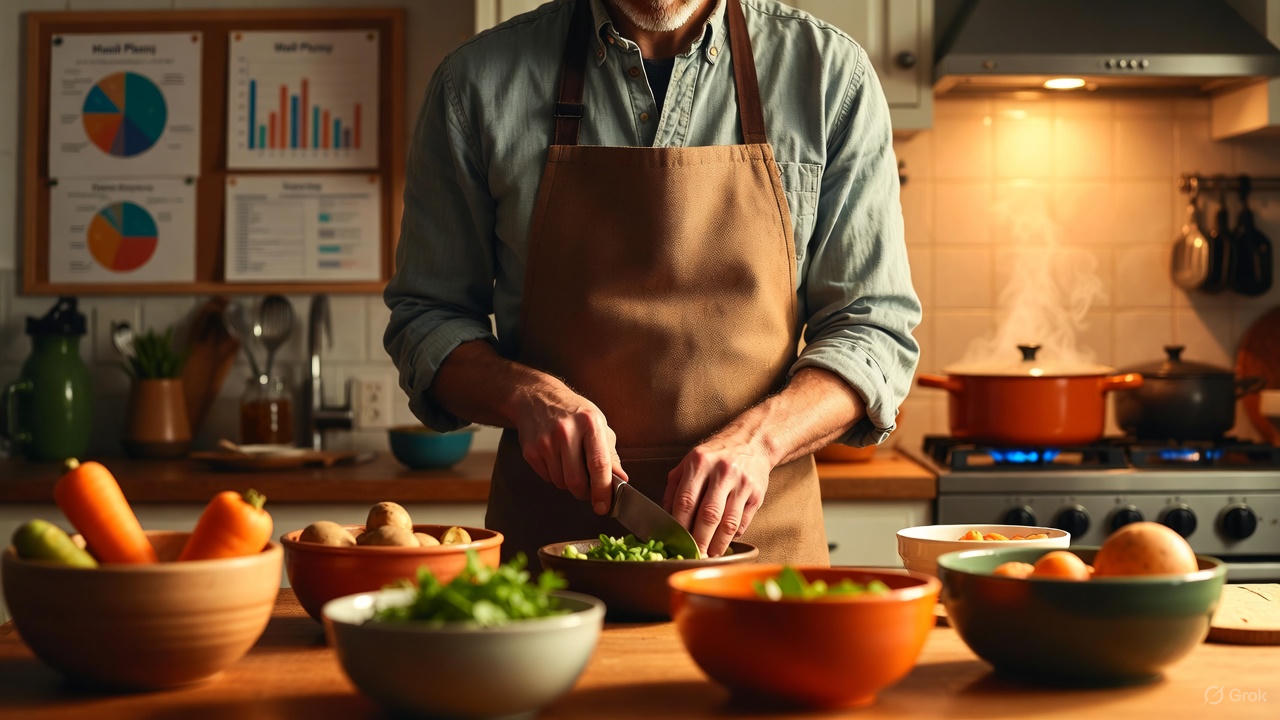
Efficient winter meal prep uses parallel processing: oven and stovetop working simultaneously to produce a full week of food in 90 minutes or less. This approach maximizes kitchen time and ensures variety without requiring multiple cooking sessions.
The oven track handles your carbohydrate base through sheet-pan roasting. Root vegetables, cut into uniform 1-inch cubes, develop sweet, caramelized exteriors while maintaining tender interiors at 400 degrees Fahrenheit. Toss sweet potatoes, carrots, parsnips, beets, or winter squash with olive oil, salt, and hardy herbs like rosemary and thyme. Spread in a single layer on sheet pans, avoiding overcrowding that causes steaming rather than roasting. Forty minutes yields vegetables that hold their texture for five days and provide complex carbohydrates, fiber, and micronutrients that processed grains cannot match.
The stovetop track handles your protein through braising or slow-cooking. Choose collagen-rich cuts that become more tender with time. Chicken thighs simmered in salsa, bone-in beef chuck braised in red wine and stock, or pork shoulder slow-cooked until it shreds create protein bases that actually improve throughout the week as flavors meld and collagen continues to break down into gelatin. Season generously at the start; braising liquids reduce and intensify, so underseasoning is a more common error than over.
A Dutch oven or heavy-bottomed pot is ideal for braising. Brown the meat in batches first to develop fond, the caramelized bits on the pan bottom that become the foundation of the braising liquid’s flavor. Deglaze with wine or stock, add aromatics (onions, garlic, carrots, celery), and enough liquid to come halfway up the meat. Cover and simmer on low for 2 to 3 hours until fork-tender.
For sturdy greens, the third component of your weekly prep, a quick stovetop sauté takes only minutes. Kale, collards, or chard wilted with garlic, finished with lemon juice, and stored separately in glass containers provide vegetable servings that reheat well and pair with any protein-carb combination. Slightly undercook them during initial preparation; they’ll finish during reheating.
Protein Calculations and Portioning
Strategic portioning during meal prep ensures each meal meets your protein targets without requiring measurement at every eating occasion. Understanding how much protein you need and preparing accordingly transforms meal prep from an approximation to a precise nutrition tool.
Current research supports 1.6 to 2.2 grams of protein per kilogram of goal body weight for those seeking to build or maintain muscle mass. For a 70-kilogram individual targeting 2 grams per kilogram, this means 140 grams of protein daily, or roughly 35 grams per meal across four eating occasions. Understanding the protein content of your prepped foods allows accurate portioning.
Chicken thighs with skin provide approximately 26 grams of protein per 100 grams of cooked meat. A 150-gram portion, easily eyeballed as the size of a deck of cards plus a bit more, delivers roughly 39 grams of protein. Beef chuck roast yields about 30 grams per 100 grams cooked. Pulled pork provides approximately 27 grams per 100 grams. For detailed protein timing strategies, our guide on strategic protein distribution covers optimal meal frequency and distribution patterns.
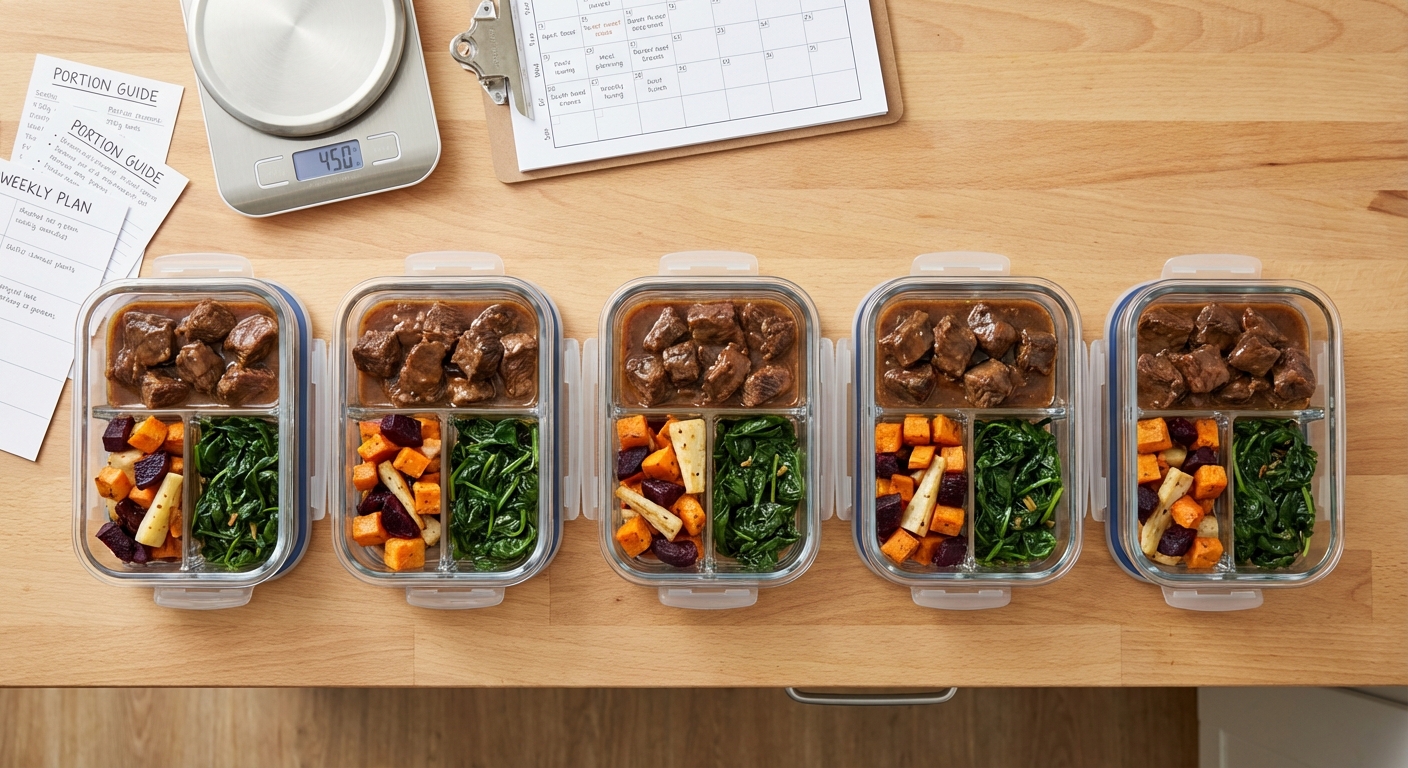
Portion into individual containers at the end of your prep session rather than storing in bulk and portioning later. This eliminates the friction of scooping and measuring when you’re hungry, reduces contamination from repeated opening of containers, and provides visual clarity about whether you’re on track for the week. Five identical containers in the refrigerator represent five ready lunches; when three are gone, you know exactly where you stand.
A complete meal prep container for most nutrition goals includes: 150-200 grams of braised protein (35-50g protein), 150-200 grams of roasted root vegetables (30-40g carbohydrates, plus fiber), and 100 grams of cooked greens (minimal calories, micronutrients and fiber). This combination provides satiety, balanced macronutrients, and nutrients that support energy and recovery.
The Flavor Variety System
Eating the same meal five days in a row tests anyone’s willpower. The solution isn’t preparing five different meals, which defeats the efficiency purpose of meal prep, but using sauces and finishing elements to transform a single base into multiple flavor profiles.
Your Sunday prep produces a base: shredded or cubed braised protein, roasted root vegetables, and cooked greens. This base is intentionally neutral in seasoning, providing a foundation that different flavor additions can transform. The base remains consistent; the experience changes daily.
A Mexican profile adds salsa, fresh avocado slices, cilantro, and a squeeze of lime. The same chicken that started the week becomes an entirely different eating experience. On Tuesday, a Mediterranean profile employs feta cheese, olives, sun-dried tomatoes, and fresh lemon juice. Wednesday might bring an Asian influence: soy sauce, sesame oil, sriracha, and sliced scallions.
Store sauces and finishing elements separately from the base meals. A small container of tahini lemon dressing, a jar of salsa, a squeeze bottle of soy-sesame sauce, and containers of fresh herbs provide a week’s worth of variety with minimal additional prep time. These can be prepared during your main cooking window or purchased ready-made without compromising the integrity of the approach.
The psychological impact of variety shouldn’t be underestimated. Studies on dietary adherence consistently show that monotony predicts failure. The perception of choice, even when the underlying ingredients are identical, maintains motivation throughout the week. You’re not eating “Tuesday’s meal prep”; you’re eating a Mediterranean grain bowl.
Storage Science and Food Safety
How you store prepared food matters as much as how you cook it. Improper storage accelerates spoilage, degrades texture, and creates food safety risks that can derail your best meal prep intentions.
Never put hot food directly into the refrigerator. The heat raises the internal refrigerator temperature, potentially bringing other stored foods into the “danger zone” between 40 and 140 degrees Fahrenheit where bacteria multiply rapidly. Allow prepared food to cool to room temperature on the counter for no more than two hours before sealing containers and refrigerating. Spreading food in shallow containers accelerates cooling compared to deep vessels where the center stays hot longer.
Glass containers are strongly preferred over plastic for several reasons. First, they don’t absorb colors or odors from foods, maintaining their usefulness over years of use. Second, glass doesn’t warp in the microwave or leach chemicals when heated. Research published in Environmental Health Perspectives identified that heating fatty foods in plastic containers causes measurable migration of endocrine-disrupting compounds into food. Third, glass containers allow visual inspection of contents without opening, and their weight and feel signal “real food” rather than “sad desk lunch.”
Properly stored braised proteins maintain quality for 5 days in the refrigerator. Roasted vegetables last 4 to 5 days. Cooked greens should be consumed within 4 days. These windows determine the maximum practical scope of a single prep session for a single person; couples or families may need to prep twice weekly or freeze portions.
Freezing extends the useful life of prepared meals to 2 to 3 months. Braised proteins freeze particularly well because the gelatin protects texture during freezing and thawing. Root vegetables maintain acceptable quality when frozen, though texture degrades slightly compared to fresh preparation. Cooked greens become limp and watery after freezing and are better prepared fresh each week. Label frozen containers with contents and date; unlabeled mystery containers accumulate and go to waste.
The Practical Sunday Timeline
A sample 90-minute prep session illustrates how parallel processing produces a full week of food. This timeline assumes you’ve done minimal advance prep: grocery shopping completed, and ingredients washed.
The session begins with protein browning. While the Dutch oven heats, cube your beef chuck or season your chicken thighs. Brown the protein in batches, transferring to a plate while you build the braising liquid. Fifteen minutes of active work gets the protein simmering; it then requires no attention for 2 hours.
With the protein cooking, turn to the oven. Preheat to 400 degrees while you peel and cube root vegetables. Toss with olive oil and seasonings, spread on sheet pans, and into the oven. The vegetables will be done before the meat, but that’s fine; they can cool on the counter while the protein finishes.
The gap while protein braises and vegetables roast is productive time. Wash and prep greens for sautéing later. Prepare sauces and dressings. Clean as you go. When the vegetables emerge from the oven, immediately start sautéing greens in a large pan; this takes 5 to 10 minutes.
In the final 30 minutes, pull the finished protein from the braising liquid, shred or cube it, and portion into containers. Add roasted vegetables and greens to each container. Allow to cool, then seal and refrigerate.
The result: five days of balanced, satisfying meals that require only reheating. Total hands-on time is closer to 60 minutes; the rest is passive cooking time you can spend on other Sunday activities. For more time-efficient approaches, our meal prep systems guide covers advanced batching techniques.
The Bottom Line
Winter meal prep succeeds when you work with the physical realities of refrigeration and reheating rather than fighting them. Lean proteins dry out; choose collagen-rich cuts that improve with time. Delicate greens wilt; choose hardy brassicas that maintain structure. Pasta becomes mushy; choose root vegetables that hold their texture.
The investment of 90 minutes on Sunday returns hours throughout the week, reduces food spending by eliminating impulse purchases and takeout, and ensures that nutrition targets are met regardless of how chaotic weekday evenings become. The approach isn’t glamorous, but it works. That container of beef stew you heat up at your desk might not Instagram as well as a restaurant meal, but it serves your body better and costs a fraction of the price.
Your Sunday Prep Checklist:
- Choose a collagen-rich protein (chicken thighs, beef chuck, pork shoulder) and purchase 2 pounds
- Select 3 to 4 varieties of root vegetables for sheet-pan roasting (aim for 3 pounds total)
- Buy 2 bunches of hardy greens (kale, collards, or chard)
- Prepare 2 to 3 different sauces or finishing elements for variety
- Invest in quality glass containers with secure lids
- Block 90 uninterrupted minutes on Sunday afternoon
- Portion into individual containers before refrigerating
Sources: Food science research on protein moisture retention, USDA food safety guidelines for storage and reheating, Journal of the Academy of Nutrition and Dietetics protein distribution research, behavioral psychology studies on dietary adherence and variety.