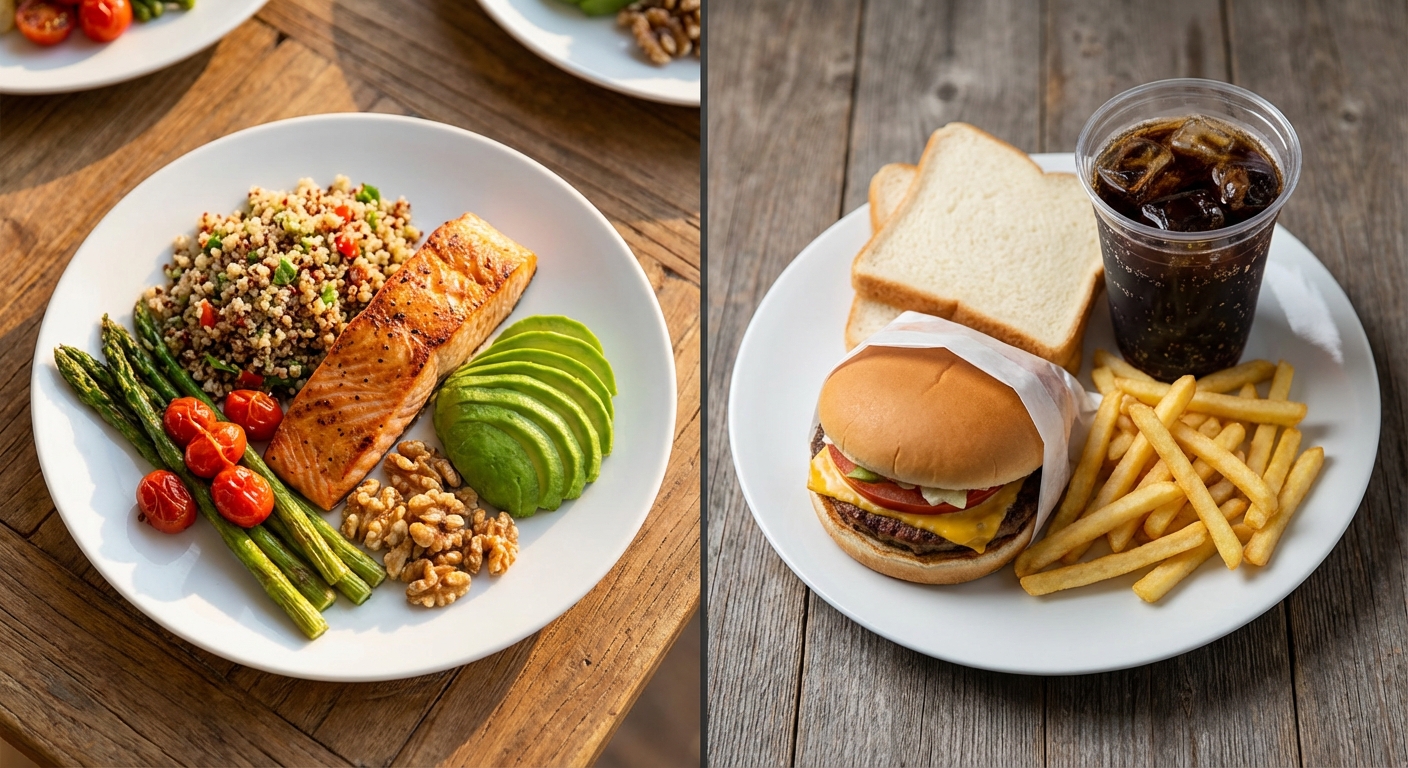
The average American consumes 4,500 calories on Thanksgiving Day alone, according to the Calorie Control Council. Yet the real nutrition disaster isn’t the calorie count itself, but how those calories are distributed. Most holiday meals front-load carbohydrates and fats while relegating protein to a single main course, creating a metabolic environment that favors fat storage over muscle preservation.
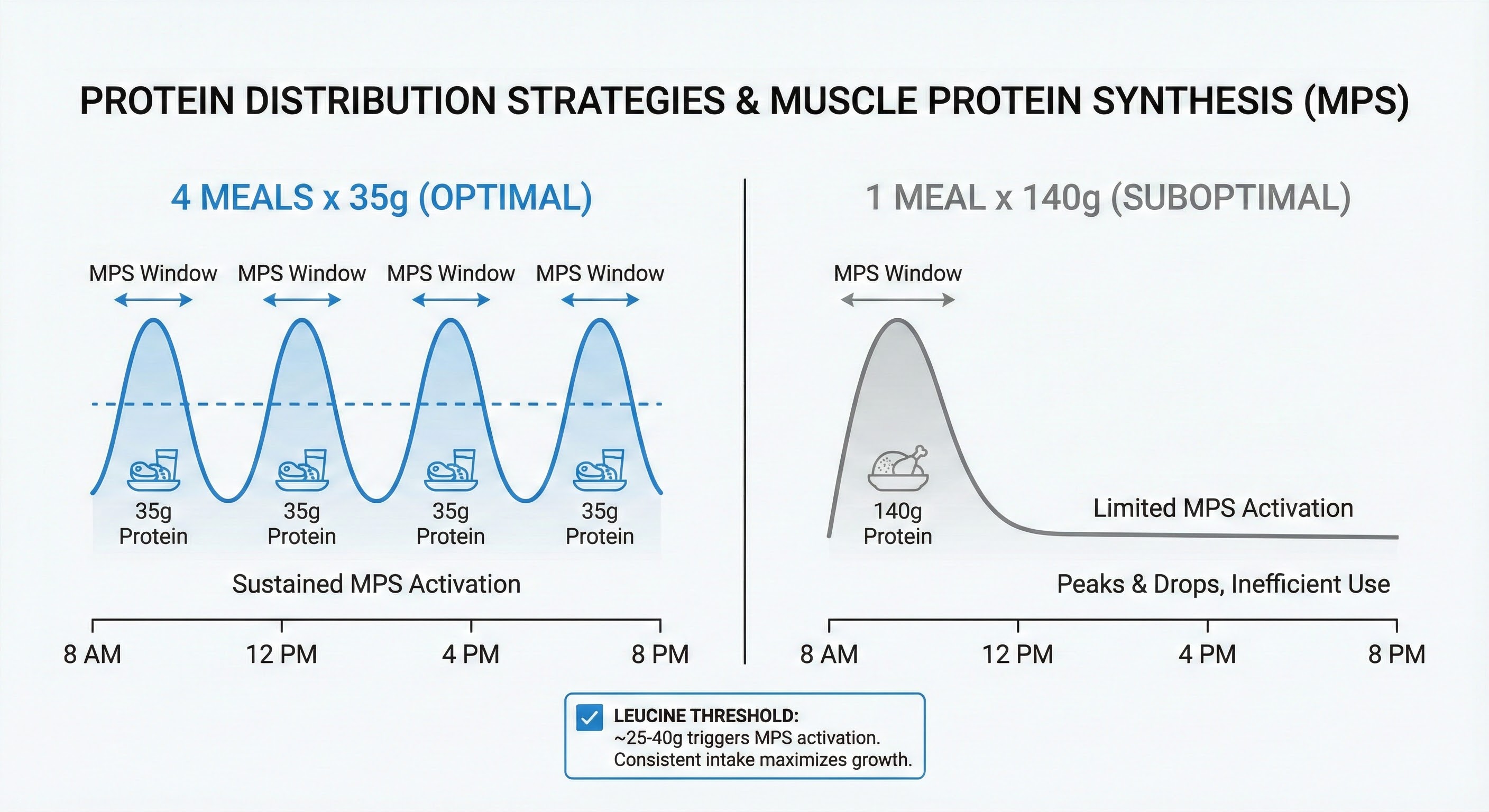
Research published in the Journal of Nutrition demonstrates that protein distribution matters as much as total intake for maintaining lean body mass. Dr. Doug Paddon-Jones at the University of Texas Medical Branch has shown that consuming 25 to 40 grams of protein at each meal triggers maximal muscle protein synthesis, while consuming the same total protein in one large meal provides diminishing returns. During the holiday season, when schedules shift and meals become unpredictable, strategic protein distribution becomes your most powerful tool for maintaining body composition.
In our clinical nutrition practice, we’ve observed that patients who maintain protein distribution during the November-December holiday period lose significantly less lean mass compared to those who abandon their usual eating patterns. The challenge intensifies when you consider that holiday gatherings often feature protein-rich foods served at odd times, surrounded by appetizers and desserts that can easily displace the protein your body needs. Understanding how to navigate these situations requires both nutritional knowledge and practical strategies.
The Leucine Threshold and Why Timing Matters
Muscle protein synthesis doesn’t respond linearly to protein intake. Instead, research from the American Journal of Clinical Nutrition reveals a threshold effect centered on the amino acid leucine. To maximize the anabolic response, each meal needs to deliver approximately 2.5 to 3 grams of leucine, which typically translates to 25 to 40 grams of high-quality protein depending on the source.
Dr. Layne Norton’s research at the University of Illinois demonstrated that spacing protein intake across multiple meals produces superior muscle protein synthesis compared to consuming the same total protein in fewer, larger servings. This phenomenon, sometimes called the “muscle-full effect,” explains why a single 80-gram protein serving at dinner cannot compensate for protein-free meals earlier in the day. For a deeper exploration of these timing mechanisms, see our guide on protein timing for optimal muscle synthesis.
During holiday seasons, this becomes particularly relevant. A breakfast of coffee and Christmas cookies followed by an appetizer-heavy afternoon leaves your body in a catabolic state for hours, even if dinner includes a generous portion of prime rib. The muscle protein synthesis window remains closed until sufficient leucine reaches your bloodstream, and by then, opportunities for optimal distribution have passed.
The practical implication is straightforward: front-load your protein on days when large evening meals are planned. A protein-rich breakfast and lunch ensure you’ve already met most of your daily needs before the holiday feast begins.
Optimal Protein Targets for Holiday Seasons
The International Society of Sports Nutrition recommends 1.6 to 2.2 grams of protein per kilogram of body weight for individuals looking to maintain or build muscle mass. For a 75-kilogram person, this translates to 120 to 165 grams daily. During the holiday season, when physical activity often decreases and caloric intake increases, staying at the higher end of this range becomes strategically important.
Dividing this into four protein-rich eating occasions provides approximately 30 to 40 grams per meal. Here’s how this might look across a typical holiday day:
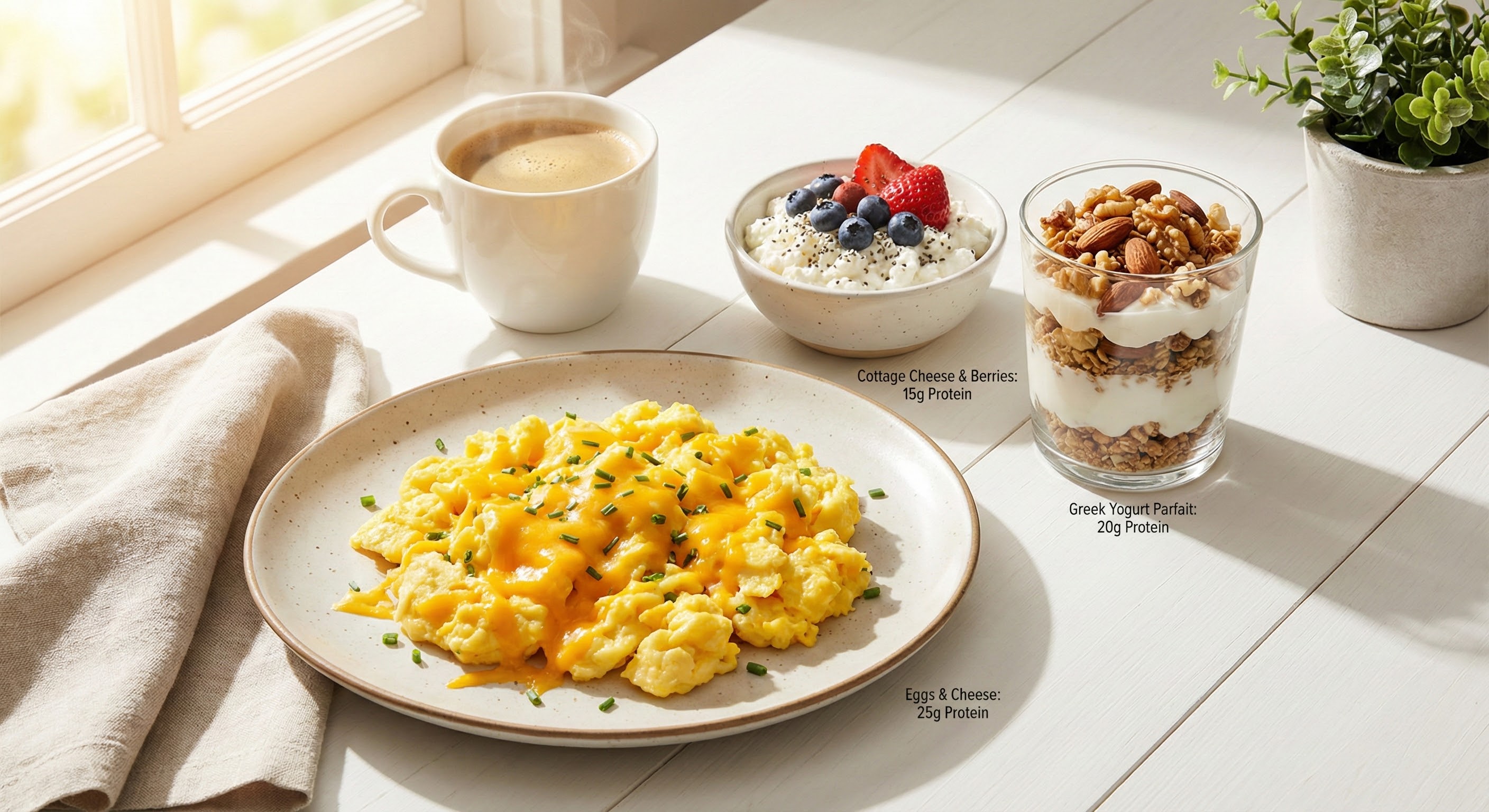
Morning (7 to 9 AM): 35 grams from Greek yogurt with nuts or eggs with cheese Midday (12 to 2 PM): 35 grams from leftover turkey, deli meats, or a protein shake Afternoon gathering (4 to 6 PM): 25 grams from shrimp cocktail, cheese selections, or smoked salmon Evening meal (7 to 9 PM): 40+ grams from the main protein course
This distribution ensures you’ve consumed approximately 95 grams of protein before the main holiday dinner even begins. The evening meal then becomes a bonus rather than your sole protein source.
For older adults concerned about age-related muscle loss, our comprehensive guide on strength training and muscle preservation after 50 provides additional strategies that complement protein timing for maintaining lean mass during periods of disrupted routine.
Best Protein Sources for Holiday Gatherings
Holiday parties typically feature several high-protein options hidden among the carbohydrate-heavy appetizers and desserts. Knowing which choices deliver the most protein per serving allows you to make strategic selections without appearing antisocial or overly restrictive.
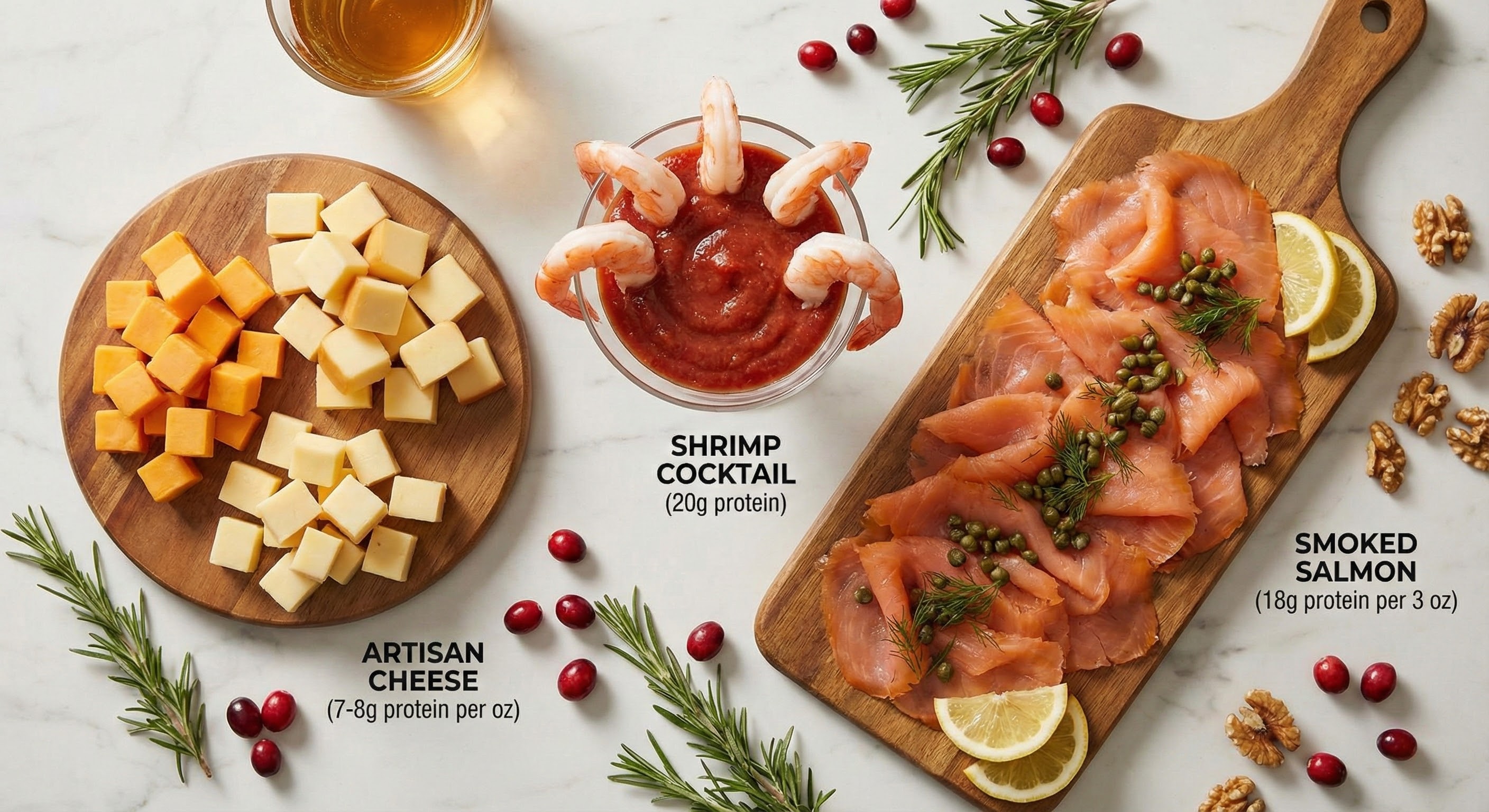
Shrimp cocktail delivers approximately 20 grams of protein per 10 large shrimp, with negligible fat and carbohydrates. This makes it one of the most protein-dense appetizer options available. Smoked salmon provides roughly 16 grams per 3-ounce serving, along with omega-3 fatty acids. Cheese cubes, often overlooked, contribute 7 grams per ounce of hard cheese like cheddar or Gouda.
For main courses, roasted turkey breast offers approximately 25 grams per 3-ounce serving with minimal fat if you choose white meat without skin. Prime rib provides similar protein with higher fat content. Ham delivers about 18 grams per 3-ounce portion, though sodium content tends to be elevated.
The key is building your plate around these protein sources first, then adding vegetables and starches as accompaniments. This reverses the typical approach of filling up on rolls and mashed potatoes before reaching the turkey.
Managing Appetite and Satiety
Protein’s effect on satiety hormones makes it a powerful tool for preventing holiday overeating. Research from the University of Washington found that increasing protein intake from 15% to 30% of calories reduced spontaneous caloric intake by approximately 441 calories per day without requiring conscious restriction.
This satiety effect stems from protein’s influence on gut hormones, particularly GLP-1 and PYY, which signal fullness to the brain. A 2024 study in the journal Appetite demonstrated that high-protein meals produced sustained reductions in ghrelin, the hunger hormone, for up to four hours post-meal.
Applying this research to holiday eating suggests a practical strategy: consume a protein-rich snack 30 to 60 minutes before attending gatherings. A protein shake, Greek yogurt, or handful of nuts can significantly reduce the drive to overeat appetizers. This isn’t about restriction but about arriving at social situations without the intense hunger that leads to poor food choices.
The timing matters because protein digestion takes longer than carbohydrates. Starting with protein at each eating occasion creates a satiety buffer that naturally moderates intake of less nutrient-dense options.
Sample Holiday Day Protocol
The following protocol demonstrates how to distribute protein strategically across a day culminating in an evening holiday dinner:
6:30 AM: Wake with 8 ounces of water 7:00 AM: Breakfast with 3 eggs scrambled with cheese (28g protein), side of cottage cheese (14g protein) 10:30 AM: Mid-morning snack of beef jerky or protein bar (15-20g protein) 1:00 PM: Lunch with leftover turkey or chicken breast on salad (30g protein) 4:00 PM: Pre-party protein shake (25g protein) 6:00 PM at party: Focus on shrimp, cheese, smoked salmon appetizers (20-25g protein) 8:00 PM dinner: Moderate portion of main protein (35-40g protein)
This distribution delivers approximately 170 grams of protein across the day while accounting for typical holiday schedules. The pre-party protein shake serves as insurance against arriving hungry and making impulsive choices.
Notice that the largest protein servings occur before the evening meal. This counterintuitive approach ensures you’ve met most of your protein needs even if the dinner conversation or social dynamics limit your main course intake.
Special Considerations for Different Dietary Patterns
Those following plant-based diets face additional challenges during holiday gatherings, where protein options may be limited. Combining incomplete proteins throughout the day, such as beans with rice or hummus with pita, ensures adequate amino acid availability. Plant-based protein powders made from pea, rice, or hemp can provide concentrated protein when whole food options are scarce.
Individuals using GLP-1 medications like semaglutide or tirzepatide need to prioritize protein even more carefully. These medications reduce appetite significantly, making it essential to front-load protein when eating occurs. Research from Dr. Caroline Apovian at Harvard Medical School suggests that patients on GLP-1 medications should aim for the higher end of protein recommendations to prevent muscle loss during weight reduction. For comprehensive strategies on maintaining nutrition while using these medications, see our dedicated guide on protein timing for GLP-1 users.
Older adults, particularly those over 65, require approximately 1.2 grams per kilogram of body weight as a minimum, with evidence supporting even higher intakes of 1.6 grams per kilogram or more for maintaining muscle mass. The anabolic resistance that occurs with aging means each meal needs sufficient protein to overcome this threshold. We’ve observed in our practice that older patients who maintain protein distribution during holiday periods experience significantly less strength decline compared to those who allow protein intake to become erratic.
The Bottom Line
Strategic protein distribution during holiday seasons isn’t about restriction or missing out on celebration foods. It’s about ensuring your body receives the amino acids it needs throughout the day, regardless of when the main meal occurs. By consuming 25 to 40 grams of protein at each eating occasion, front-loading protein earlier in the day, and strategically selecting protein-rich options at gatherings, you maintain muscle mass while enjoying holiday traditions.
The research is clear: total daily protein matters, but distribution matters equally. A 150-gram protein day concentrated in one evening meal produces inferior muscle protein synthesis compared to the same 150 grams spread across four meals. This holiday season, prioritize protein at every eating occasion, and let the strategic distribution do the metabolic work for you.
Next Steps:
- Calculate your daily protein target (1.6 to 2.2g per kg of body weight)
- Divide this into 4 meals of 25 to 40 grams each
- Front-load protein on days with evening holiday meals
- Consume a protein-rich snack before attending gatherings
- Build your plate around protein sources first at buffets and parties
Sources: Journal of Nutrition protein distribution research, American Journal of Clinical Nutrition leucine threshold studies, International Society of Sports Nutrition Position Stand on Protein, University of Texas Medical Branch (Dr. Doug Paddon-Jones), University of Illinois (Dr. Layne Norton), University of Washington satiety studies, Appetite journal GLP-1 and ghrelin research (2024), Harvard Medical School GLP-1 and muscle preservation (Dr. Caroline Apovian).