The advice to “eat more fermented foods” has become standard nutritional guidance, repeated by doctors, dietitians, and wellness influencers alike. But treating all fermented foods as interchangeable “probiotics” misses the point entirely. The bacterial strains in yogurt are fundamentally different from those in kimchi, which are different from those in kefir, and each performs distinct functions in the ecosystem of your gut.
A landmark 2021 study from Stanford University, published in Cell, demonstrated this specificity dramatically. Researchers assigned participants to either a high-fermented-food diet or a high-fiber diet for ten weeks. The fermented food group showed significantly increased microbiome diversity and marked reductions in 19 inflammatory markers, including interleukin-6, a key driver of chronic disease. The high-fiber group showed no such improvements in inflammatory markers, despite fiber being the conventional recommendation for gut health.
The takeaway isn’t that fiber doesn’t matter, it does. The insight is that fermented foods offer something unique: live microbial communities that actively reshape your gut ecosystem in ways that fiber alone cannot accomplish. But which fermented foods, and which bacterial strains, deliver the benefits you’re seeking? The answer depends on understanding what each fermentation tradition offers.
Why Diversity Trumps Quantity
Your gut microbiome contains trillions of bacteria representing hundreds of different species. This diversity isn’t just interesting, it’s functionally critical. Different bacterial species perform different metabolic tasks: breaking down specific fibers, producing particular vitamins, competing with pathogens, training immune cells, and generating neurotransmitter precursors.
A diverse microbiome is a resilient microbiome. When you have many species present, the loss or reduction of any single species has less impact because other bacteria can compensate. Conversely, a microbiome dominated by just a few species is fragile, susceptible to disruption from antibiotics, dietary changes, or invading pathogens.
Eating the same yogurt every day provides the same few bacterial strains repeatedly. You’re not building diversity; you’re just replenishing the same narrow population. The Stanford study found that participants who ate a variety of fermented foods, rotating between different sources, achieved greater increases in microbiome diversity than those who ate larger quantities of a single fermented food.
This principle should guide your approach: variety matters more than volume. Rather than consuming a lot of one fermented food, consume moderate amounts of several different types. Each fermentation substrate, whether dairy, cabbage, tea, or soy, encourages the growth of different microbial families. By rotating sources, you seed your gut with a broader spectrum of beneficial organisms.

Kefir: The Probiotic Powerhouse
If you could choose only one fermented food, kefir would be the strongest candidate. This tangy, drinkable cultured milk product originated in the Caucasus Mountains and offers probiotic density that dwarfs virtually every other fermented food or supplement.
Standard yogurt typically contains two to four bacterial strains, usually Lactobacillus bulgaricus and Streptococcus thermophilus, sometimes with added Lactobacillus acidophilus or Bifidobacterium. Kefir, by contrast, is fermented using kefir “grains,” complex symbiotic communities containing 30 to 60 different species of bacteria and beneficial yeasts. The microbial diversity in a single serving of kefir exceeds what most probiotic supplements provide.
The numbers are striking. A cup of quality kefir can contain 150 to 300 billion colony-forming units (CFUs). A typical probiotic supplement contains 10 to 50 billion CFUs, and questions persist about how many of those organisms survive manufacturing, shelf storage, and stomach acid to reach the intestines alive. Kefir delivers living organisms in a food matrix that helps protect them during transit.
Beyond quantity, kefir contains strains with demonstrated functional benefits. Lactobacillus kefiri, found only in kefir, has been shown to inhibit the growth of harmful bacteria including Salmonella, E. coli, and Helicobacter pylori. Other kefir strains produce antimicrobial compounds that help reshape the gut environment in favor of beneficial organisms.
Research published in the Journal of the American Dietetic Association found that kefir consumption improved lactose digestion even in lactose-intolerant individuals, suggesting its bacterial populations help break down lactose more effectively than the bacteria in standard yogurt. If dairy intolerance has kept you away from fermented dairy, kefir may be worth testing.
How to use it: Start with 4-6 ounces daily and increase gradually. Plain, unsweetened kefir is preferable to flavored versions, which often contain added sugars that feed less beneficial bacteria. It works as a smoothie base, poured over granola, or consumed straight. Look for brands that list specific strains on the label, indicating a more intentional formulation.
Sauerkraut: The Synbiotic
Sauerkraut, simple fermented cabbage, is technically a “synbiotic” food, meaning it contains both probiotic bacteria and the prebiotic fiber those bacteria need to thrive. You’re delivering the organisms and their food source simultaneously, which may enhance survival and colonization.
The fermentation of cabbage proceeds through distinct phases. Early fermentation is dominated by Leuconostoc mesenteroides, which initiates the acidification that prevents spoilage. As pH drops, Lactobacillus plantarum becomes dominant. This species is among the most studied probiotic organisms, with research demonstrating benefits for immune regulation, reduction of gut permeability (“leaky gut”), and competitive inhibition of pathogenic bacteria.
A 2019 study in Frontiers in Microbiology found that L. plantarum strains from fermented vegetables could survive gastric transit and transiently colonize the human gut, influencing immune function and reducing markers of inflammation. Unlike many probiotic organisms that pass through without establishing residence, vegetable-derived lactobacilli appear to interact meaningfully with the intestinal environment.
The critical caveat: You must buy raw, unpasteurized sauerkraut, typically found in the refrigerated section of grocery stores. Brands like Bubbies, Farmhouse Culture, and Wildbrine are genuinely fermented and contain live cultures. The shelf-stable jars in the condiment aisle have been heat-processed, killing all beneficial bacteria. You’re left with a tangy condiment that offers fiber but no probiotic benefit. Check the label: it should say “raw,” “unpasteurized,” or “contains live cultures,” and it should require refrigeration.
How to use it: A few forkfuls with meals is sufficient, roughly two to four tablespoons. It pairs well with proteins, as the acidity aids digestion. Avoid heating it, which kills the beneficial organisms. Add it to plates after cooking is complete.

Kimchi: The Metabolic Optimizer
Kimchi, the Korean fermented vegetable preparation, adds layers of complexity beyond simple sauerkraut. The base is typically napa cabbage, but the fermentation also incorporates garlic, ginger, scallions, fish sauce, and gochugaru (Korean red pepper flakes). Each additional ingredient brings its own bioactive compounds and influences which bacterial species dominate the fermentation.
The bacterial profile of kimchi overlaps with sauerkraut, Lactobacillus plantarum and Leuconostoc species are present, but kimchi also contains Lactobacillus kimchii, a species unique to this preparation. Research on kimchi-specific strains has found associations with improved insulin sensitivity, enhanced fat oxidation, and beneficial effects on cholesterol profiles.
A 2011 study in Nutrition Research found that fermented kimchi consumption for four weeks significantly reduced body weight, body mass index, and body fat percentage in overweight subjects compared to fresh, unfermented kimchi. The fermentation process itself appears to generate compounds that influence metabolism, beyond what the raw vegetables provide.
The capsaicin from gochugaru adds a mild thermogenic effect, temporarily increasing metabolic rate. The garlic provides prebiotic fructans that feed beneficial bacteria. The ginger offers anti-inflammatory compounds. Kimchi isn’t just a probiotic delivery vehicle; it’s a complex food that delivers multiple bioactive components simultaneously.
How to use it: Like sauerkraut, a few tablespoons per meal is adequate. Kimchi is more intensely flavored, so it may require an adjustment period if you’re not accustomed to spicy, pungent foods. It complements rice dishes, appears in Korean stews and pancakes, and works surprisingly well with eggs. Again, avoid heating if you want to preserve probiotic content.
Kombucha: The Gateway Ferment
Kombucha, fermented tea, has become the most commercially successful fermented food in recent years. It’s approachable, mildly sweet, slightly effervescent, and widely available. However, it’s generally less probiotic-dense than dairy or vegetable ferments and requires more careful selection to avoid products that are essentially sweetened tea marketed as health food.
True kombucha is fermented using a SCOBY (symbiotic culture of bacteria and yeast), which metabolizes sugar and tea to produce organic acids, B vitamins, and small amounts of alcohol. The bacterial profile includes Acetobacter species and Gluconobacter, along with yeasts like Saccharomyces. These organisms produce gluconic acid, which has been studied for potential liver support and antioxidant effects.
The challenge with commercial kombucha is sugar content. The bacteria and yeast consume sugar during fermentation, but many brands add fruit juice or additional sweeteners after fermentation for palatability. Some kombucha products contain 15-20 grams of sugar per bottle, undermining the potential metabolic benefits. Look for brands with less than 4 grams of sugar per serving and verify that the label indicates live cultures (some products are pasteurized after fermentation).
How to use it: Kombucha works as an alternative to soda or as a digestive aid with meals. One serving (8-12 ounces) daily is reasonable. Be aware that kombucha contains trace amounts of alcohol (typically 0.5% or less in commercial products, more in home-brewed versions) and caffeine from the tea base.
The Prebiotic Partnership
Probiotics need food to survive and multiply. Eating fermented foods without adequate fiber is like planting seeds in sterile soil. The bacteria may pass through your system without establishing residence or producing meaningful metabolic effects.
Prebiotic fibers, non-digestible carbohydrates that reach the colon intact and feed beneficial bacteria, dramatically enhance the effects of probiotic foods. When bacteria ferment these fibers, they produce short-chain fatty acids (SCFAs) like butyrate, propionate, and acetate. Butyrate in particular is the primary fuel source for colonocytes (colon lining cells) and has been shown to reduce inflammation, strengthen the gut barrier, and potentially protect against colorectal cancer.
Strategic pairings maximize benefits:
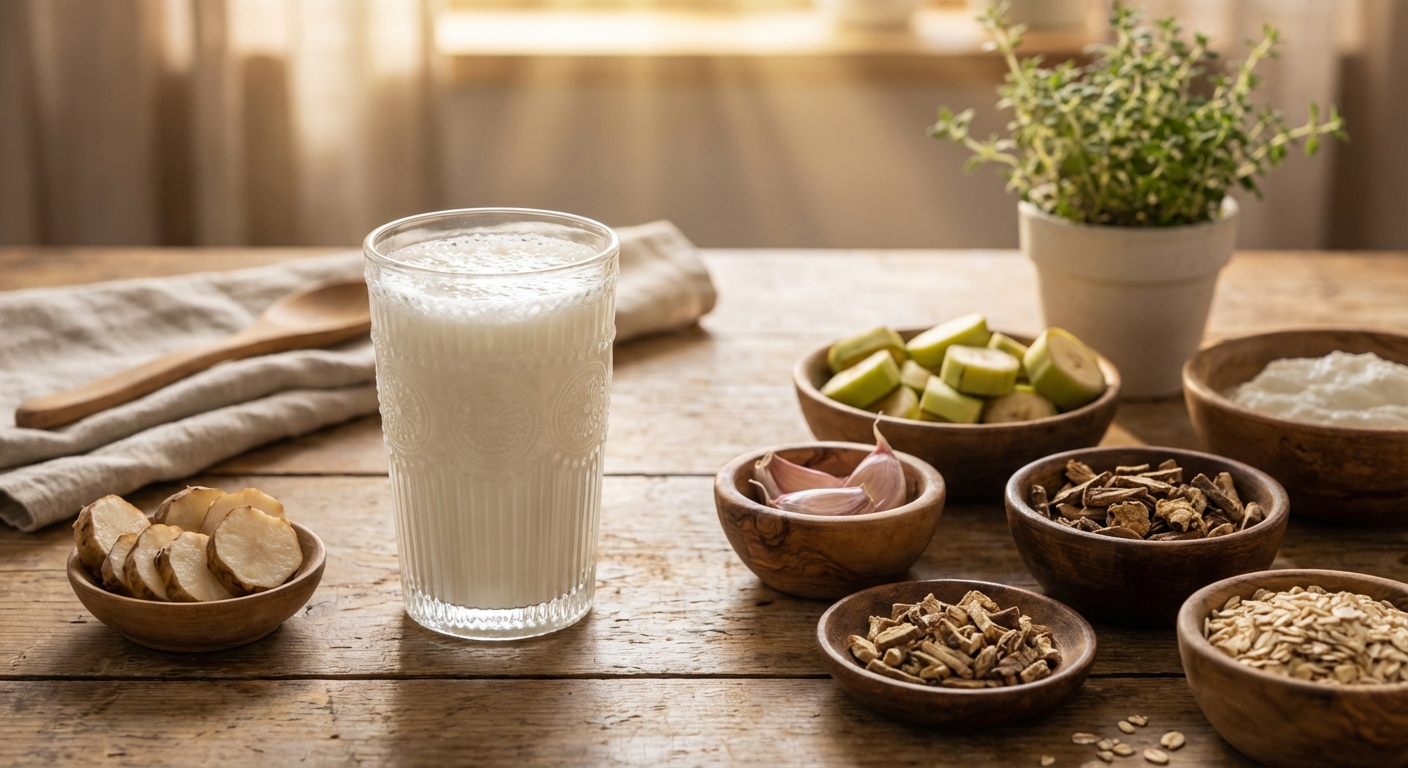
- Kefir + green banana or plantain (resistant starch feeds bacteria, SCFAs produced)
- Sauerkraut + onions and garlic (inulin and fructans provide prebiotic fuel)
- Kimchi + cold rice (cooled rice develops resistant starch)
- Yogurt + oats (beta-glucan fiber feeds beneficial species)
The combination of probiotic organisms with their preferred food sources creates conditions for these bacteria to thrive rather than simply transit through your system.

Dosing and Rotation Strategy
More isn’t necessarily better with fermented foods. They’re biologically active, and introducing too much too quickly, especially if your gut isn’t accustomed to these organisms, can cause bloating, gas, and digestive discomfort as your microbiome adjusts.
Start conservatively: Begin with one serving of one fermented food daily for a week. A “serving” is approximately 4-6 ounces of kefir or kombucha, or 2-4 tablespoons of sauerkraut or kimchi. If you tolerate this well, add a second fermented food the following week. Gradual introduction allows your gut ecosystem to adapt without dramatic disruption.
Rotate sources: The goal is diversity. Rather than eating kefir every day forever, rotate between different fermented foods throughout the week. Monday: kefir. Tuesday: kimchi with dinner. Wednesday: sauerkraut. Thursday: kombucha. This rotation exposes your gut to a broader range of bacterial species than any single fermented food can provide.
Consistency matters more than quantity: A small amount of fermented food daily or every other day delivers better results than occasional large servings. The organisms need regular reinforcement to maintain presence in your gut; sporadic consumption doesn’t allow populations to establish.
Supplements vs. Whole Foods
Probiotic supplements are a multi-billion dollar industry, but they face significant challenges that whole fermented foods avoid. First, many probiotic organisms die during manufacturing, shipping, and storage. By the time you take the capsule, the “50 billion CFU” on the label may have diminished substantially. Fermented foods contain living organisms in their natural environment, protected by the food matrix.
Second, supplements typically contain isolated strains, often just one to ten species. Fermented foods contain complex communities, dozens of species interacting synergistically. These communities may offer emergent benefits that isolated strains cannot replicate.
Third, supplements are expensive. A quality probiotic runs $30-60 per month. For the same cost, you can buy kefir, sauerkraut, kimchi, and kombucha, obtaining orders of magnitude more organisms from diverse sources in whole food form.
Supplements have their place, particularly for targeting specific conditions with specific strains under clinical guidance. But for general gut health and microbiome diversity, whole fermented foods are more effective, more economical, and more supported by research.
The Bottom Line
Fermented foods aren’t interchangeable “probiotics.” Each fermentation tradition cultivates distinct bacterial communities that perform different functions in your gut. Kefir offers unmatched probiotic density and strain diversity. Sauerkraut delivers vegetable-derived lactobacilli with immune-modulating properties. Kimchi adds metabolic benefits from its unique bacterial species and bioactive ingredients. Kombucha provides an accessible entry point with organic acids and B vitamins.
The strategy isn’t to find the “best” fermented food and consume it exclusively. It’s to rotate among multiple sources, pair them with prebiotic fibers, and maintain consistent moderate intake over time. Your microbiome doesn’t need a probiotic pill; it needs a diverse community of organisms that have co-evolved with humans over thousands of years, delivered in the food forms that keep them alive and active. Learn more about gut health fundamentals and how fiber supports your microbiome.
Your Next Steps:
- Start with kefir – The highest probiotic density in a single food
- Add raw sauerkraut or kimchi – Check labels for “raw” and “refrigerated”
- Rotate weekly – Aim for 3-4 different fermented foods each week
- Pair with prebiotic fiber – Onions, garlic, bananas, oats, cooled rice
- Be patient – Microbiome changes take weeks to months, not days
Sources: Cell (2021) Stanford fermented foods study, Journal of the American Dietetic Association kefir and lactose digestion, Frontiers in Microbiology (2019) L. plantarum colonization, Nutrition Research (2011) kimchi and metabolic effects, Dr. Justin Sonnenburg (Stanford) microbiome research.