The holiday season presents a unique metabolic challenge that extends far beyond simple calorie counting. From late November through early January, the average American attends seven to twelve social events centered around food and alcohol. These gatherings rarely conform to regular meal schedules, often featuring hors d’oeuvres at 4 PM, dinner at 8 PM, and dessert at 10 PM. The cumulative effect of six weeks of disrupted eating patterns, late-night consumption, and constant grazing creates metabolic chaos that a single gym session cannot correct.
Intermittent fasting, more accurately termed Time-Restricted Eating (TRE), offers a structural solution to this seasonal challenge. Rather than attempting to track every canape and cocktail, TRE establishes temporal boundaries around consumption. The question shifts from “What can I eat?” to “When should I eat?” This reframe proves particularly powerful during the holidays because it creates clear decision points while preserving the freedom to enjoy traditional foods and social rituals.
However, the rigid 16:8 protocol that works perfectly during routine weeks often proves socially isolating during the holiday season. Refusing breakfast at a family gathering or declining a toast at midnight creates friction that undermines both relationships and adherence. The protocols outlined below adapt fasting principles for real-world holiday scenarios, allowing you to maintain metabolic health while fully participating in the celebrations that make this season meaningful.
The Metabolic Context: Why Meal Timing Matters
Before diving into specific strategies, understanding why meal timing influences metabolism beyond simple calorie balance proves essential. Your body operates on circadian rhythms that govern everything from hormone secretion to enzyme activity. These rhythms evolved over millions of years in response to the natural light-dark cycle, and they profoundly influence how efficiently your body processes food at different times of day.
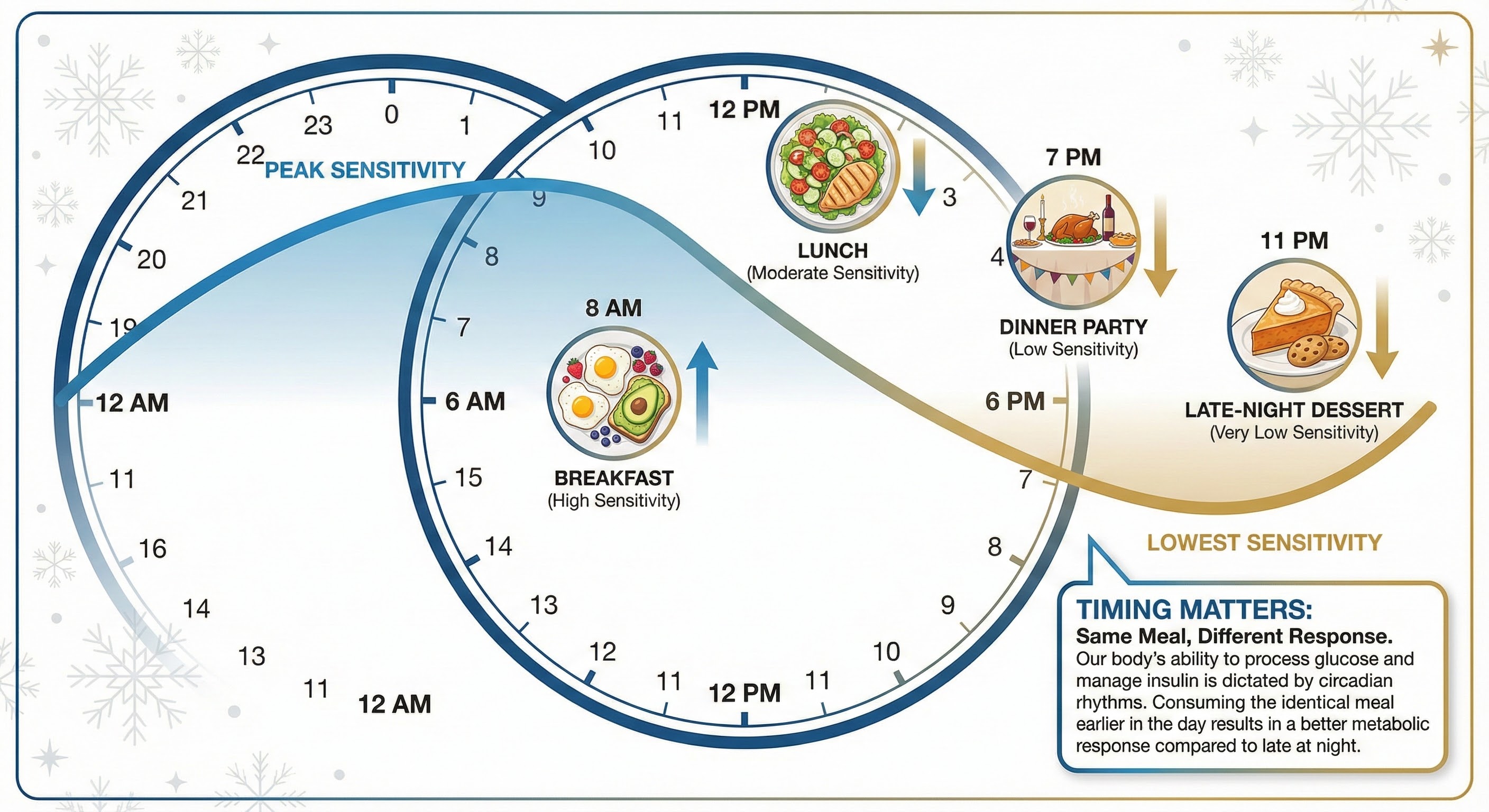
Insulin sensitivity, your cells’ responsiveness to the hormone that clears glucose from blood, peaks in the morning and declines throughout the day. Research from the Salk Institute for Biological Studies demonstrates that identical meals produce dramatically different metabolic responses depending on when they’re consumed. A 400-calorie meal eaten at 8 AM generates significantly lower blood glucose and insulin spikes than the same meal eaten at 8 PM. By 10 PM, when holiday parties often serve heavy appetizers, insulin sensitivity has dropped to its daily nadir.
Melatonin, the hormone that promotes sleep, begins rising approximately two hours before your typical bedtime. This rise directly inhibits insulin secretion from pancreatic beta cells, creating a double metabolic penalty for late-night eating. Not only is your peripheral tissue less sensitive to insulin, but your pancreas is producing less of it precisely when you’re consuming Christmas cookies and champagne. The result is elevated blood glucose that persists through the night, disrupting sleep architecture and promoting fat storage.
The practical implication is straightforward: eating the same foods earlier in the day produces better metabolic outcomes than eating them late at night. This doesn’t mean avoiding evening parties; it means structuring your eating pattern to minimize the metabolic damage of inevitable late-night consumption. Time-restricted eating provides the framework for this optimization, compressing caloric intake into windows that align more closely with circadian biology.
The Push Protocol: Strategic Fasting for Evening Events
On days with scheduled evening parties, the conventional eating pattern of breakfast, lunch, and dinner ensures you’ve consumed 70% of your daily calories before the event even begins. You arrive at the party already in caloric surplus, then add appetizers, dinner, dessert, and drinks on top of an already-full day. This accumulation drives the average holiday weight gain of one to three pounds that, research shows, most Americans never lose.
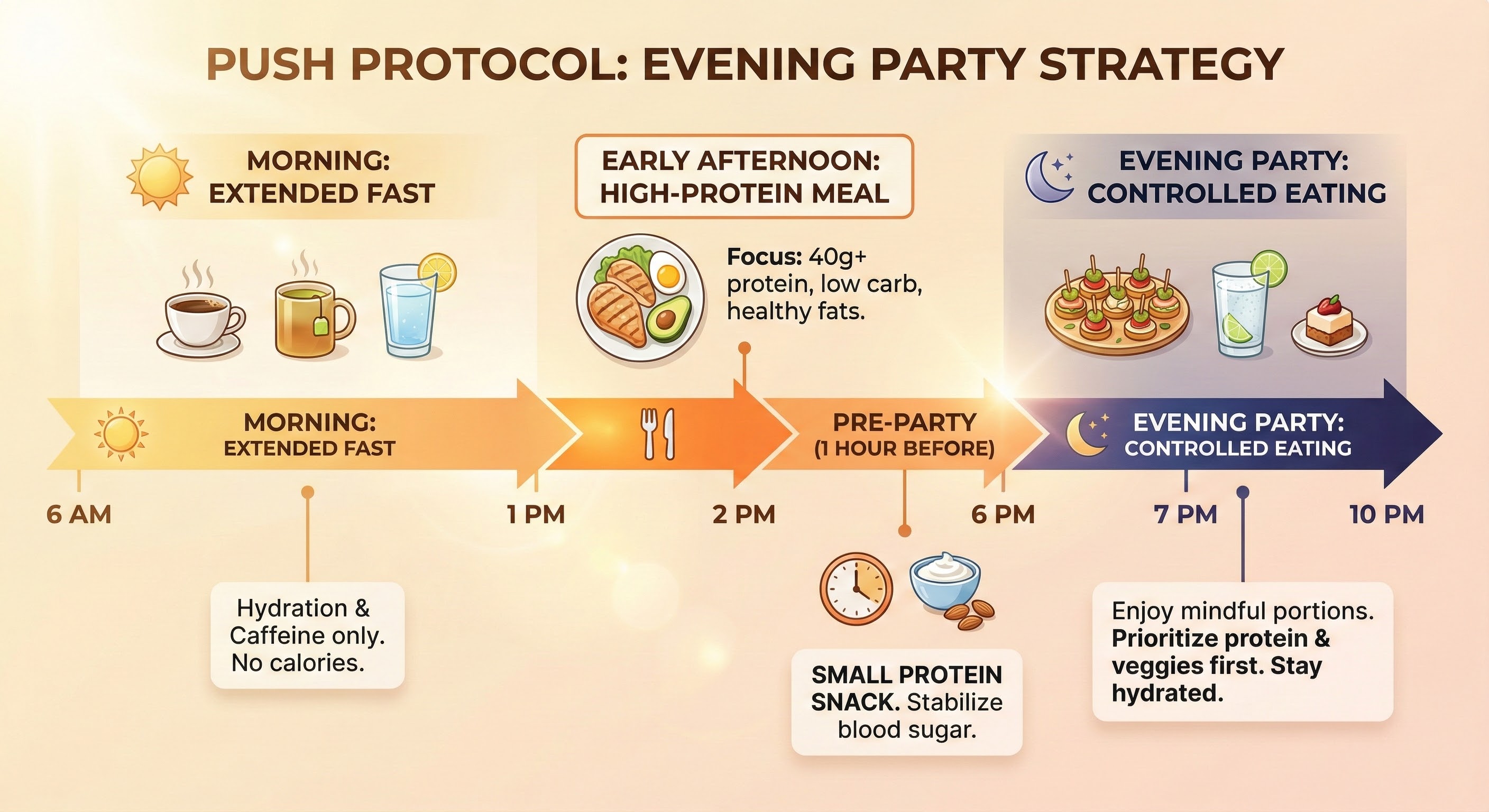
The Push Protocol inverts this pattern by shifting your eating window later in the day to accommodate the social eating that evening events demand. Upon waking, consume only non-caloric beverages: black coffee, plain tea, or water with lemon. These maintain autophagy, the cellular cleanup process that fasting promotes, while providing the caffeine or hydration you need to function normally through the morning.
Extend this fast until early afternoon, breaking it between 1 PM and 2 PM with a meal specifically designed to set you up for evening success. This meal should be high in protein (at least 40 grams), moderate in fat, and relatively low in carbohydrates. A large chicken salad with olive oil dressing, Greek yogurt with nuts and seeds, or a protein shake with avocado and spinach all fit this profile. Protein triggers the release of satiety hormones PYY and GLP-1, which reduce appetite for the subsequent four to six hours. The moderate fat content slows gastric emptying, further extending satiety.
Crucially, avoid breaking your fast with sugar or refined carbohydrates. Starting your eating window with orange juice and a muffin creates a blood sugar spike followed by a crash that amplifies hunger by late afternoon. You’ll arrive at the party ravenous, having already depleted your willpower on resisting the office snacks that called to you during the post-sugar crash.
Approximately one hour before the party begins, consume a small protein-focused snack: a protein shake, a handful of jerky, or two hard-boiled eggs. This “pre-loading” strategy ensures you arrive at the event satiated rather than starving. The difference is profound. A hungry guest attacks the bread basket within minutes of arrival. A satiated guest can survey the options, select the items worth consuming, and enjoy them mindfully rather than desperately.
Circadian Alignment: Minimizing Late-Night Damage
Even with optimal pre-event preparation, holiday parties inevitably involve eating later than your circadian biology prefers. Complete avoidance of late-night consumption during a six-week social season is neither realistic nor necessary for maintaining metabolic health. The goal shifts from perfection to damage mitigation, employing strategies that reduce the metabolic impact of foods consumed during the circadian low point.
The most effective strategy is front-loading consumption within the party itself. If the event runs from 6 PM to 11 PM, concentrate your eating in the first half. Enjoy the appetizers and dinner between 6 PM and 8 PM, then consciously transition to non-caloric beverages for the remainder of the evening. This approach allows social participation throughout the event while limiting the truly late-night calories that cause the most metabolic disruption.
If you do eat late, prioritize protein and fat over carbohydrates. The insulin response to protein is approximately 30% of the response to equivalent calories from carbohydrates, and fat produces almost no insulin response at all. A slice of prime rib with vegetables creates far less metabolic disruption at 10 PM than a piece of pie. You’re not being “good” by choosing the ribeye over the cobbler; you’re being strategic about which foods your body can process effectively at that hour.
Close your eating window at least two to three hours before you plan to sleep. If you typically sleep at 11 PM, aim to finish eating by 8 or 9 PM. This buffer allows blood glucose to begin normalizing before sleep, improving both sleep quality and overnight metabolic function. The post-meal insulin surge that suppresses growth hormone secretion will have largely resolved by the time you enter deep sleep, allowing the normal nocturnal peak of this restorative hormone.
One underappreciated factor is the digestive burden of late-night eating. Your digestive system, like other organ systems, operates on circadian rhythms. Gastric motility and enzyme secretion decline in the evening. Eating a large meal at 10 PM means your gut is working overtime when it should be in maintenance mode, a situation that commonly produces the acid reflux, bloating, and disturbed sleep that make holiday party nights so uncomfortable.
Alcohol and Fasting: The Metabolic Pause Button
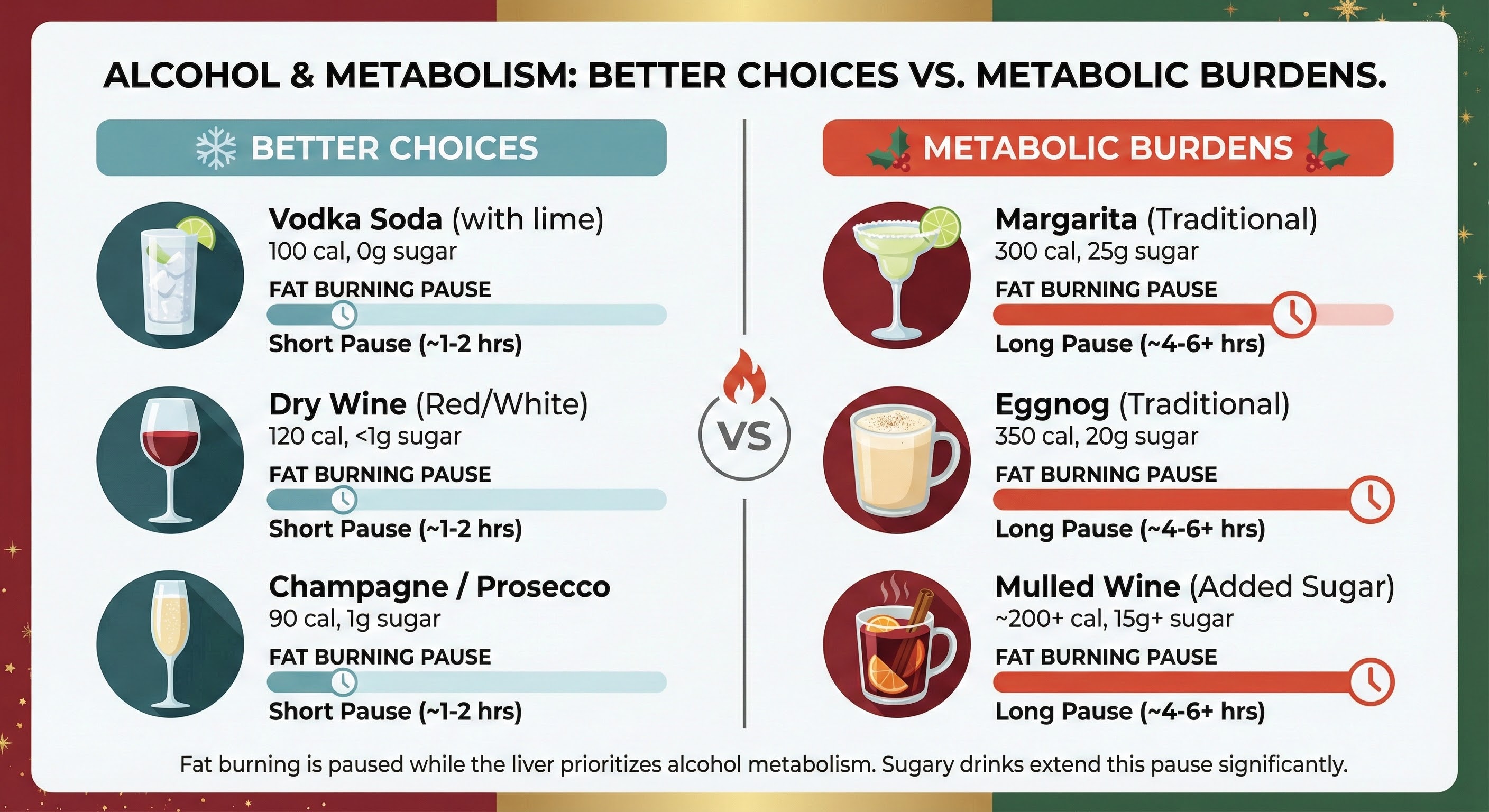
Alcohol presents unique challenges for anyone using time-restricted eating during the holidays. From a fasting perspective, any caloric beverage breaks the fast, and alcohol is particularly disruptive because it cannot be stored and must be metabolized immediately. When acetate, the primary metabolite of alcohol, is circulating in your bloodstream, fat oxidation essentially stops. Your body is too busy processing the alcohol to burn stored fat or even dietary fat.
This doesn’t mean abstaining entirely, but it does mean understanding the metabolic consequences and planning accordingly. If you know you’ll be drinking at an evening event, consider extending your morning fast slightly longer. The additional fasting hours before the event help ensure that you approach the party with some metabolic flexibility rather than already processing a full day’s worth of calories.
When you do drink, simple strategies reduce the metabolic impact. Choose spirits with zero-calorie mixers over beer or cocktails with sugary additions. A vodka soda contains roughly 100 calories of alcohol and nothing else, while a margarita may contain 300 calories, half of which come from sugar. Wine falls in the middle, with most of its calories from alcohol rather than carbohydrates, though sweet wines are obvious exceptions.
The morning after a night of drinking, your approach to fasting should shift from strict protocol to pragmatic recovery. Do not attempt to punish yourself with an extended fast while dehydrated and potentially hypoglycemic from alcohol’s effects on gluconeogenesis. Instead, hydrate aggressively upon waking, ideally with water containing electrolytes. If you feel genuinely terrible, break your fast early with protein and fat, perhaps eggs with avocado. A comfortable 12 to 14 hour overnight fast is better than attempting 18 hours and abandoning the effort entirely by noon when you feel miserable.
The connection between alcohol and subsequent day food choices deserves attention. Research consistently shows that alcohol consumption increases caloric intake the following day, independent of hangover severity. The mechanisms include disrupted sleep architecture that elevates ghrelin (the hunger hormone), impaired executive function that weakens food-related decision making, and a general metabolic perturbation that increases cravings for high-calorie comfort foods. Awareness of this pattern allows you to prepare: stock your kitchen with high-protein foods for the morning after, and plan a structured eating day that doesn’t rely heavily on willpower you may not have.
The Post-Feast Reset: Recovery Without Punishment
The day after a major holiday meal or party is where many people make their biggest mistakes. Guilt drives extreme restriction, perhaps a 24-hour fast or severely limited calories. While extended fasting can be a useful tool, using it as punishment for perceived dietary “sins” creates a dysfunctional relationship with food that undermines long-term metabolic health. The goal is recovery, not penance.
If you overindulged significantly, whether at Thanksgiving dinner, an office party, or a New Year’s Eve celebration, your glycogen stores are likely full and your gut is processing a larger-than-usual food bolus. A moderately extended fast of 14 to 16 hours simply gives your digestive system time to complete its work. You’re not compensating for calories; you’re allowing physiological processes to normalize before introducing new food.
Resume eating with a high-protein, moderate-fat meal when genuine hunger returns. The body’s hunger signals are remarkably accurate when you’re not eating emotionally. If you don’t feel hungry until 2 PM the day after a feast, that’s your body signaling that it’s still processing yesterday’s intake. Trust this signal. The conventional breakfast-at-8-AM imperative doesn’t apply when you consumed 4,000 calories twelve hours ago.
One Meal A Day (OMAD), where you compress eating into a single meal within a one to two hour window, can serve as an effective reset button when used occasionally and intentionally. The day after a major feast, OMAD naturally aligns with reduced hunger and full glycogen stores. You fast through the morning, eat one substantial protein-focused meal in the late afternoon, and return to your normal eating pattern the following day. This isn’t starvation or punishment; it’s a physiologically appropriate response to an atypically large prior intake.
However, those with any history of disordered eating should approach extended fasting cautiously. The line between strategic fasting and restriction-driven behavior requires honest self-assessment. If extending your fast produces anxiety, obsessive calorie calculations, or sets up a binge-restrict cycle, shorter fasting windows with consistent meals serve you better. The goal is metabolic flexibility and a peaceful relationship with food, not rigid adherence to any particular protocol.
Integrating Fasting with Holiday Fitness
Time-restricted eating interacts importantly with exercise, and understanding this interaction helps optimize both your training and your fasting during the holiday season. The morning hours of an extended fast represent a unique metabolic state where glycogen stores are partially depleted and fatty acid oxidation is elevated. This makes fasted morning training particularly effective for body composition, assuming intensity remains moderate.
Zone 2 cardio, such as brisk walking, easy cycling, or a light jog, performed in the fasted state maximizes fat oxidation while avoiding the glycogen demands that would require pre-workout fuel. A 30 to 45 minute fasted morning walk on the day of an evening party serves double duty: it extends your fast naturally and provides the movement that enhances insulin sensitivity for the eating that will follow later.
Strength training presents different considerations. While some individuals adapt to fasted lifting, most perform better with amino acids circulating during resistance work. If you train seriously and have a workout scheduled on a party day, consider a small pre-workout protein serving, perhaps 20 to 25 grams from a shake, that provides the amino acids for muscle protein synthesis without significantly breaking the fast from a metabolic standpoint. You can then return to fasting until your pre-party protein snack.
Post-workout nutrition timing becomes flexible within a time-restricted eating framework. The “anabolic window” requiring immediate post-workout protein has been largely debunked; what matters is total daily protein intake distributed across your eating window. If you train fasted at 7 AM and don’t eat until 1 PM, you haven’t missed a magical window. Consume adequate protein (0.7 to 1 gram per pound of body weight) across your eating hours, and muscle protein synthesis proceeds normally.
For those looking to maintain fitness during the chaotic holiday season, our guide on 15-minute holiday workout routines provides efficient protocols that pair well with time-restricted eating. The combination of compressed eating windows and brief, intense training sessions allows maintenance of metabolic health and body composition despite the seasonal disruption to normal routines.
The Bottom Line
Time-restricted eating during the holidays works not because it restricts what you eat, but because it provides structure in a season characterized by nutritional chaos. The specific protocols matter less than the underlying principle: compress your eating into a defined window, and within that window, eat what you choose. This approach allows full participation in holiday traditions while maintaining the metabolic flexibility that prevents the seasonal weight gain most people accept as inevitable.
The Push Protocol accommodates evening events by shifting your eating window later. Circadian alignment strategies minimize the metabolic damage of inevitable late-night consumption. Thoughtful alcohol management preserves your fasting benefits while allowing celebratory drinks. And post-feast recovery focuses on physiological reset rather than punitive restriction.
Consistency across the six-week holiday season matters more than perfection at any single event. A moderate 14-hour fast maintained most days serves you better than alternating between 20-hour fasts and no structure at all. Build the habit of evening eating closure, develop your repertoire of high-protein meals, and trust that the flexibility to enjoy holiday foods doesn’t require abandoning metabolic health. For managing the stress that often accompanies holiday eating decisions, tactical breathing techniques can help maintain calm around food choices.
Your Holiday TRE Toolkit:
- Use the Push Protocol (late first meal, pre-party protein) for scheduled evening events
- Front-load eating within parties, transitioning to non-caloric drinks for the final hours
- Close your eating window 2-3 hours before sleep whenever possible
- Choose spirits with zero-calorie mixers over sugary cocktails
- The morning after excess, extend your fast until genuine hunger returns, then resume normal patterns
- Use fasted morning walks on party days to extend the fast and enhance insulin sensitivity
Sources: Salk Institute circadian metabolism research, The New England Journal of Medicine time-restricted eating studies, Diabetes Care insulin sensitivity and meal timing research, Sleep journal on melatonin and glucose metabolism, American Journal of Clinical Nutrition alcohol metabolism studies.