Keenan Pearson was working on aptamers for brain cancer when he struck up a conversation at a Mayo Clinic scientific event with Sarah Jachim, who studied cellular senescence in the aging lab down the hall. Neither expected that their casual chat would lead to a breakthrough that their supervisor initially dismissed as “crazy.” Published in Aging Cell this September, their research has identified DNA molecules that can distinguish aging “zombie cells” from healthy tissue, solving one of the most persistent problems in anti-aging medicine.
Senescent cells, the so-called zombies of the cellular world, have emerged as one of the most promising targets for extending healthy lifespan. These cells have stopped dividing but refuse to die, accumulating in tissues over time and secreting inflammatory signals that damage neighboring healthy cells. They’ve been linked to cancer, Alzheimer’s disease, cardiovascular decline, arthritis, and virtually every aspect of age-related deterioration. Eliminating them from mice extends lifespan and reverses markers of aging. The problem has been identifying them in living human tissue without destroying what you’re looking for.
Pearson and Jachim’s solution involves aptamers, short segments of synthetic DNA that fold into three-dimensional shapes capable of binding to specific molecules. By screening over 100 trillion random DNA sequences against senescent cells, the team identified several aptamers that selectively attach to proteins on senescent cell surfaces while ignoring healthy cells. The discovery doesn’t just advance basic science, it opens a path toward precision treatments that could target zombie cells for destruction while leaving healthy tissue untouched.
The Zombie Cell Problem: Why Senescence Matters for Aging
Every cell in your body faces a critical decision when its DNA becomes damaged or when growth-promoting signals go haywire. It can repair the damage and continue functioning. It can trigger apoptosis, a controlled cellular suicide that eliminates the defective cell cleanly. Or it can enter senescence, permanently halting division while remaining metabolically active.
Senescence exists for good reasons. When a cell accumulates mutations that might lead to cancer, arresting its division prevents tumor formation. During wound healing, senescent cells help coordinate tissue repair before being cleared by the immune system. In a young, healthy body, this process works beautifully. The immune system efficiently removes senescent cells, preventing their accumulation.
The problem emerges with age. Immune function declines while the rate of cellular damage increases. Senescent cells begin to accumulate, and their effects become progressively harmful. These cells secrete a complex mixture of inflammatory molecules, growth factors, and tissue-degrading enzymes collectively called the senescence-associated secretory phenotype, or SASP. This inflammatory soup damages neighboring cells, promotes tissue dysfunction, and creates a self-reinforcing cycle where the SASP itself triggers senescence in additional cells.
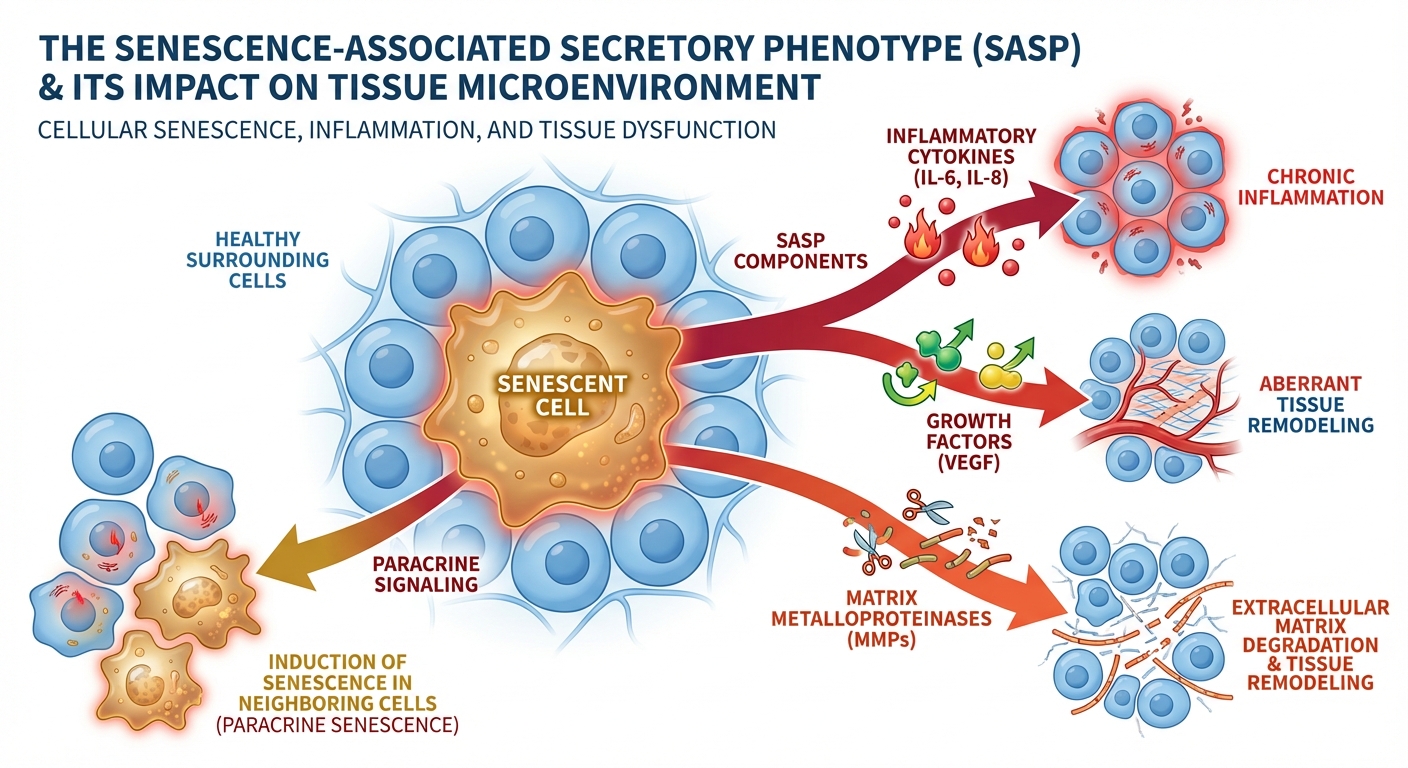
Research conducted over the past decade has demonstrated that eliminating senescent cells produces remarkable benefits in animal models. Mice treated with senolytic drugs, compounds that selectively kill senescent cells, show improved cardiovascular function, better insulin sensitivity, enhanced physical capacity, and extended lifespan. In some experiments, removing senescent cells reversed aspects of age-related decline, restoring tissue function to levels more typical of younger animals.
The translation to humans has been slower but is progressing. More than 30 clinical trials of senolytic and senomorphic agents have been completed, are underway, or are planned for conditions ranging from Alzheimer’s disease to osteoarthritis. Early results are encouraging. A pilot study published in eBioMedicine testing dasatinib plus quercetin in older adults at risk for Alzheimer’s found that an intermittent “hit-and-run” dosing strategy effectively reduced senescent cell markers without serious adverse effects.
The Identification Challenge: Finding Needles in a Haystack
Despite the therapeutic promise, a fundamental problem has limited progress. Senescent cells are notoriously difficult to identify in living tissue. They represent a small fraction of total cells, perhaps 2-10% even in aged tissues, and they’re interspersed among healthy cells without forming distinct structures visible to imaging. Most identification methods require destroying the tissue being examined, making it impossible to track senescent cell burden over time or verify whether treatments are working.
Current senolytic drugs also face selectivity challenges. Most compounds that kill senescent cells also harm some healthy cells, limiting dosing and potentially causing unwanted side effects. The combination of dasatinib and quercetin works partly because these compounds are relatively well-tolerated, but their mechanism involves blocking survival pathways that senescent cells depend on more heavily than healthy cells, not specifically targeting senescent cells themselves.
“While small pilot studies of senolytics show some initial success, the gold-standard of double-blinded placebo trials is a long road ahead,” notes one review of the field. Part of the difficulty is the absence of robust, non-invasive biomarkers for senescent cell burden in humans, which impairs the ability to select appropriate patients for trials or monitor whether treatments are reducing the target cell population.
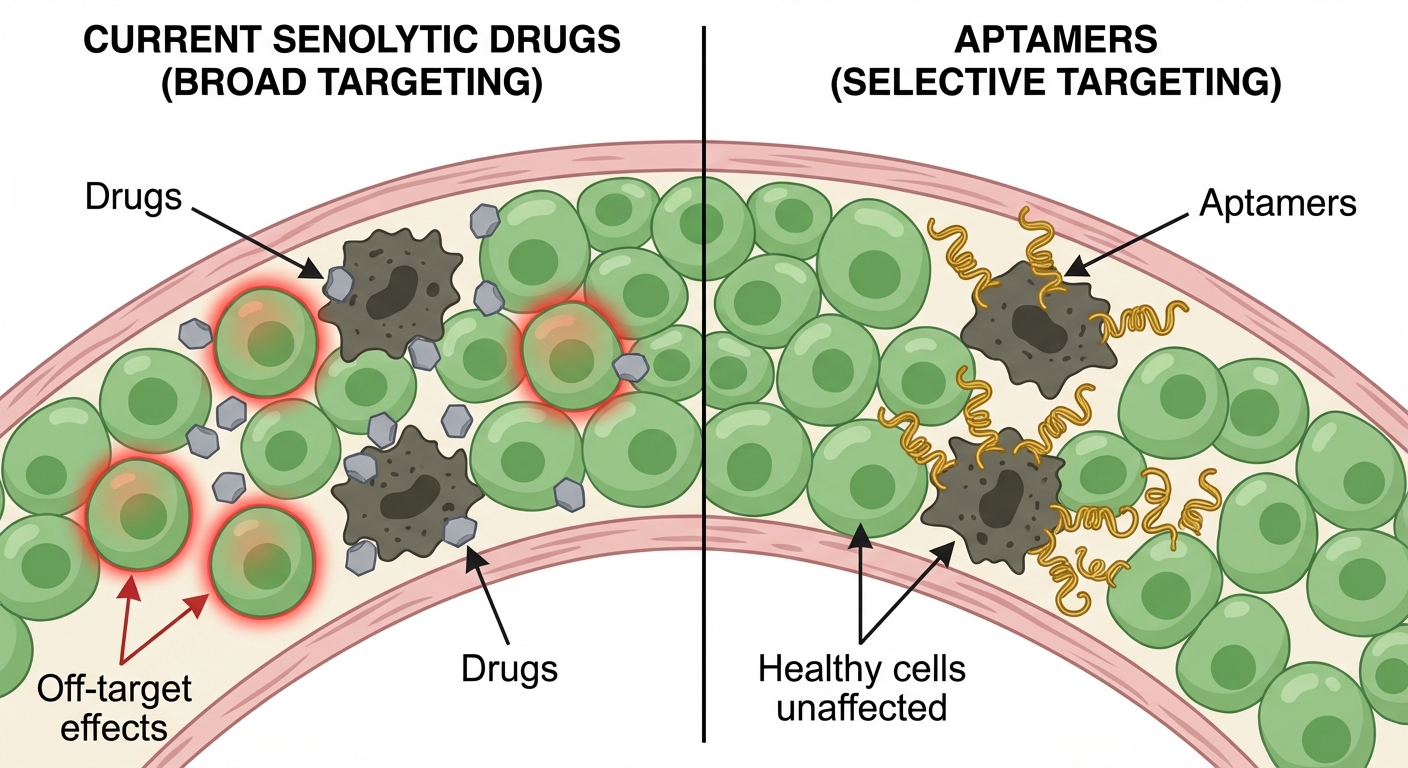
This is where Pearson and Jachim’s work becomes transformative. If aptamers can reliably distinguish senescent cells from healthy tissue in living systems, they could serve multiple purposes. As diagnostic tools, they could measure senescent cell burden non-invasively, enabling patient selection for trials and treatment monitoring. As delivery vehicles, they could carry therapeutic payloads directly to senescent cells, reducing off-target effects. As research tools, they could help identify new senescent cell markers that might serve as drug targets.
The Aptamer Advantage: Shape-Shifting DNA Molecules
Aptamers occupy a unique niche in molecular biology. Like antibodies, they can bind to specific targets with high selectivity. Unlike antibodies, they’re made of nucleic acids rather than proteins, which offers several practical advantages. They’re chemically synthesized rather than produced in living cells, making manufacturing simpler and more reproducible. They’re smaller than antibodies, potentially penetrating tissues more easily. They’re non-immunogenic, meaning the body won’t mount an immune response against them. And they can be modified to carry therapeutic cargoes or imaging agents.
The process of identifying aptamers, called SELEX (Systematic Evolution of Ligands by EXponential enrichment), involves exposing a vast library of random nucleic acid sequences to a target and selecting those that bind. The selected sequences are amplified and subjected to additional rounds of selection, progressively enriching for high-affinity binders. Modern versions of this process can screen libraries containing trillions of unique sequences.
Dr. Jim Maher III, a biochemist and molecular biologist who supervises both Pearson and other aptamer researchers at Mayo Clinic, was initially skeptical when his students proposed applying this technology to senescent cells. “At first, the students’ idea seemed ‘crazy’ but worth pursuing,” he acknowledged. The challenge was substantial. Unlike most aptamer targets, which are purified proteins with known structures, senescent cells present a complex surface with numerous potential binding sites.
The Mayo Clinic Discovery: Fibronectin and Beyond
Pearson, Jachim, and their colleagues took an unbiased approach, exposing their aptamer library to whole senescent cells rather than purified proteins. Starting with over 100 trillion random DNA sequences, they performed successive rounds of selection, eliminating sequences that bound to healthy cells while retaining those that preferentially attached to senescent cells. After multiple cycles, several aptamer sequences emerged as highly selective for senescent cells.
When the team investigated what these aptamers were binding to, they found something unexpected. Several of the most selective aptamers attached to a variant form of fibronectin, a protein involved in cell adhesion and tissue structure. This modified fibronectin appeared on the surface of senescent cells but not on healthy cells of the same type.
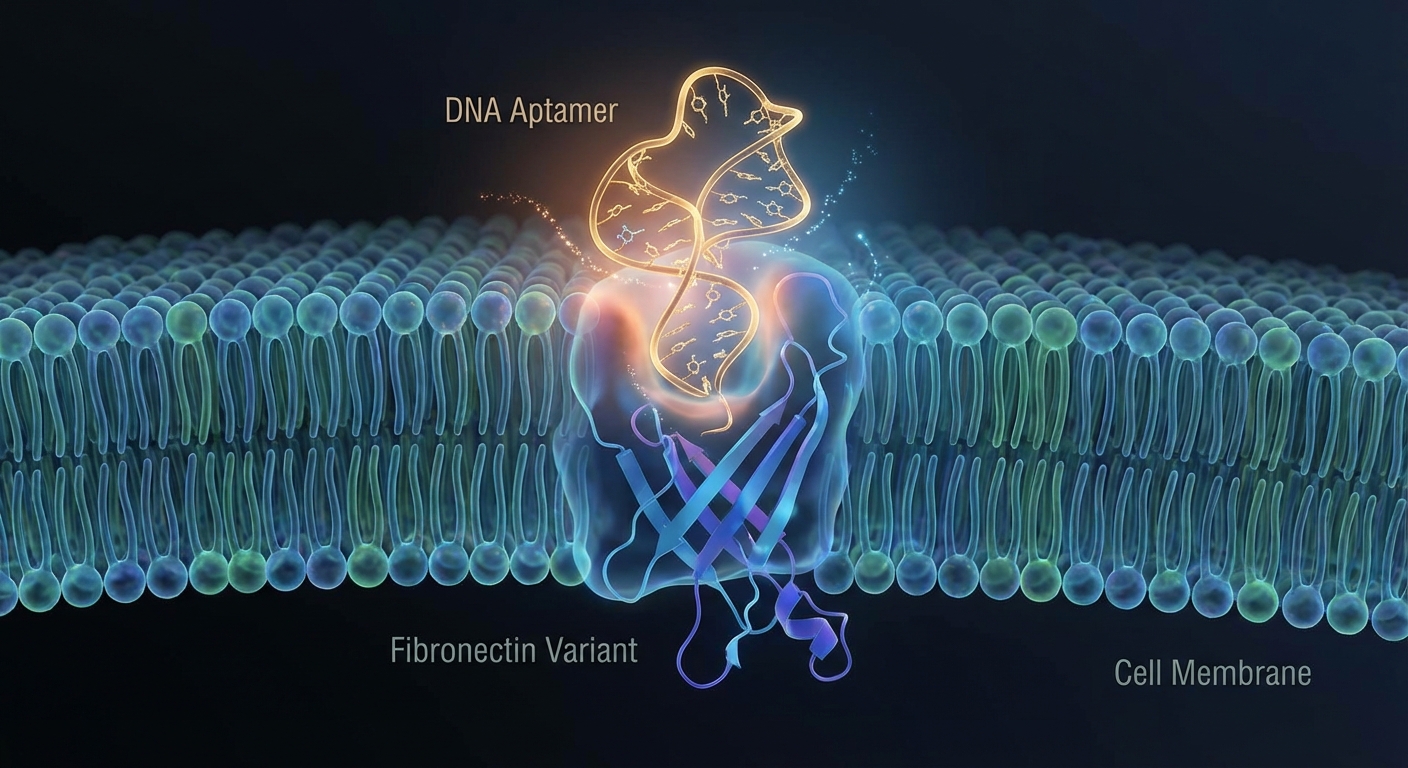
“This approach established the principle that aptamers are a technology that can be used to distinguish senescent cells from healthy ones,” Maher said. The significance extends beyond the specific finding. The discovery that senescent cells display unique surface markers that can be targeted by aptamers validates the entire approach. Even if the fibronectin variant turns out not to be the optimal target, the methodology can identify other markers.
The role of the fibronectin variant in senescence remains unclear. Fibronectin is heavily involved in tissue remodeling and cell-to-cell communication, processes that senescent cells actively participate in through their SASP. The modified form might reflect altered processing or glycosylation patterns in senescent cells, potentially related to their changed metabolism. Understanding why senescent cells display this marker could reveal new insights into senescence biology itself.
From Detection to Treatment: The Therapeutic Pipeline
The aptamers’ ability to find senescent cells opens multiple therapeutic possibilities. Most directly, aptamers could serve as delivery vehicles for senolytic drugs or other toxic payloads. Rather than flooding the body with compounds that affect all cells, aptamer-drug conjugates could concentrate therapeutic agents specifically within senescent cells, potentially increasing efficacy while reducing side effects.
This targeted delivery approach has precedent in cancer therapy, where antibody-drug conjugates have proven effective for several tumor types. Aptamers might offer advantages over antibodies for this application, including easier tissue penetration due to their smaller size, lower manufacturing costs, and the ability to be modified with various chemical payloads.
Alternative approaches could use aptamers to flag senescent cells for immune destruction. By attaching aptamers to molecules that recruit immune cells, researchers could potentially harness the body’s own defenses to clear zombie cells. Chimeric antigen receptor (CAR) T-cell therapies, which have revolutionized blood cancer treatment, could potentially be adapted to target senescent cell markers identified through aptamer screening.
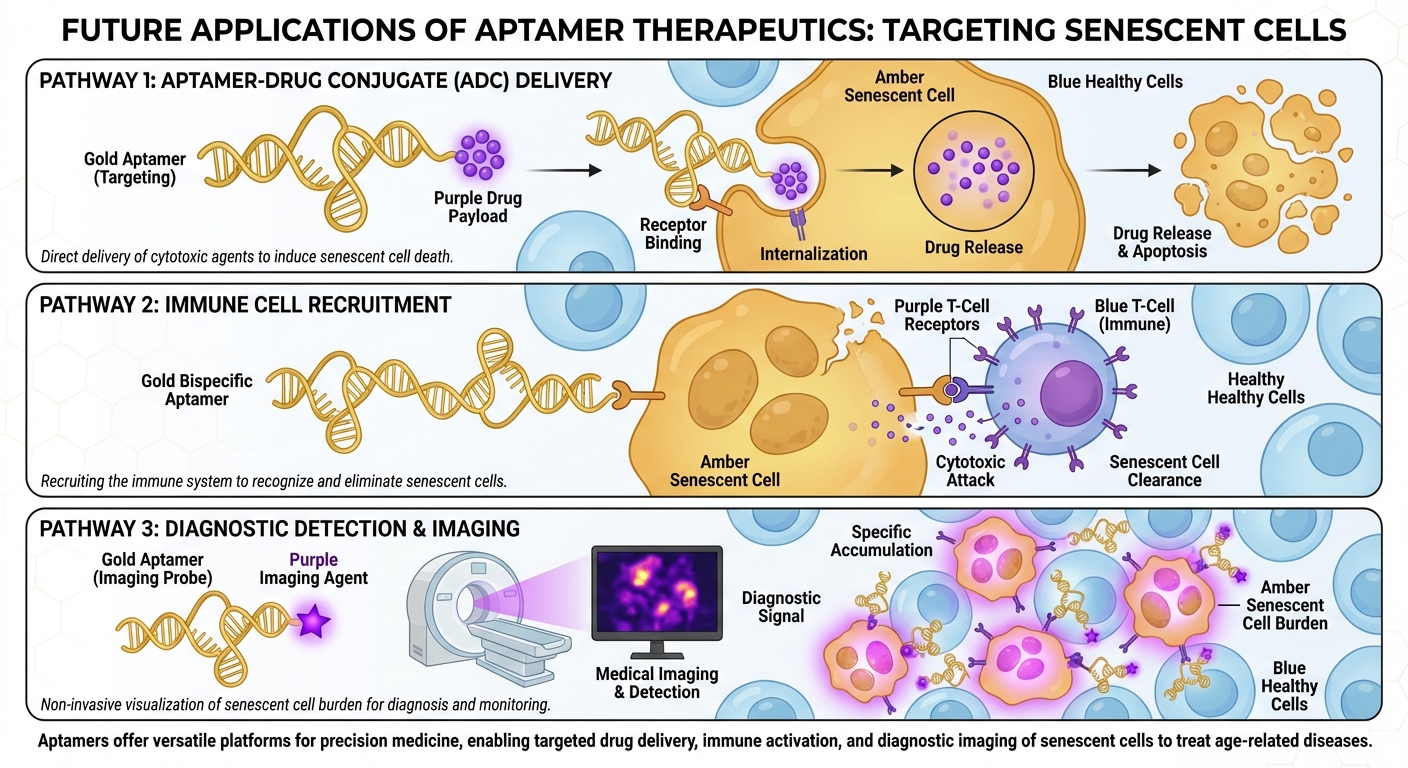
For diagnostic applications, aptamers conjugated to imaging agents could enable non-invasive measurement of senescent cell burden. This would address one of the field’s most pressing needs, providing a way to identify patients most likely to benefit from senolytic treatment and to monitor whether interventions are working. Current clinical trials essentially treat patients blindly, without knowing how many senescent cells they carry or whether the number decreases with treatment.
The Road Ahead: From Mice to Humans
The Mayo Clinic study was conducted in mouse cells, and considerable work remains before the technology reaches human applications. The fibronectin variant identified as a senescent cell marker in mice may or may not serve the same role in human senescent cells. Additional studies will be needed to identify aptamers that recognize human senescent cells specifically.
Even if human-selective aptamers can be identified, validating their specificity across different tissues and senescent cell types presents challenges. Senescence isn’t a uniform state. Cells can enter senescence through various pathways, including DNA damage, oncogene activation, oxidative stress, and telomere shortening. Different triggers may produce different surface marker profiles, potentially requiring panels of aptamers to capture the full spectrum of senescent cells.
Manufacturing and delivery also require development. While aptamers are relatively straightforward to synthesize chemically, scaling production to therapeutic quantities, ensuring stability in the body, and achieving adequate tissue distribution all present engineering challenges. Aptamers are susceptible to degradation by nucleases in blood, though chemical modifications can substantially improve their stability.
Despite these hurdles, the fundamental proof of concept is established. Aptamers can distinguish senescent cells from healthy cells. The methodology to identify such aptamers exists. And the potential applications span diagnostics, drug delivery, and immunotherapy. For a field that has struggled with the basic problem of finding its target, this represents a significant step forward.
What This Means for Longevity Science
The senescent cell hypothesis of aging has gained substantial support over the past decade, moving from a theoretical possibility to an active area of clinical development. The discovery of aptamers that can identify senescent cells addresses one of the field’s major technical limitations and accelerates the timeline for precision anti-aging interventions.
For individuals interested in longevity, the research reinforces principles we’ve covered extensively. Regular exercise stimulates immune function and may enhance clearance of senescent cells. Caloric restriction and intermittent fasting modulate pathways involved in senescence. Compounds like quercetin, found in onions, apples, and green tea, have mild senolytic properties that may contribute to their observed health benefits. Avoiding chronic inflammation, which both promotes and results from senescent cell accumulation, remains central to healthy aging.
The aptamer breakthrough won’t immediately change what you do for your health. But it signals that the scientific tools for precisely targeting aging processes are advancing rapidly. Within the next decade, treatments that selectively eliminate senescent cells with minimal side effects may move from research labs to clinical practice. For those focused on healthspan and longevity, this represents one of the most exciting developments in aging biology.
The Bottom Line
A chance conversation between two graduate students led to a discovery that may reshape anti-aging medicine. By identifying DNA aptamers that selectively bind to senescent “zombie cells,” Mayo Clinic researchers have solved a fundamental problem that has limited progress in the field. The technology opens paths to targeted diagnostics that could measure senescent cell burden non-invasively, precision drug delivery that could minimize side effects, and immunotherapies that could harness the body’s own defenses against aging cells.
While human applications remain years away, the proof of concept is compelling. Senescent cells can be found and distinguished from healthy tissue using aptamer technology. The fibronectin variant identified as a marker suggests that senescent cells display characteristic surface signatures that therapeutic approaches can exploit. Combined with ongoing clinical trials of senolytic drugs, this research brings the possibility of genuine anti-aging treatments closer to reality.
Next Steps:
- Focus on lifestyle factors that naturally support senescent cell clearance, including regular exercise, adequate sleep, and anti-inflammatory nutrition
- Consider foods rich in quercetin (onions, apples, berries, green tea), which has mild senolytic properties
- Monitor developments in senolytic clinical trials, particularly those targeting Alzheimer’s disease and osteoarthritis where results may emerge soonest
- Maintain healthy immune function through proven strategies, as your immune system remains the primary mechanism for clearing senescent cells
For more on the science of healthy aging, see our guides on longevity biomarkers worth tracking, the critical aging window between 45-55, and polyphenols and longevity.
Sources: Mayo Clinic, Aging Cell (September 2025, DOI: 10.1111/acel.70245), ScienceDaily, Technology Networks, eBioMedicine, npj Aging, Nature reviews on senolytics and senomorphics.