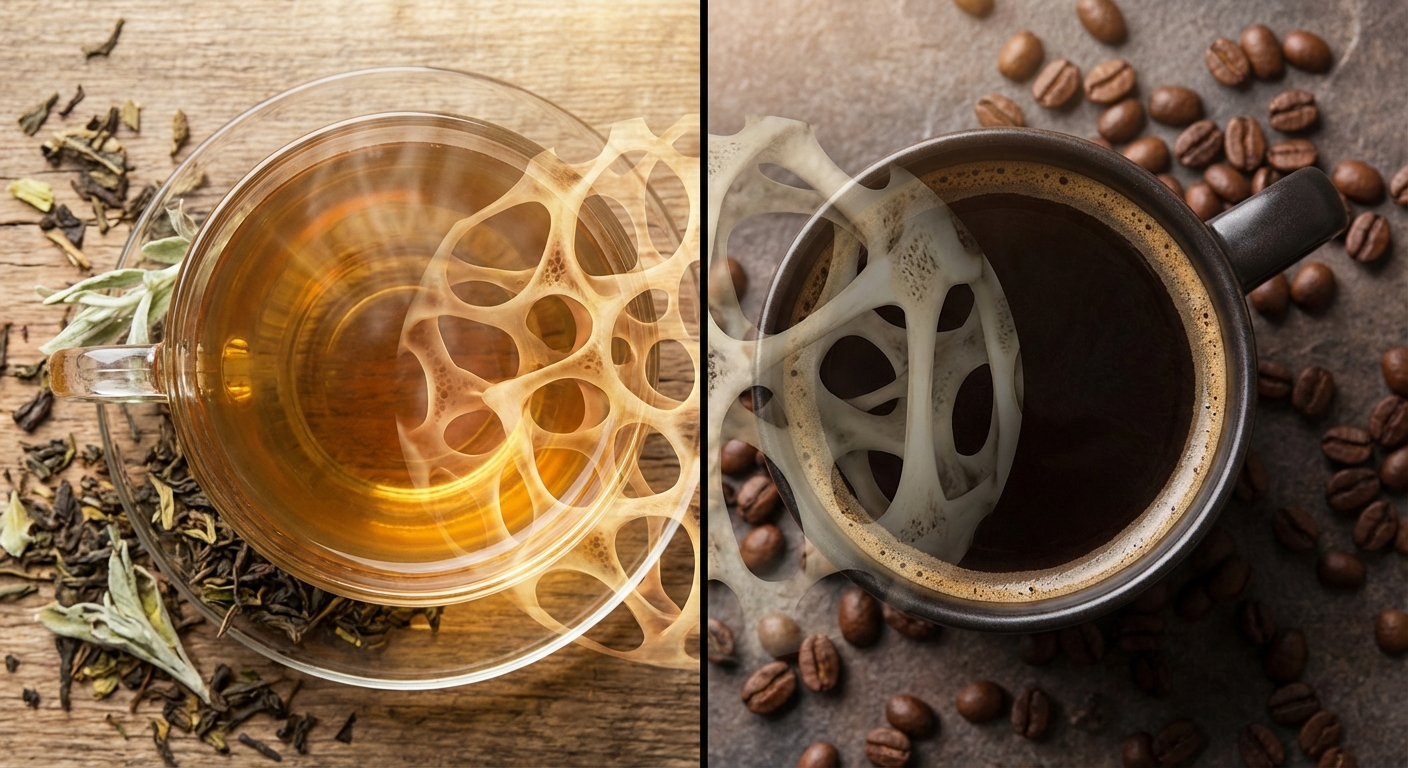
For decades, the advice seemed simple: calcium, vitamin D, and weight-bearing exercise for strong bones. But your daily beverage habits, those cups of tea or coffee that punctuate your morning and afternoon, may also be influencing your skeletal health in ways researchers are only now beginning to quantify.
A new study from Flinders University, published in the journal Nutrients, followed nearly 10,000 women aged 65 and older over a full decade to investigate how tea and coffee consumption affected bone mineral density. The findings complicate the simple narrative. Tea drinkers showed slightly higher bone density at the hip compared to non-tea drinkers. Moderate coffee consumption appeared neutral. But drinking more than five cups of coffee daily was associated with lower bone density, particularly in women with higher lifetime alcohol consumption.
The measured differences are not dramatic enough to warrant panic or radical dietary changes. But they add important nuance to our understanding of bone health, particularly for postmenopausal women facing the highest osteoporosis risk. The mechanisms proposed, from catechins in tea to caffeine’s effects on calcium metabolism, suggest that what we drink may matter more than previously appreciated.
The Study: A Decade of Bone Data
The research drew on data from the Study of Osteoporotic Fractures, one of the largest and longest-running investigations of bone health in older women. Participants, all aged 65 and older at enrollment, underwent repeated bone mineral density measurements at the hip and spine over approximately ten years. Dietary questionnaires captured their tea and coffee consumption patterns.
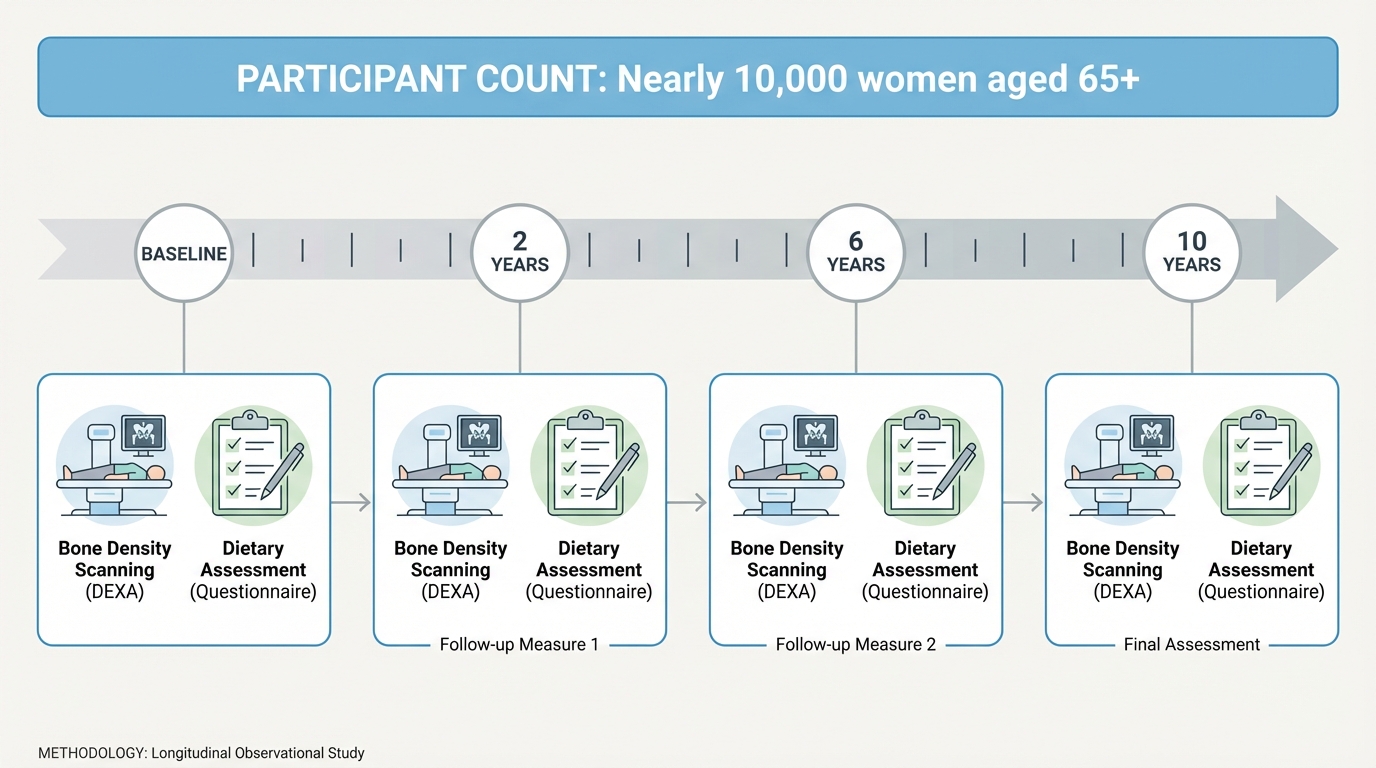
The analysis controlled for numerous confounding variables: age, body mass index, smoking status, alcohol consumption, physical activity, calcium and vitamin D intake, hormone replacement therapy use, and socioeconomic factors. This statistical rigor helps isolate the independent effects of tea and coffee consumption from the many other factors influencing bone health.
What emerged was a pattern of modest but statistically significant associations. Tea consumption correlated with higher total hip bone mineral density compared to non-consumption. The relationship held across different amounts of tea, though the researchers noted that the benefits appeared relatively consistent whether women drank one cup daily or several.
Coffee told a more complex story. Moderate consumption, approximately two to three cups daily, showed no significant association with bone density in either direction. But higher consumption, exceeding five cups daily, correlated with lower bone mineral density. Interestingly, this negative association was most pronounced in women who also had higher lifetime alcohol consumption, suggesting possible interactions between these lifestyle factors.
Why Tea May Strengthen Bones
The proposed mechanism for tea’s bone-protective effects centers on catechins, a class of polyphenol compounds abundant in tea leaves. Green tea contains the highest concentrations, but black tea also provides meaningful amounts, as the oxidation process that differentiates black from green tea doesn’t eliminate catechins entirely.
Laboratory research has identified multiple pathways through which catechins may influence bone metabolism. These compounds appear to promote osteoblast activity, meaning they support the cells responsible for building new bone tissue. Simultaneously, they may inhibit osteoclasts, the cells that break down existing bone. This anti-inflammatory mechanism parallels the benefits seen with broader anti-inflammatory lifestyle approaches. The net effect shifts the balance toward bone formation and preservation.
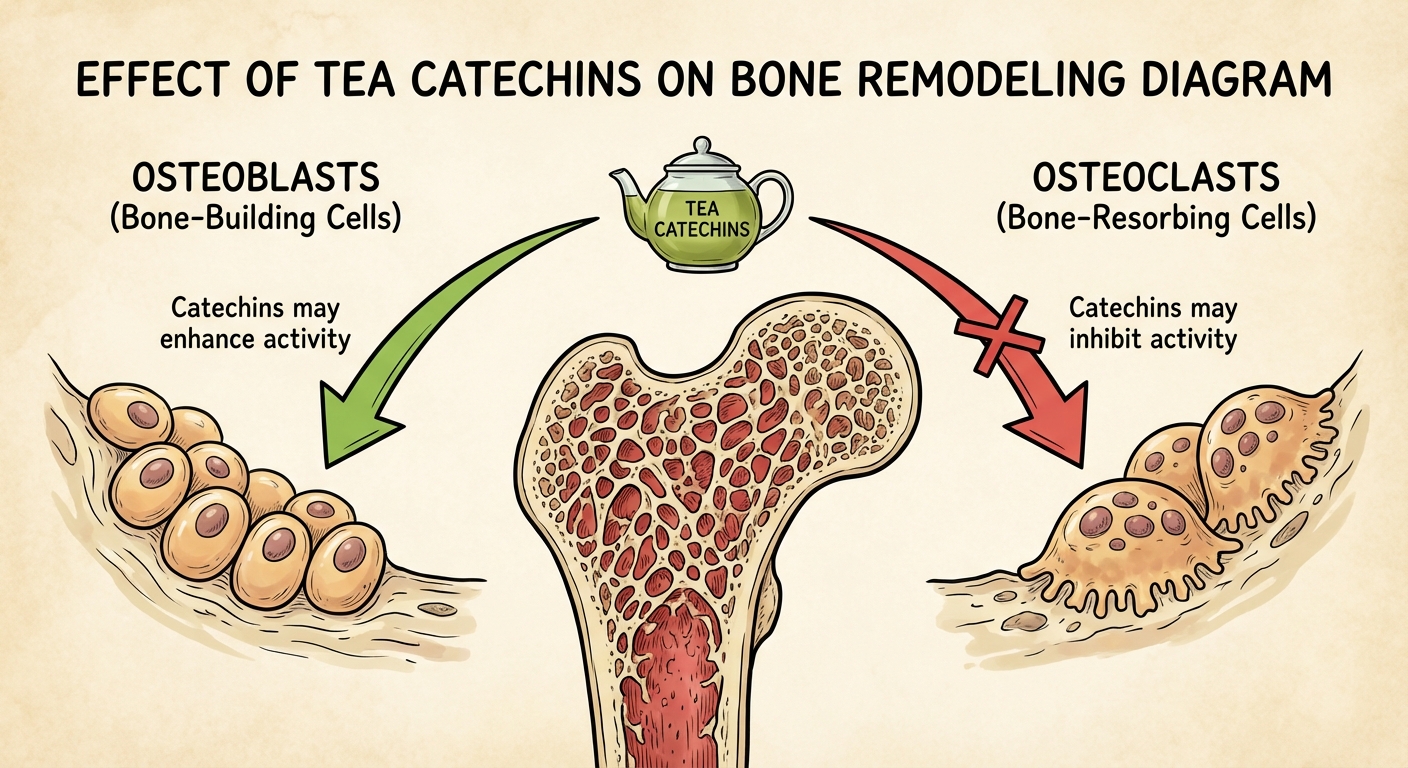
Ryan Liu, co-author on the paper from Flinders University, explains: “Compounds called catechins, abundant in tea, may promote bone formation and slow bone breakdown.” The effect size observed in the study, approximately 0.003 g/cm² higher bone mineral density at the hip in tea drinkers, translates to roughly a one-year slowing of age-related bone loss compared to non-drinkers.
Beyond catechins, tea contains other compounds with potential bone-relevant effects. Fluoride, present in tea in small amounts, incorporates into bone mineral and may enhance density. Phytoestrogens in tea could partially compensate for the decline in estrogen that accelerates bone loss after menopause. These mechanisms likely work together rather than in isolation.
The type of tea matters less than you might expect. While green tea’s higher catechin content has received more research attention, black tea consumption was the primary form in this study population, and it still showed positive associations. The key appears to be regular consumption rather than obsessive optimization of tea variety.
Why Excessive Coffee May Harm Bones
Coffee’s relationship with bone health has been debated for decades, with studies producing inconsistent results. This study helps clarify the picture by distinguishing between moderate and heavy consumption.
At moderate levels, coffee appears neutral for bone health. The slight stimulatory effect of caffeine on calcium excretion, often cited as a concern, may be too small at normal consumption levels to meaningfully impact bone density. Additionally, coffee drinkers often add milk to their coffee, partially offsetting any calcium losses.
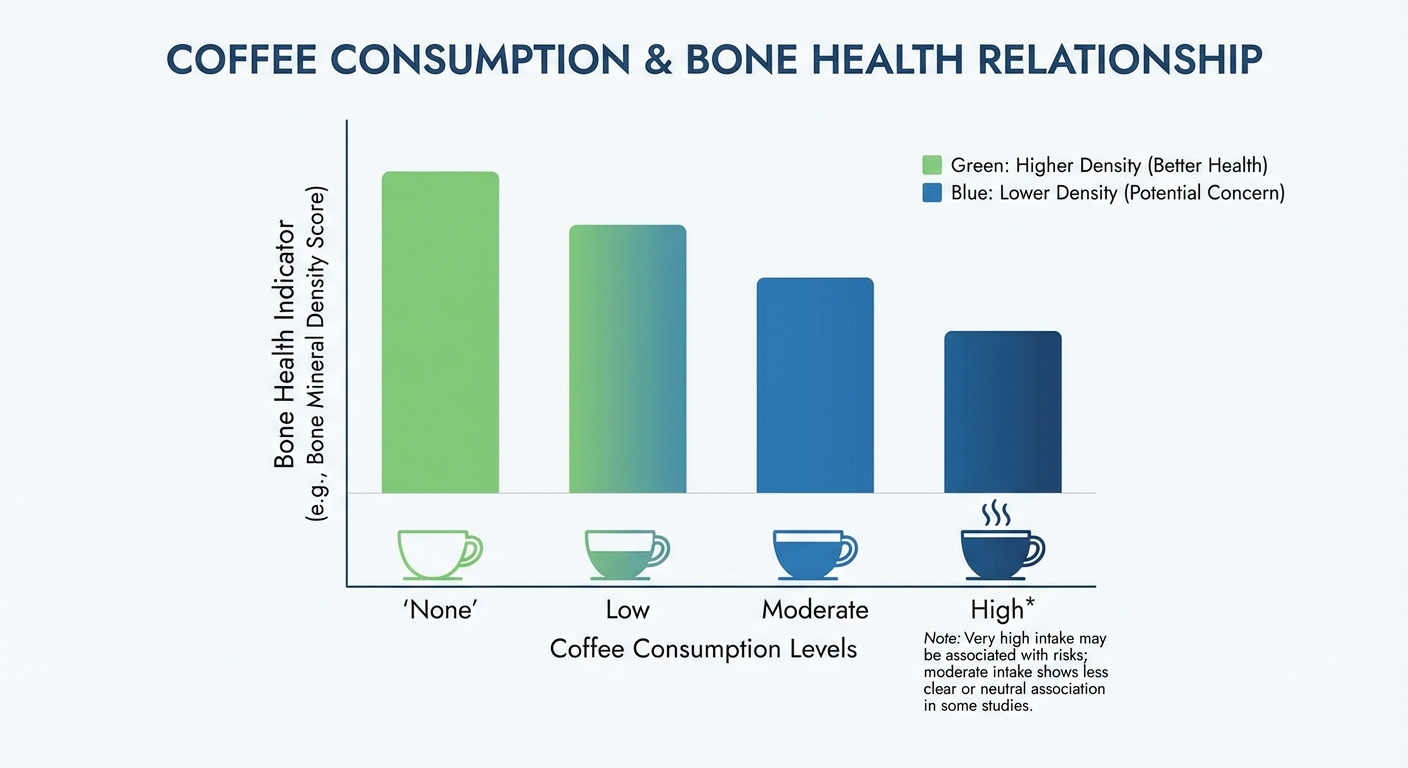
Above five cups daily, however, the picture changes. Caffeine does increase urinary calcium excretion, and at high chronic intake, this effect may become cumulatively significant. Caffeine also influences vitamin D receptors in ways that could impair calcium absorption from the intestine. Heavy coffee consumption often correlates with other lifestyle factors, including higher stress, irregular eating patterns, and in this study, higher alcohol consumption, which may compound the effects.
The interaction with alcohol consumption is particularly noteworthy. Women who had consumed more alcohol over their lifetimes showed stronger negative associations between coffee and bone density. Both substances affect calcium metabolism and may interfere with bone remodeling. Their combined effects appear greater than either alone.
Associate Professor Liu from Flinders University offers a measured interpretation: “Our results don’t mean you need to give up coffee or start drinking tea by the gallon. The observed differences, while statistically significant, are not large enough to warrant dramatic changes for individuals.” The research provides population-level insights that may matter most for those already at elevated osteoporosis risk.
Putting the Findings in Context
Osteoporosis affects approximately one in three women over age 50, contributing to millions of fractures annually worldwide. Hip fractures are particularly devastating, with significant mortality risk and loss of independence. Any factor that modestly shifts bone density trajectories could, at a population level, meaningfully impact fracture rates.
The bone density differences observed in this study, while modest, are statistically significant and consistent with the biological mechanisms proposed. A one-year slowing of bone loss over a decade of tea drinking may not sound dramatic, but over the 20 to 30 years of post-menopausal life, such effects could accumulate meaningfully. This aligns with research showing how strength training protects bone density during aging.
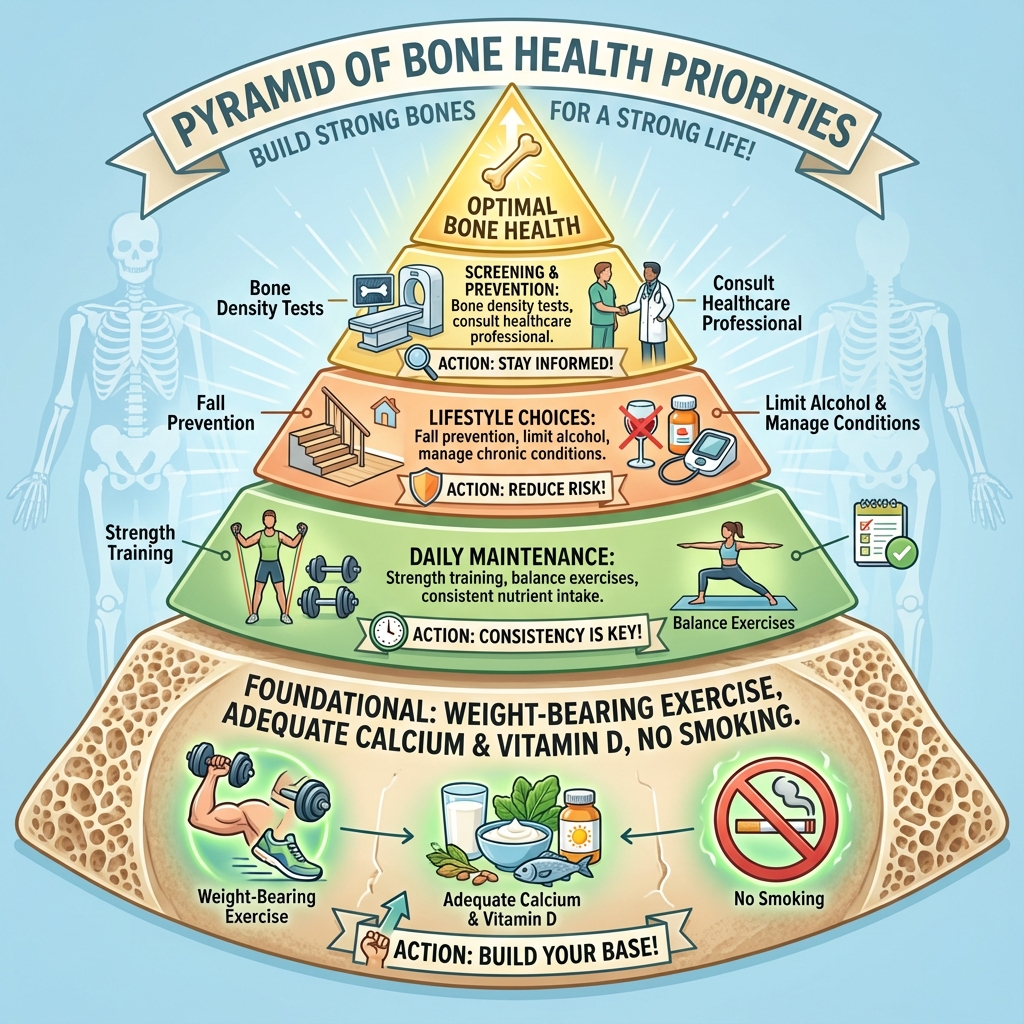
However, context matters enormously. Beverage choices represent one small factor among the many that influence bone health. Weight-bearing exercise, adequate calcium and optimized vitamin D levels, not smoking, limiting alcohol, maintaining healthy body weight, and, for some women, hormone replacement therapy all exert larger effects than tea or coffee consumption.
For women already doing the major things right, optimizing beverage choices offers incremental benefit. For those with major gaps in bone-protective behaviors, focusing on tea versus coffee misses the forest for the trees. The research adds nuance to the bone health picture without revolutionizing recommendations.
Practical Applications for Bone Health
If you currently enjoy tea, the research provides reassurance that you may be supporting your bone health with every cup. The type of tea appears less important than consistent consumption. Both green and black tea provide catechins, though green tea contains higher concentrations. Herbal teas, which are not technically tea (Camellia sinensis), don’t contain the same catechins and likely don’t offer the same bone benefits.
If you’re a coffee drinker, moderate consumption appears compatible with bone health. Two to three cups daily showed no association with reduced bone density. If you’re consuming more than five cups daily, considering moderation may be worthwhile, particularly if you have other risk factors for osteoporosis or if you also consume alcohol regularly.
Adding milk to coffee provides calcium that may offset any negative effects on calcium metabolism. This common practice makes intuitive nutritional sense and may explain why moderate coffee consumption shows neutral effects in most studies.
The findings also highlight the value of considering beverage choices as part of overall dietary pattern rather than in isolation. Women in this study who drank tea but also had higher alcohol consumption still saw bone benefits from tea. Those who drank excessive coffee alongside high alcohol intake showed the most pronounced negative effects. Beverages interact with each other and with broader lifestyle factors.
For those at particularly high osteoporosis risk, such as thin, small-framed women, those with family history of osteoporosis, or those taking medications that affect bone (like corticosteroids), these findings may carry more weight. Switching from heavy coffee consumption to tea, or simply moderating coffee intake, could be a reasonable component of a comprehensive bone-protection strategy.
The Broader Beverage-Health Picture
This research adds to a growing body of literature examining how our daily beverages influence health beyond hydration. Tea has shown associations with cardiovascular benefits, cognitive protection, and now bone health. Coffee, despite decades of health concerns, has emerged as largely neutral or positive for most outcomes at moderate consumption, though this study identifies a potential exception for bone health at high intakes.
The compounds in these beverages, from caffeine to catechins to chlorogenic acids, interact with human physiology in complex ways. Simple good-bad categorizations miss the nuance. Tea appears beneficial for bones but high in oxalates that could theoretically contribute to kidney stones in susceptible individuals. Coffee may harm bones at high intake but appears protective against type 2 diabetes and Parkinson’s disease.
Personal context determines which findings matter most. A 45-year-old man at low osteoporosis risk but high diabetes risk might reasonably prioritize coffee’s metabolic benefits over bone concerns. A 68-year-old woman with osteopenia and family history of hip fractures might rationally shift toward tea and moderate coffee consumption.
The Bottom Line
A decade-long study of nearly 10,000 older women found that tea drinkers had slightly higher hip bone mineral density compared to non-tea drinkers, a difference equivalent to roughly one year of slowed bone aging. Moderate coffee consumption showed no significant relationship with bone density. However, drinking more than five cups of coffee daily was associated with lower bone density, particularly in women with higher lifetime alcohol consumption.
The effect sizes are modest and shouldn’t prompt dramatic dietary changes in isolation. Beverage choices matter less than exercise, calcium, vitamin D, and other major bone health factors. But for those already optimizing the fundamentals, shifting toward tea and away from excessive coffee may offer incremental protection.
Practical Takeaways:
- Continue enjoying tea freely; both green and black tea appear beneficial for bones
- Moderate coffee consumption (2-3 cups daily) appears compatible with bone health
- If drinking more than 5 cups of coffee daily, consider reducing, especially if you have other osteoporosis risk factors
- Adding milk to coffee provides calcium that may offset any negative effects
- Don’t let beverage optimization distract from higher-impact factors: weight-bearing exercise, adequate calcium and vitamin D
Sources: Nutrients journal (December 2025), Flinders University research team (Ryan Liu, co-author), Study of Osteoporotic Fractures data, Frontiers in Nutrition meta-analysis on coffee and tea consumption.