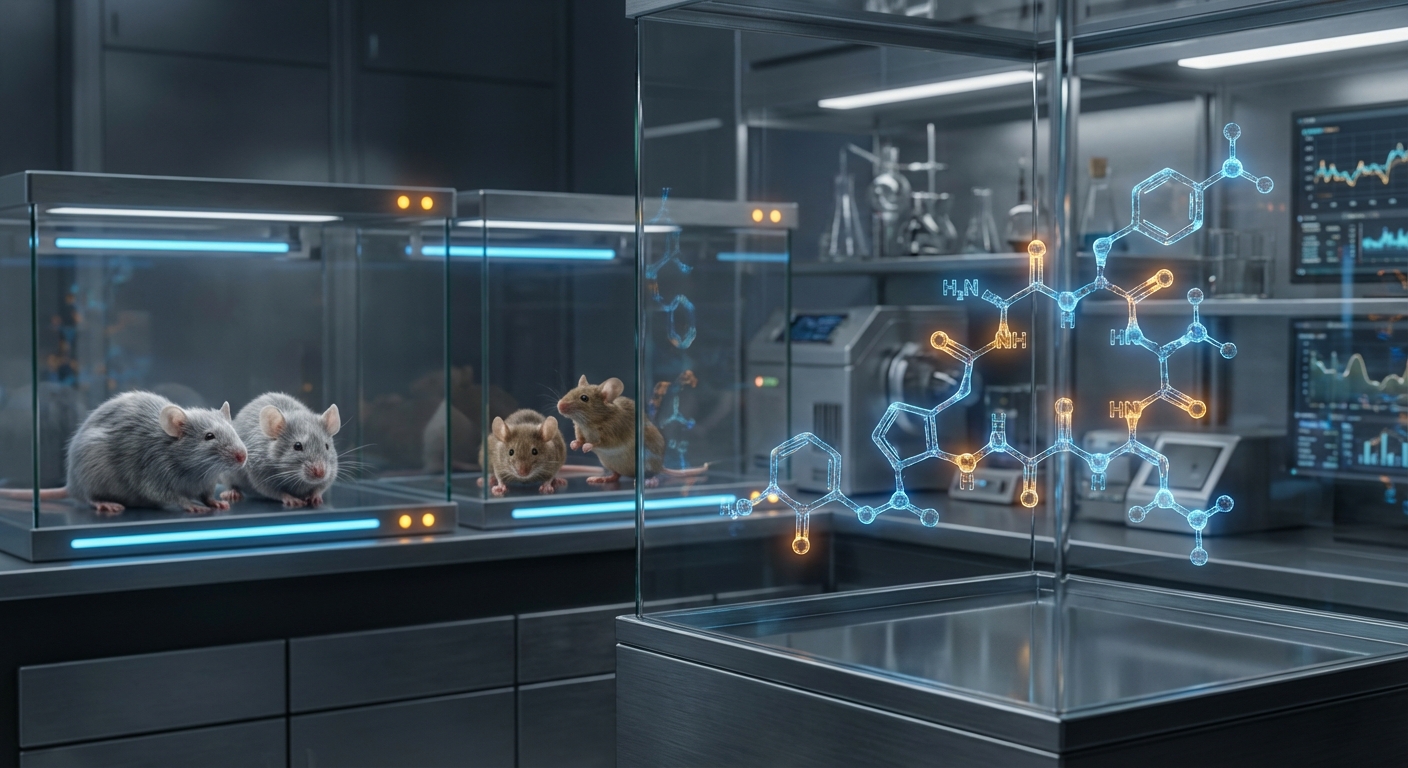
At 25 months old, a mouse is roughly equivalent to a 75-year-old human, well past middle age, entering the final phase of life. By this age, mice show the same signs of decline we see in elderly humans: reduced mobility, cognitive slowing, weakened muscles, and metabolic dysfunction. When researchers at UC Berkeley began treating mice at this advanced age with a two-drug combination, expectations were modest. Reversing aging in the elderly is far more difficult than preventing it in the young.
What happened next has shaken the longevity research community. Male mice treated with the combination of oxytocin and an Alk5 inhibitor lived more than 70% longer than untreated controls. They didn’t just survive longer, they thrived: improved agility, enhanced endurance, better memory, and blood proteins that looked decades younger. The findings, published as a cover article in Aging-US in December 2025, represent one of the most dramatic lifespan extensions ever achieved in elderly mammals.
The Two-Drug Combination That Changed Everything
The research, led by Cameron Kato and corresponding author Dr. Irina M. Conboy at UC Berkeley, combined two compounds with very different mechanisms of action. Oxytocin, often called the “bonding hormone,” is best known for its role in social connection, childbirth, and breastfeeding. But oxytocin also plays a crucial role in tissue repair and regeneration. As we age, oxytocin levels decline, and this decline contributes to reduced healing capacity and accelerated tissue deterioration.
The second component, an Alk5 inhibitor (A5i), blocks part of the TGF-beta signaling pathway. TGF-beta is a double-edged sword in aging. While it plays important roles in development and immune function, elevated TGF-beta signaling in older tissues promotes inflammation, fibrosis, and cellular senescence. By blocking Alk5, the inhibitor dampens these pro-aging effects without completely shutting down TGF-beta function.
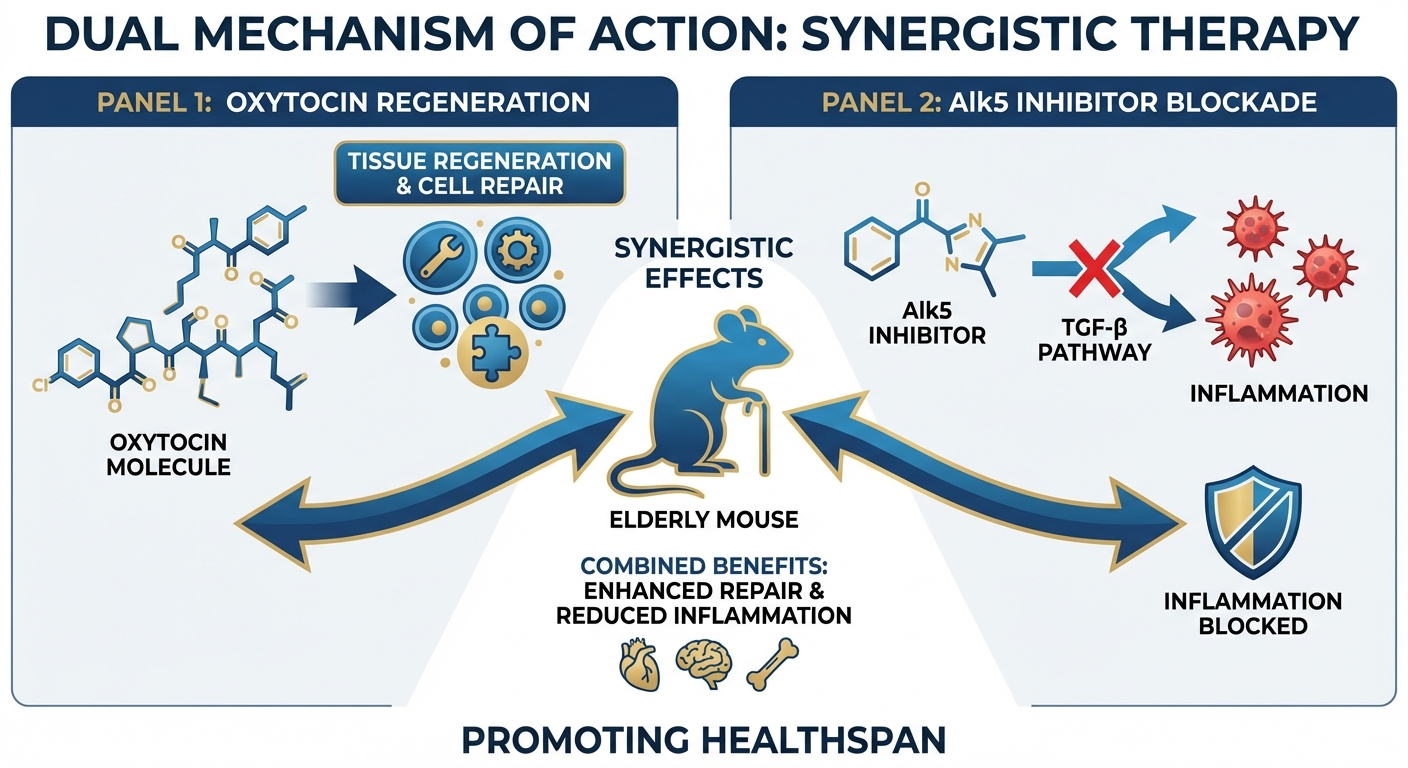
Neither compound alone produced the dramatic results seen with the combination. Previous research by the Conboy lab had shown that each intervention offered modest benefits. But together, oxytocin and the Alk5 inhibitor produced synergistic effects far exceeding what either could achieve alone. This combinatorial approach differs from other emerging strategies, such as targeting senescent cells with novel aptamer technology. The tissue repair signals from oxytocin and the anti-inflammatory effects of Alk5 inhibition apparently work on complementary pathways, each enabling the other to function more effectively.
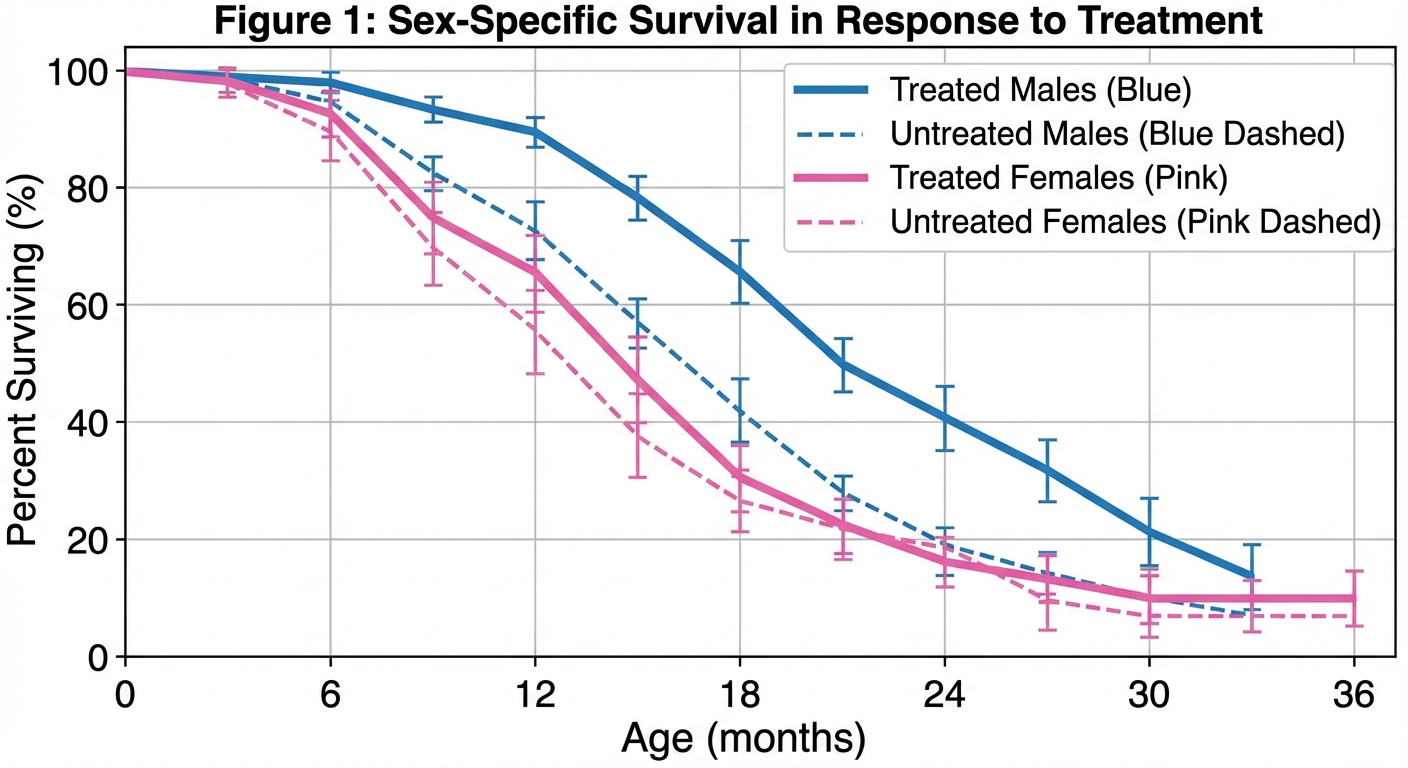
The specific numbers are striking. Treated male mice showed a 73% life extension compared to controls. When researchers analyzed survival curves using hazard ratios, treated males were nearly three times less likely to die at any given moment than their untreated counterparts. The 14% increase in overall median lifespan might sound modest, but achieving this in mice already at advanced age, equivalent to starting treatment in 75-year-old humans, is extraordinary. Most longevity interventions show diminishing returns when started late in life.
Not Just Living Longer, But Living Better
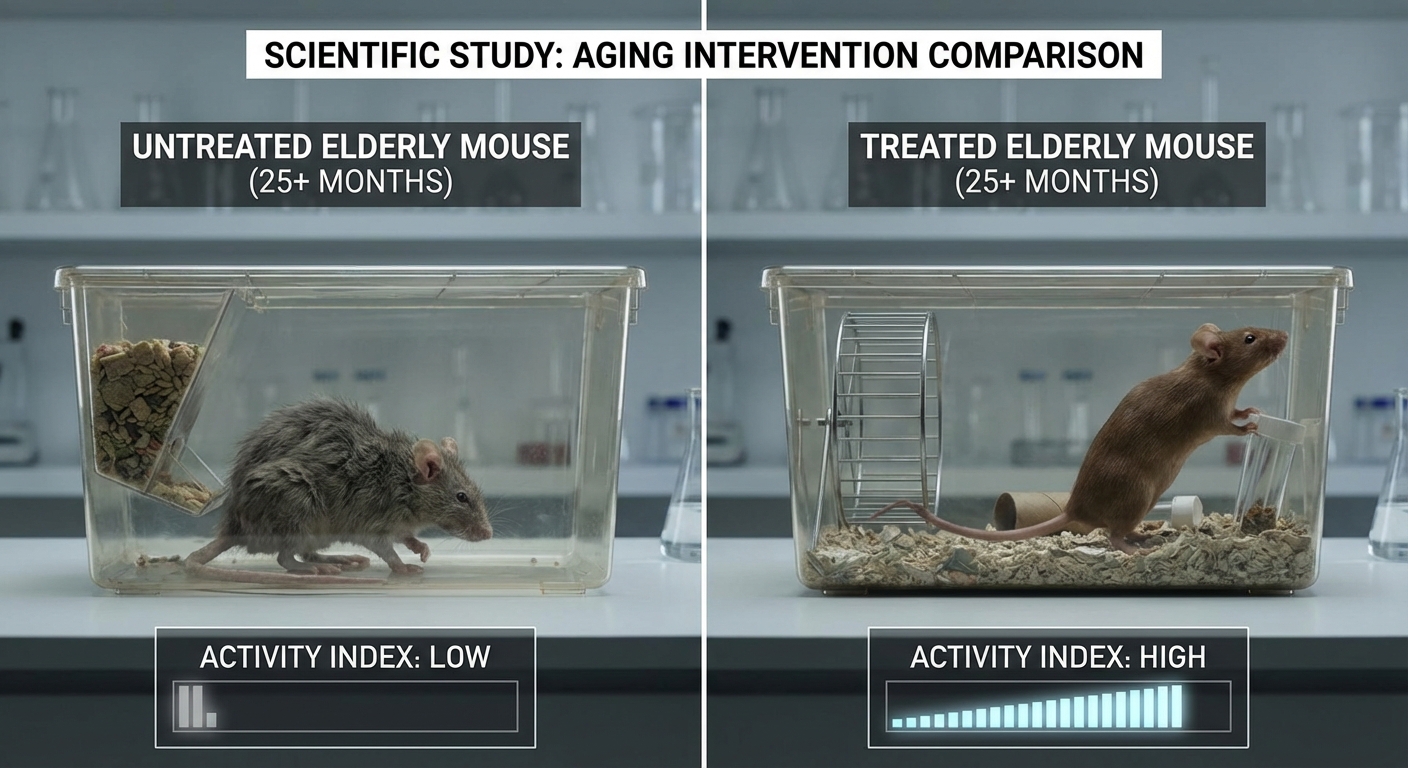
Lifespan extension means little if those extra months are spent in declining health. The Conboy team carefully assessed healthspan, the period of life spent in good health, alongside raw survival. The results suggest that treated mice weren’t simply lingering longer; they were functionally younger.
Treated males showed improved agility in standard physical tests. Their endurance, measured through treadmill protocols, exceeded that of untreated peers. Memory assessments, using maze navigation and object recognition tasks, revealed cognitive improvements. These aren’t subtle effects requiring statistical gymnastics to detect. The differences were apparent to observers simply watching the animals move and behave.
Perhaps most remarkably, the researchers analyzed blood protein patterns in treated animals. As we age, our blood contains an increasingly “noisy” mix of proteins, with damaged, misfolded, and dysfunctional variants accumulating over time. This connects to the growing field of longevity biomarkers that can track biological aging. This noise has been proposed as both a marker and a driver of aging. In treated mice, blood protein patterns became cleaner and more youthful. The biological noise associated with aging was reduced, suggesting that the intervention was addressing fundamental aging processes rather than simply masking symptoms.
The combination therapy appeared to be well tolerated. Mice maintained normal behavior and eating patterns. No severe adverse effects were noted during the treatment period. Given that oxytocin is already FDA-approved for other uses and Alk5 inhibitors are in clinical trials for various conditions, the safety profile of these compounds in humans is at least partially understood.
The Sex Difference Puzzle
One of the study’s most intriguing findings was the stark difference between male and female responses. While male mice experienced dramatic and sustained benefits, female mice showed only short-term improvements that didn’t translate to significant lifespan extension. The therapy appeared to increase fertility in middle-aged females, but the survival curves for treated and untreated females converged over time.
This sex difference isn’t unique to this intervention. Throughout aging research, male and female animals often respond differently to the same treatments. Hormonal differences, varying inflammatory profiles, and distinct aging trajectories between sexes likely all play roles. Females of many species live longer than males to begin with, suggesting different underlying aging biology.
The finding has important implications for translating this research to humans. A therapy that works primarily in males would still be valuable, but it would also require understanding why females respond differently. Future research will need to determine whether modifying the intervention, changing dosages, timing, or drug combinations, could produce similar benefits in females.
From Mice to Humans: The Translation Challenge
The question on everyone’s mind is obvious: will this work in humans? The honest answer is that we don’t know yet. Mouse studies, even dramatic ones, frequently fail to translate to human benefits. The history of longevity research is littered with interventions that looked promising in rodents but disappointed in human trials.
However, several factors make this research more promising than typical mouse studies. First, the intervention began in elderly animals, mimicking the situation of older adults who would seek longevity therapies. Many interventions that work in young animals fail when started late. Second, both compounds are already in human use or human trials, reducing the uncertainty around safety and dosing. Third, the magnitude of the effect is so large that even partial translation could be meaningful.
Oxytocin is already FDA-approved for inducing labor and treating postpartum hemorrhage. It has been studied extensively in humans, including for its effects on social bonding, trust, and pain perception. The safety profile is well-characterized. Alk5 inhibitors are currently in clinical trials for conditions including fibrosis, cancer, and wound healing. While not yet approved, they have been tested in thousands of human subjects.
The path from this mouse study to a human longevity therapy would require several steps. Researchers would first need to optimize dosing for each compound in humans. They would need to determine optimal treatment timing and duration. Long-term safety studies would be essential, since a longevity therapy would presumably be taken for years or decades. And ultimately, clinical trials would need to demonstrate meaningful benefits on human aging outcomes.
The Bigger Picture in Longevity Research
This study arrives in a remarkable year for aging research. AI-driven drug discovery has identified compounds that extend lifespan in C. elegans worms by up to 74%. Researchers have demonstrated that keeping the brain and immune system biologically young correlates with 56% lower mortality risk over 15 years, building on foundational work around NAD+ and cellular energy metabolism. Studies have identified the critical 45-55 age window when many tissues undergo dramatic remodeling. The field is advancing on multiple fronts simultaneously.
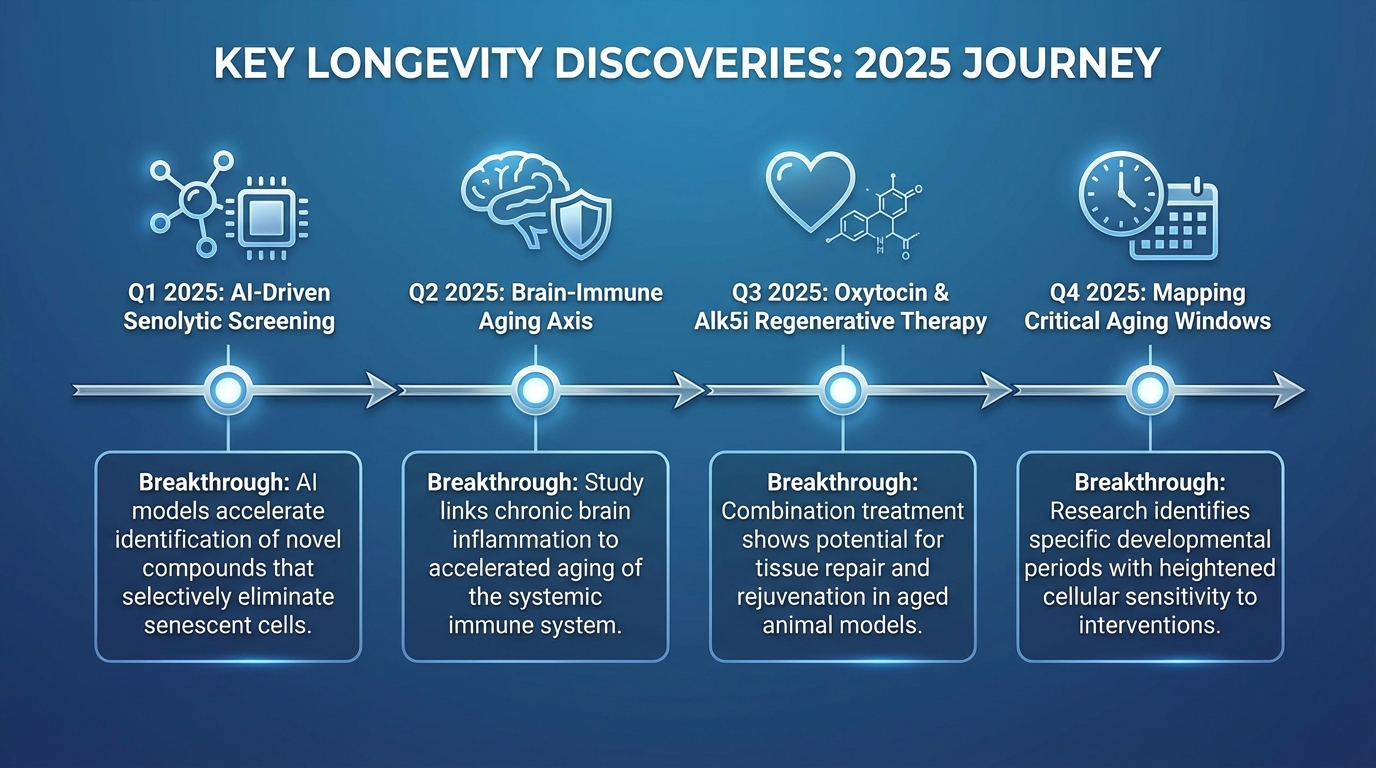
The oxytocin-Alk5i combination represents a particularly interesting approach because it targets multiple aging mechanisms simultaneously. Aging isn’t caused by a single pathway gone wrong; it’s the cumulative result of many interconnected processes. Interventions that address only one aspect of aging often fail because other pathways compensate or because the untargeted aspects continue to deteriorate. By combining tissue repair enhancement (oxytocin) with inflammation reduction (Alk5 inhibition), the Conboy team addressed at least two major hallmarks of aging in one treatment.
This combinatorial approach may prove to be the future of longevity medicine. Rather than searching for a single magic bullet, researchers are increasingly exploring synergistic combinations of interventions. The oxytocin-Alk5i result provides proof of concept that carefully chosen combinations can exceed the sum of their parts.
The Bottom Line
The 70% lifespan extension achieved by UC Berkeley researchers represents a genuine breakthrough in longevity science. The use of elderly animals, the magnitude of the effect, the improvements in healthspan markers, and the use of compounds already in human trials all distinguish this study from typical mouse research.
However, appropriate caution is essential. Many promising mouse studies have failed to translate to humans. The sex-specific response raises questions about universal applicability. The mechanisms underlying the synergistic effects aren’t fully understood. Years of additional research, including human clinical trials, will be needed before we know whether this approach can extend human lifespan.
For now, the research offers genuine hope that meaningful longevity interventions may be possible even for those already in middle or later life. The compounds involved are already in human use or human trials, potentially shortening the path to clinical testing. And the dramatic results suggest that our understanding of aging, and our ability to intervene in it, is advancing faster than many expected.
What This Means for You:
- This is early-stage research in mice, not a treatment available today
- Do not attempt to self-administer oxytocin or seek Alk5 inhibitors, both require medical supervision
- The sex-specific response means benefits may differ between men and women
- Watch for clinical trials that may emerge from this research in coming years
- Proven healthspan strategies, exercise, nutrition, sleep, stress management, remain your best current options
Sources: Aging-US (Kato et al., December 2025, DOI: 10.18632/aging.206304), UC Berkeley Conboy Laboratory research, American Federation for Aging Research commentary, Cell (2025) on aging inflection points, Aging Cell (2025) on AI-driven drug discovery.