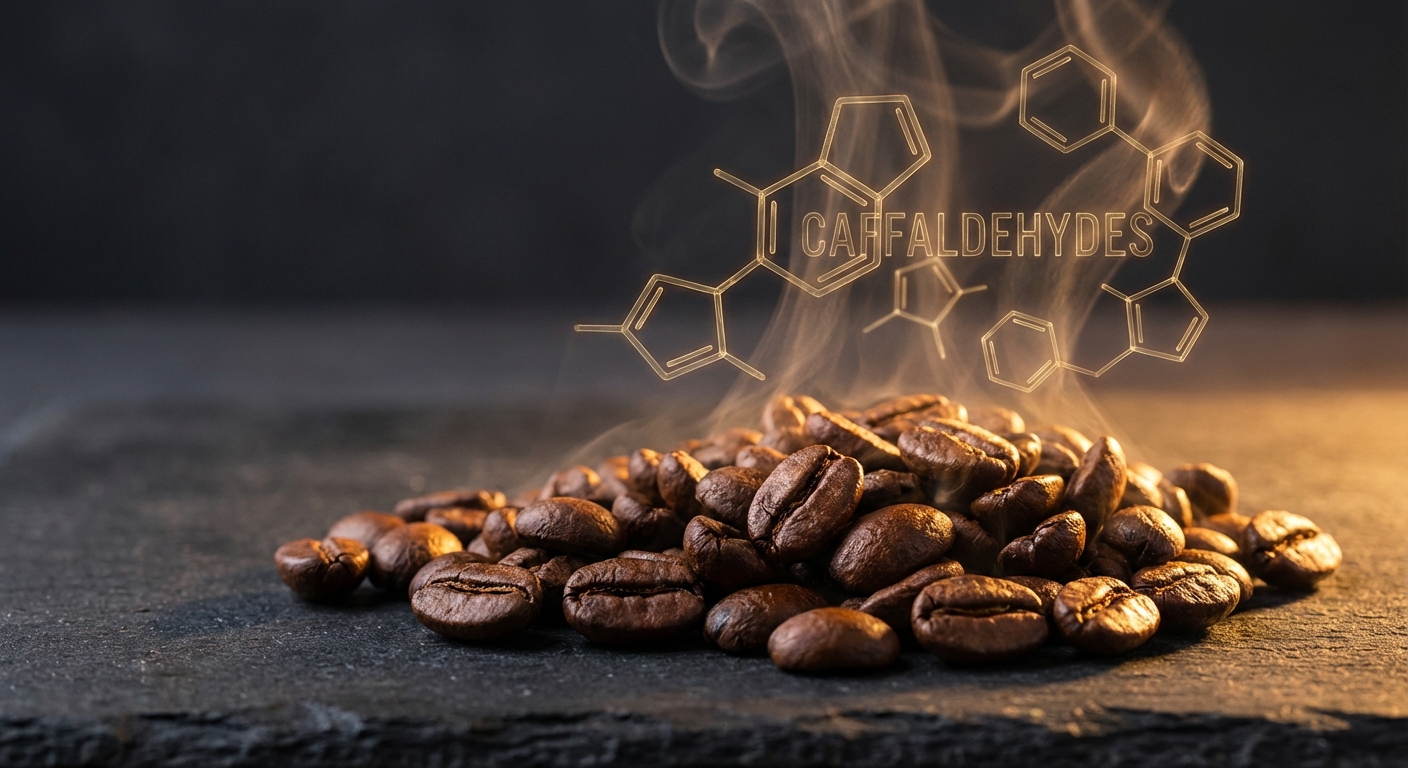
Your morning coffee might be doing more than waking you up. Hidden within those roasted beans are newly discovered compounds that, in laboratory tests, outperform a common diabetes medication at blocking an enzyme central to blood sugar regulation.
Researchers at the Kunming Institute of Botany in China have identified three previously unknown molecules in roasted Coffea arabica beans. Named caffaldehydes A, B, and C, these diterpene esters demonstrated remarkable ability to inhibit alpha-glucosidase, the enzyme responsible for breaking down carbohydrates into glucose. In direct comparison, all three compounds showed stronger activity than acarbose, a prescription drug used to manage type 2 diabetes.
The Discovery: Mining Coffee’s Hidden Chemistry
The research team, led by Minghua Qiu at the Chinese Academy of Sciences, employed a sophisticated three-step process to uncover bioactive compounds that had escaped detection in previous coffee research. Their findings, published in Beverage Plant Research in January 2026, reveal that even a beverage studied for centuries still harbors undiscovered secrets.
The methodology was designed to detect both common and extremely low-concentration compounds that might possess alpha-glucosidase inhibiting activity. Using silica gel chromatography, the researchers first separated roasted Arabica coffee into 19 distinct fractions. Nuclear magnetic resonance (NMR) analysis with cluster heatmap evaluation helped identify which fractions contained novel compounds. Semi-preparative high-performance liquid chromatography (HPLC) then purified the most promising candidates.
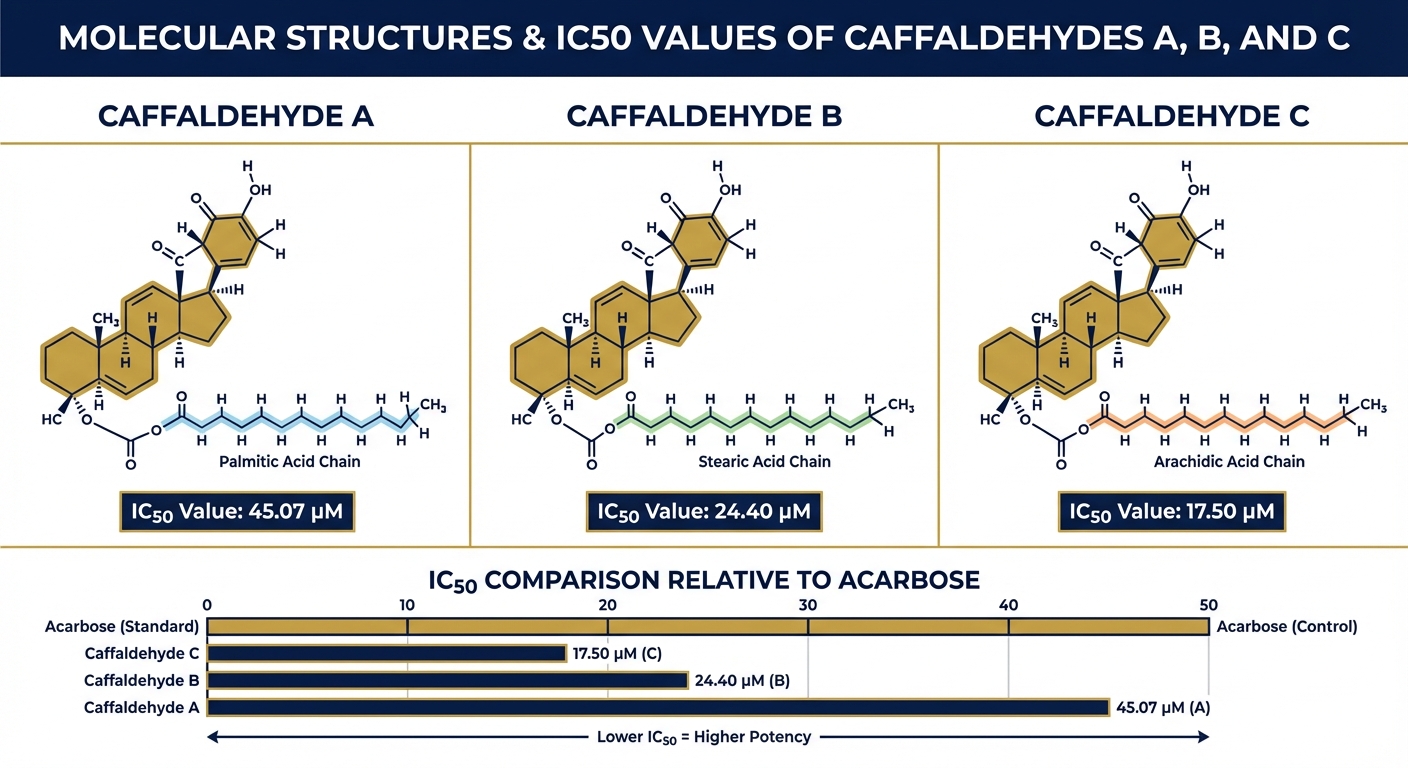
What emerged from this painstaking process were three entirely new molecules. Caffaldehydes A, B, and C share a diterpene ester backbone but differ in their fatty acid components: palmitic, stearic, and arachidic acids respectively. The researchers confirmed through extensive database searches that these compounds had never been reported in scientific literature.
The team’s molecular networking analysis, using tools like GNPS and Cytoscape, revealed three additional related compounds containing different fatty acids (margaric, octadecenoic, and nonadecanoic acids). These too had never been previously identified, suggesting that coffee’s chemical complexity extends far beyond the well-known caffeine, chlorogenic acids, and melanoidins.
How Alpha-Glucosidase Inhibition Controls Blood Sugar
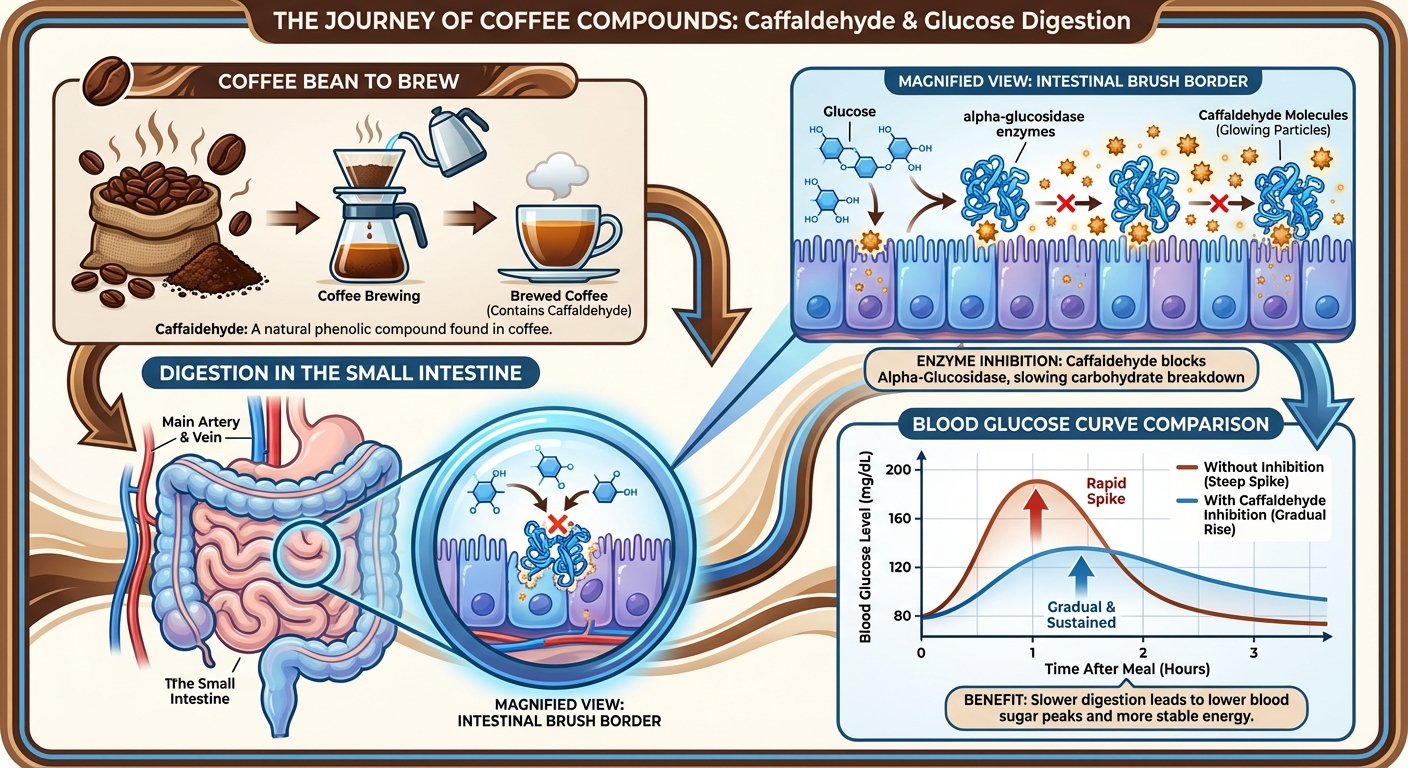
Understanding why these findings matter requires knowing how carbohydrates become blood glucose. When you eat starches or complex sugars, digestive enzymes must break them down into simple glucose molecules before absorption into the bloodstream. Alpha-glucosidase, located in the brush border of intestinal cells, performs the final step of this breakdown.
Drugs that inhibit alpha-glucosidase, like acarbose, slow carbohydrate digestion. Instead of a rapid glucose spike after eating, blood sugar rises more gradually. This gentler curve reduces the demand on insulin-producing pancreatic beta cells and helps maintain more stable glucose levels throughout the day. For people with type 2 diabetes or prediabetes, this effect can meaningfully improve glycemic control.
The potency of the newly discovered coffee compounds is measured by their IC50 values, the concentration needed to inhibit 50% of enzyme activity. Lower numbers indicate stronger inhibition. Caffaldehyde A showed an IC50 of 45.07 micromolar. Caffaldehyde B was more potent at 24.40 micromolar. Caffaldehyde C demonstrated the strongest activity at 17.50 micromolar. All three outperformed acarbose in these standardized laboratory comparisons.
This mechanism connects to a growing body of research on how dietary compounds affect blood sugar regulation. Previous studies have linked coffee consumption to reduced diabetes risk, though the specific compounds responsible remained unclear. The Kunming Institute research suggests that diterpene esters may be among the active players, alongside better-known components like chlorogenic acid.
Coffee and Diabetes: The Epidemiological Connection
The laboratory findings gain significance against the backdrop of decades of population research linking coffee consumption to metabolic health. Multiple large-scale studies have found that regular coffee drinkers have lower rates of type 2 diabetes compared to non-drinkers, with risk reductions ranging from 25% to 50% depending on consumption levels.
This association has puzzled researchers because caffeine alone actually impairs glucose tolerance in the short term. Caffeine blocks adenosine receptors and triggers adrenaline release, which can temporarily raise blood sugar. Yet habitual coffee drinkers show improved long-term metabolic markers. Something else in coffee must be counteracting caffeine’s acute effects.
Chlorogenic acids, which are abundant in coffee and degraded during roasting, have received significant attention as potential diabetes-protective compounds. They slow glucose absorption and may improve insulin sensitivity. However, dark roasted coffee contains less chlorogenic acid than lighter roasts, yet population studies haven’t consistently shown that lighter roasts provide greater diabetes protection.
The discovery of caffaldehydes adds a new piece to this puzzle. Diterpene esters form during the roasting process, meaning they may actually be more abundant in darker roasts. If these compounds contribute meaningfully to coffee’s metabolic benefits, it could explain why roasting level hasn’t shown the expected relationship with diabetes protection in population studies.
What This Means for Your Morning Cup
Before you triple your coffee intake hoping for diabetes protection, several important caveats apply. The Kunming Institute research was conducted entirely in laboratory conditions, testing purified compounds against isolated enzymes. The concentrations that showed activity may not be achievable through normal coffee consumption. The compounds may be metabolized, degraded, or poorly absorbed in the human digestive system.
The researchers explicitly noted that future studies will need to evaluate safety and effectiveness in living organisms. Laboratory potency doesn’t automatically translate to real-world benefits. Many promising compounds fail when tested in animals or humans because they don’t survive digestion, can’t reach target tissues, or produce unexpected side effects.
That said, this research opens doors for practical applications. The team suggested that understanding these compounds could lead to “coffee-based functional foods or nutraceuticals aimed at regulating blood glucose.” Imagine a concentrated coffee extract, optimized for caffaldehyde content, that could supplement dietary strategies for blood sugar management.
For now, the research reinforces rather than revolutionizes practical recommendations. Coffee consumption appears safe and potentially beneficial for most adults concerned about metabolic health. The relationship between blood sugar management and dietary choices involves many factors, with coffee being one potentially helpful component of an overall strategy.

The Broader Picture: Coffee’s Complex Chemistry
Coffee is one of the most chemically complex beverages humans consume, containing over 1,000 identified compounds. Roasting transforms green coffee beans through Maillard reactions, caramelization, and thermal degradation, creating hundreds of molecules not present in the raw product. The Kunming Institute’s discovery of previously unknown diterpene esters demonstrates that this chemical inventory remains incomplete.
The research employed cutting-edge analytical techniques that weren’t available to earlier coffee researchers. Molecular networking, which maps relationships between compounds based on their fragmentation patterns in mass spectrometry, can identify novel molecules even when present at extremely low concentrations. These tools are revealing hidden complexity in many foods and beverages that were previously considered well-characterized.
Other coffee diterpenes, particularly cafestol and kahweol, have received attention for both positive and negative health effects. These compounds can raise cholesterol levels, which is why paper-filtered coffee (which removes most diterpenes) is sometimes recommended for people with lipid concerns. However, cafestol and kahweol also demonstrate anti-inflammatory and potentially anti-cancer properties. The newly discovered caffaldehydes add another layer to this nuanced picture.
Understanding which specific compounds drive coffee’s health effects has practical implications. Brewing method, roast level, coffee variety, and processing all affect the final chemical composition of your cup. As research identifies the active molecules, recommendations can become more specific than simply “drink coffee” or “avoid coffee.”
Future Research Directions
The Kunming Institute team outlined clear next steps for their research program. Testing the caffaldehydes in living organisms will determine whether laboratory potency translates to biological activity. Animal studies examining glucose tolerance after compound administration would provide initial evidence. Human trials measuring postprandial glucose responses would be the ultimate test of clinical relevance.
Safety evaluation represents another critical milestone. While coffee has a centuries-long safety record as a beverage, concentrated extracts containing elevated levels of specific compounds require independent assessment. The dose-response relationship, long-term effects, and interactions with medications all need investigation before any therapeutic applications could be considered.
The research also raises questions about optimizing coffee for metabolic benefits. Could specific roasting profiles maximize caffaldehyde content? Do certain Arabica varieties produce more of these compounds? Would extraction methods like espresso versus drip coffee yield different concentrations? These practical questions could eventually inform both agricultural and brewing practices.
The Bottom Line
Roasted coffee contains at least three newly discovered compounds, caffaldehydes A, B, and C, that inhibit blood sugar-regulating enzymes more potently than the diabetes drug acarbose in laboratory tests. While this research is preliminary and conducted entirely in vitro, it adds to the growing evidence that coffee’s metabolic benefits extend beyond caffeine to include complex chemistry created during roasting.
The discovery doesn’t change practical recommendations dramatically. Coffee remains a reasonable choice for most adults interested in metabolic health, with evidence suggesting three to four cups daily may be associated with reduced diabetes risk. However, the research opens possibilities for future nutraceutical development and helps explain the mechanisms behind coffee’s observed benefits.
Key Takeaways:
- Three novel diterpene esters (caffaldehydes A, B, C) were discovered in roasted Arabica coffee
- All three outperformed the diabetes drug acarbose at inhibiting alpha-glucosidase in lab tests
- These compounds form during roasting, suggesting darker roasts may contain more
- Laboratory findings don’t yet prove real-world benefits; human studies are needed
- Coffee’s metabolic benefits likely involve multiple compounds working together
The research reminds us that even familiar foods contain undiscovered chemistry. Your morning cup holds molecular secrets that scientists are only beginning to understand.
Sources: Beverage Plant Research (2026), Kunming Institute of Botany, Chinese Academy of Sciences, Minghua Qiu research team, alpha-glucosidase inhibition analysis.